Understanding Market Liquidity in One Diagram
Justin D. Lee
Market liquidity refers to the efficiency and speed with which resources, goods, services, capital, and other factors circulate and are exchanged within a market. The higher the liquidity, the smoother the market operates and the stronger the economic vitality. Conversely, low liquidity can lead to idle resources, rising transaction costs, and even economic stagnation.
Today, let's look at a classic economic circular flow diagram. Although the original diagram comes from my 2002 MBA textbook, the underlying logic remains unchanged to this day. Once you understand this diagram, you'll grasp: where does money come from, and where does it go? And why does the market sometimes feel "alive" or "dead"?
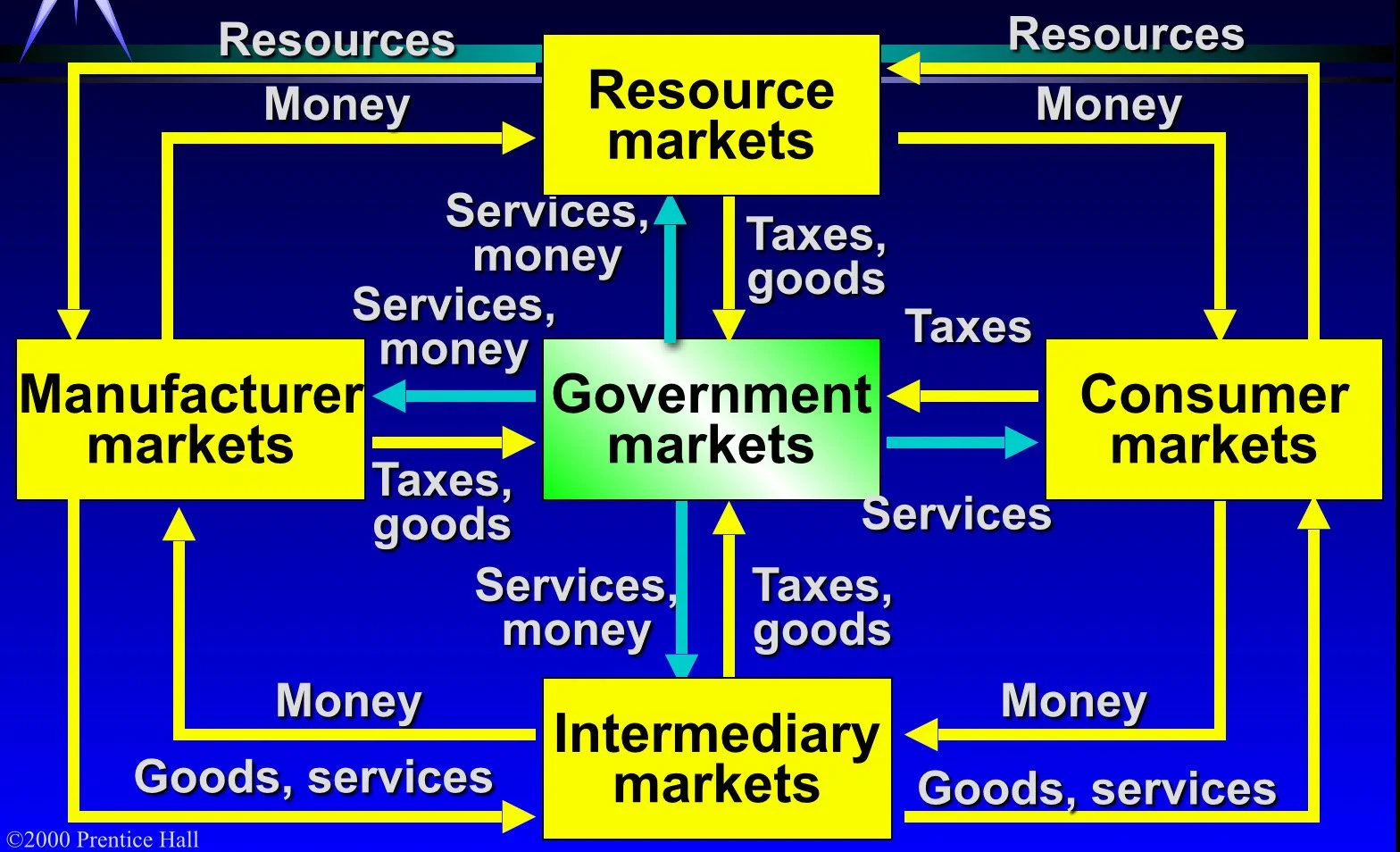
This diagram features five main players, clearly identifying five core participants:
1. Manufacturers – Factories and businesses that produce goods and services.
2. Consumer markets – You, me, and every household that spends money on food, clothing, and daily necessities.
3. Government – The "chief steward" that collects taxes and spends money on public infrastructure.
4. Intermediary markets – Banks, wholesalers, platforms, and others that facilitate matching and circulation.
5. Resource markets – Places that provide labor, raw materials, and energy.
Liquidity is the circulation of "goods + money"
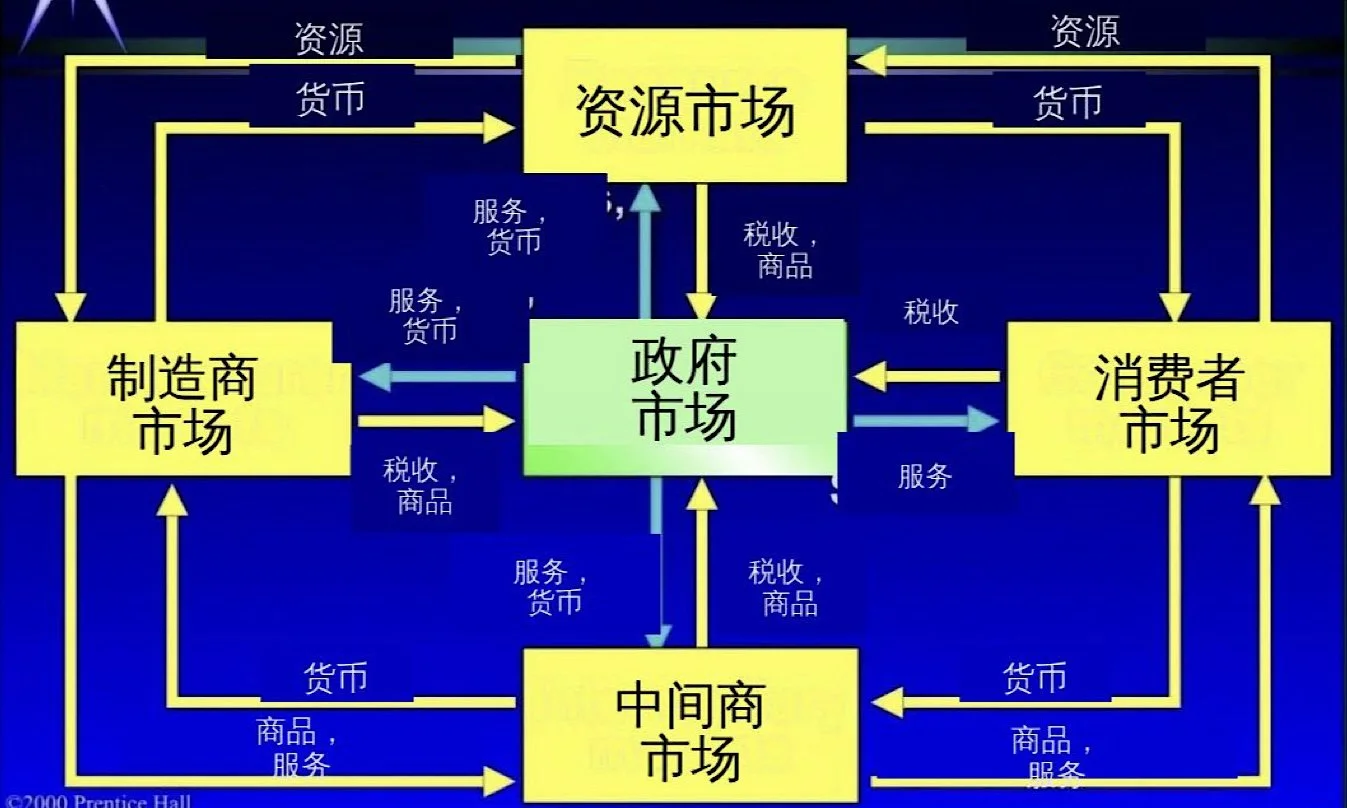
The many arrows in the diagram essentially show only two things: physical goods (goods/services/resources) flow in one direction, while money (currency/taxes) flows in the opposite direction. As long as there is flow, the market is alive.
1. Manufacturers ↔ Consumer markets: The core "spending money on goods" loop
· Manufacturers sell goods and services to consumers → Consumers receive the goods.
· Consumers pay money to manufacturers → Manufacturers earn revenue.
This is the transaction we all participate in every day: buying groceries, clothes, ordering takeout. If this line breaks, the economy goes into shock.

2. Consumers ↔ Resource markets: Exchanging labor for money
· Consumers (you) go to the resource markets to provide labor, land, and skills.
· Resource markets pay consumers wages, rent, and compensation (money).
Without this step, people have no money in their pockets. Without money, the first loop above cannot turn.

3. Government: Collecting taxes + spending money to regulate flow
· The government collects taxes from manufacturers and consumers (taxes, goods, etc.).
· The government then spends that tax money back out: building roads, issuing subsidies, paying civil servant salaries. This money flows back into the hands of consumers and manufacturers.
The government acts like a water pump—when the market is too cold, it spends more; when the market overheats, it taxes more.

4. Intermediary markets: Accelerating flow
· Banks, financial institutions, and traders act as "middlemen" to speed up the flow of money and goods.
· For example: A manufacturer needs money to buy raw materials and takes out a loan from a bank (money → intermediary). A consumer wants to buy a house and takes out a loan from a bank (money → intermediary). The intermediary then lends that money back out again.
Without intermediaries, large transactions would get stuck, and liquidity would dry up.

5. What exactly are resource markets?
When many people look at this type of diagram, the resource market is the easiest part to overlook or confuse.
Simply put: The resource market is the "starting point market" before anything is made.
It doesn't sell final goods (like smartphones or soda). It sells raw materials, labor, energy, land, technology patents—these "primitive resources."
What exactly is in the resource market?
· Labor: Your time, skills, and physical effort. When you look for a job, take on freelance work, or do gig work, you are "selling labor" in the resource market.
· Natural resources: Timber, oil, ore, water, land. A coal mine selling to a power plant, or a farmer leasing land, are both resource market transactions.
· Capital resources: Money itself is also a resource. When a company needs funds and seeks financing, venture capital, or issues bonds, it is buying capital from the "capital market" (a type of resource market).
· Technology/patents: A formula, an algorithm patent, a management process. When a pharmaceutical company buys another company's patent to produce a new drug, that's a resource market transaction.

Conclusion: What is liquidity, really?
Liquidity = the uninterrupted circulation of money, goods, services, resources, and taxes throughout the entire network.
Market liquidity is a dynamic ecosystem
Market liquidity is not determined by a single factor but is the result of the interaction of resources, money, goods, services, policies, intermediary institutions, and more. The government adjusts the direction of liquidity through policy, intermediary companies accelerate flow through innovation and efficiency, and supply and demand ultimately determine the effective allocation of resources.