
9 Key Roles of Change Leaders

American Management Association
From adopting new technologies to adapting to meet increased customer expectations, change is essential to business survival. Change management—a systematic approach to keeping change under control—supports employees throughout the transition period and prevents chaos. Yet, beyond change management, driving and steering significant change within an organization demands change leadership.
What is change leadership? It’s more than being responsible for planning and managing change. A change leader influences others to re-think what they’re accustomed to doing and embrace the possibility of doing something that’s completely unfamiliar. Along with offering an inspiring vision of bold transformation, a change leader empowers others to step outside of their comfort zone and start doing something new and radically different with confidence.
Effective change leaders are crucial to business and desperately needed during times of rapid advancement and rampant uncertainty. As the experts at American Management Association (AMA) know, change leaders are not born but made. For those embarking on this path of professional development, following are nine key roles of a change leader that you might be called upon to perform:
Understand the need for change. To convince others to reject the status quo and welcome change, you need to fully understand why your organization is undertaking this critical initiative. If the change doesn’t make sense to you, how can you expect others to see its value?
Assess readiness for change. Are your team members ready for this change? If they’re already overwhelmed with job responsibilities and pressures, prepare for resistance.
Increase readiness for change. Find a way to make the proposed change more appealing and doable for your team. Consider providing additional training or delivering a presentation on how this change will streamline a work process or solve a common problem.
Manage scope and speed of change. Is the change initiative too ambitious? Is the timeline for implementation too tight? Take steps to narrow the focus and slow the pace for your team. Consider breaking a large-scale change down into smaller increments.
Understand stakeholders’ responses to change. Make an effort to see the change initiative from the perspective of your team members and others affected, such as customers and suppliers. Acknowledge and consider their emotional as well as their intellectual responses.
Communicate change management plans. Build commitment to change by communicating the change management plan. Remember: Change is difficult for most people. Clear and consistent communication can help make accepting change easier.
Connect change initiatives to strategy. To make change meaningful and worth the effort, reinforce the connection between the change initiative and the strategic direction in which your organization is heading.
Help people learn from the change. How has the change improved a work process or result? Document and share what your team has learned from the change with regular follow-up and evaluation. Call attention to how the change has benefited the entire organization.
Keep initiatives on track. Change must be sustainable. Monitor your team’s progress and the outcomes to be sure the change is living up to its promise and stays on course.
Being a change leader is a demanding, very visible, high-stakes responsibility. So, be sure to consider all the roles you’re expected to successfully execute before taking on that important change initiative.
SML Report Shows Retailers Expect Post-Pandemic Growth
BY RICH HANDLEY
Based on input from more than 500 apparel retail decision-makers, the report examines the impacts of COVID-19 on the industry, as well as the current sentiment regarding growth prospects and the challenges in bouncing back.
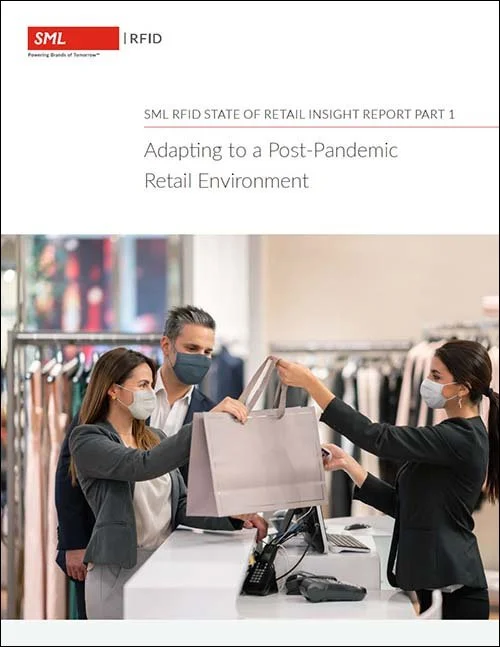
Dec 03, 2021SML RFID has announced the release of the first half of its two-part "The State of Retail in a Post Pandemic Era" report, which finds that more than a third of retailers feel confident in their ability to grow within the next year, but that recovery from the COVID-19 pandemic remains a concern. The report, which analyzes responses from more than 500 independent senior decision-makers representing apparel retailers in the United States and the United Kingdom, examines the pandemic's impacts on the apparel retail industry, as well as the general sentiment regarding growth prospects and the challenges in bouncing back.
According to SML, the past 18 months have posed a significant challenge for the retail sector due to the coronavirus outbreak. As the report explains, companies were forced to adapt to shifting consumer demands as in-store operations temporarily ground to a halt and as e-commerce became the primary sales channel. Those surveyed for the study deemed recovering from the pandemic to be the most significant obstacle, SML reports, with 38 percent of respondents citing this as their greatest challenge.
VTS report: As pandemic drags on, time is not on the side of office leasing
DAN RAFTER DECEMBER 3, 2021

The COVID-19 pandemic has thrown the U.S. office market into disarray. This isn’t surprising considering the uncertainty still surrounding this commercial sector. After all, many companies still don’t know when they’ll bring more of their workers back to the office. And when companies do make this move, it’s uncertain how many will require their employees to work full time in the office and how many will instead opt for a hybrid approach, allowing their workers to complete their work both from home and in the office.
Summary of The global burden of adolescent and young adult cancer in 2019

The Lancet
Background
In estimating the global burden of cancer, adolescents and young adults with cancer are often overlooked, despite being a distinct subgroup with unique epidemiology, clinical care needs, and societal impact. Comprehensive estimates of the global cancer burden in adolescents and young adults (aged 15–39 years) are lacking. To address this gap, we analysed results from the Global Burden of Diseases, Injuries, and Risk Factors Study (GBD) 2019, with a focus on the outcome of disability-adjusted life-years (DALYs), to inform global cancer control measures in adolescents and young adults.
Methods
Using the GBD 2019 methodology, international mortality data were collected from vital registration systems, verbal autopsies, and population-based cancer registry inputs modelled with mortality-to-incidence ratios (MIRs). Incidence was computed with mortality estimates and corresponding MIRs. Prevalence estimates were calculated using modelled survival and multiplied by disability weights to obtain years lived with disability (YLDs). Years of life lost (YLLs) were calculated as age-specific cancer deaths multiplied by the standard life expectancy at the age of death. The main outcome was DALYs (the sum of YLLs and YLDs). Estimates were presented globally and by Socio-demographic Index (SDI) quintiles (countries ranked and divided into five equal SDI groups), and all estimates were presented with corresponding 95% uncertainty intervals (UIs). For this analysis, we used the age range of 15–39 years to define adolescents and young adults.
Findings
There were 1.2 million (95% UI 1·11–1·28) incident cancer cases and 3960 (3700–4250) deaths due to cancer among people aged 15–39 years worldwide in 2019. The highest age-standardised incidence rates occurred in high SDI (59·6 [54·5–65·7] per 100 000 person-years) and high-middle SDI countries (53·2 [48·8–57·9] per 100 000 person-years), while the highest age-standardised mortality rates were in low-middle SDI (14·2 [12·9–15·6] per 100 000 person-years) and middle SDI (13·6 [12·6–14·8] per 100 000 person-years) countries. In 2019, adolescent and young adult cancers contributed 23·5 million (21·9–25·2) DALYs to the global burden of disease, of which 2·7% (1·9–3·6) came from YLDs and 97·3% (96·4–98·1) from YLLs. Cancer was the fourth leading cause of death and tenth leading cause of DALYs in adolescents and young adults globally.
Interpretation
Adolescent and young adult cancers contributed substantially to the overall adolescent and young adult disease burden globally in 2019. These results provide new insights into the distribution and magnitude of the adolescent and young adult cancer burden around the world. With notable differences observed across SDI settings, these estimates can inform global and country-level cancer control efforts.
How China can learn from the foreign modern agricultural industrial park Development?

The construction of modern agricultural industrial park is an important decision made by the Party Central Committee and the State Council and an important starting point to promote the revitalization of rural industries in the new era. In 2017, the Ministry of Agriculture and Rural Affairs and the Minister of Finance jointly launched the establishment of the National Modern Agriculture Industrial Park. On April 30, 2020, the Ministry of Agriculture and Rural Affairs and the Department of Finance approved 31 modern agricultural industrial parks to be established as national modern agriculture industrial parks, and 8 provincial modern agriculture industry parks were incorporated into the management system for the establishment of national modern farming industrial parks.
To date,The Ministry of Agriculture and Rural Affairs and the Department of Finance have identified 20, 29 and 31 national modern agricultural industrial parks in three batches in 2018, 2019 and 2020.
Countries such as Germany, Holland, USA and Japan started early in agricultural modernization.,Its modern agricultural park construction is accompanied by the development of agricultural modernization, Up to now, a large number of modern agricultural parks have been built, which integrate the functions of agricultural science and technology extension, technology demonstration, eco-tourism and agricultural education, and realize the benign interaction between agricultural modernization and agricultural park development.
Analyzing and summing up the development model and experience of the above four countries' modern agricultural parks is of great significance to solve the problems in the development of Chinese modern agriculture parks.
German Eco-Agricultural Parks: Ecology and Industrialization
The development of ecological agriculture in Germany is unique in the European Union, and its modern agricultural park construction is also around ecological agriculture, on the basis of eco-agriculture to promote the industrialization of agricultural park.
At present, milk, pork, grain, vegetables, fruits and other major agricultural products basically achieved ecological development, modern agricultural park is also in these main agricultural products planted, processed on the basis of further industrialization and scale. During the construction of modern agriculture park, the theme of ecology and industrialization is always the theme.
Specifically,First of all, to adjust the agricultural industrial structure and agricultural trade policy with market orientation, for the construction of ecological agriculture, formed the resultant force of economic, ecological and social benefits.
Secondly, after the formation of modern production system of agricultural products, further promote the specialization, automation and standardization of production system, forming a set of characteristic ecological industrialization development chain.
Third, on the basis of the production chain, and then build a strong marketing system of agricultural products, to achieve planting, feeding, processing, circulation, trade and other links of the train,Pay attention to the integration of agriculture, industry and commerce development, marketing and market development as the basic impetus to promote the development of modern agricultural parks, especially the expansion of overseas markets.
Fourth, the construction of standardized agricultural technology system, try not to use chemical fertilizers, pesticides, and actively promote the use of organic fertilizers, enhance the added value of agricultural products.
In Brandenburg's Kasht Agricultural Park, an area of more than 3,000 hectares of agricultural park, only four employees, the whole process is automated production and processing, In the whole process to achieve the ecological, recycling, such as cattle manure and related waste can continue to use, the waste processing for power generation, in addition to their own use, but also the remaining electricity sold to the State Grid Corporation.
Dutch Protected Agricultural Parks: Intensive and Standardized
The Netherlands is a country with less arable land and agricultural population, but it has created 9% to 10% of the global agricultural output value, Its potato, egg, beer, cheese and tomato and other net exports of agricultural products occupy the world first, especially potatoes accounted for more than 60% of the world's agricultural market.

The reason why the Netherlands can make such great agricultural achievements is closely related to its world-class level of facility agriculture. Specifically,First of all, soilless cultivation technology developed.More than 90% of the protected agricultural parks in the Netherlands adopt soilless culture, and rock wool is widely used as the cultivation substrate. Rock wool can avoid water loss or leakage compared with ordinary soil. In addition, rock wool does not contain any nutrients, which is convenient for managers to adjust the nutrition formula in different growth cycles of crops to maximize the growth of crops with appropriate water and nutrients.
Secondly, the circulation irrigation technology is advanced.When rock wool is used as culture medium, excessive irrigation is generally needed to ensure the stability of nutrients in the medium. The backflow of nutrient solution in rock wool is generally kept at about 40%. If these nutrients are discharged into the natural environment, it will not only affect the ecological security, but also cause water and nutrient waste. In order to improve the utilization rate of water and nutrients, the Dutch facility agriculture park generally adopts closed irrigation system, the cultivation nutrient solution after disinfection recycling, its water and nutrient recycling rate reaches 90%.
Third, crop water supply precision.The Netherlands Protected Agriculture Park (FAP) has developed water supply management models suitable for different crops during their growth cycle. In theory, crops absorb water mainly to counteract evaporation, and the amount of water consumed by crops is usually proportional to the time of illumination. The Netherlands Facility Agriculture Park adopts a precise water supply control system to adjust water supply according to the growth cycle of crops. The water supply can be adjusted in time according to the solar radiation in one day, which can not only ensure the needs of crop growth, but also avoid the waste of water resources caused by excessive irrigation.
Fourth, the RainWater collection system is well developed.From the point of view of crop growth, Rain Water is the best water source for rock wool soilless culture because of its lower EC value and less mineral composition compared with ground water and surface water.
In order to make full use of the Rain Water, Rain water collection systems have been widely established in Dutch facility agricultural parks, where Water irrigation accounts for 50% of the water supply. At present, the Rain Water Injection System has been established in some flower agricultural parks. In rainy season, the surplus Rain water is injected into the ground and stored in a specific soil layer for extraction when needed. The application of this technology can not only save water resources, but also effectively neutralize groundwater and improve the quality of groundwater.
American Science and Technology Agriculture Park: Technology and Scale
The United States is the country with the highest degree of agricultural modernization in the world. After years of development, its agriculture has become a highly integrated industry, and it is worthy of the name of the first agricultural country in the word. The experience of the United States in developing high-tech and large-scale agricultural parks with its natural endowment and resources is worth learning.
The construction and development of science and technology agricultural parks in the United States is an important symbol of agricultural modernization. Specifically,First, adhere to the main family farm business model.The family farm system has always been the most important mode of agricultural production in the United States, and its agricultural parks are also managed through the system of family farms. On the basis of the family farm, the implementation of science and technology in the agricultural park and scale, so that an area of 180 hectares of agricultural park, only 2 people can produce, manage and operate.
Secondly, the industry in the agricultural park is highly integrated.The construction, operation and management of agricultural parks in the United States is a comprehensive system. It not only includes comprehensive knowledge related to meteorology, geography and biology, but also includes agricultural production, processing, circulation and financial services. It is a multi-disciplinary, multi-sector complex. Because of this, American agricultural parks are characterized by high technology content and high output, forming a comprehensive agricultural form of scale, industrialization, socialization and internationalization, and forming an integrated industrial chain of agriculture, industry and commerce.
Third, the agricultural park has a high degree of specialization and reasonable layout.The development of agricultural parks in the United States has little homogeneous competition, and its rich climatic conditions, Make the agricultural park from the industry for a more reasonable division of labor, in the production link also carried out specialized decomposition, depending on different industries to establish a specialized, characteristic agricultural park system.
For example, in the eastern region, the establishment of a large number of pasture, dairy science and technology parks; In the central and northern regions, scientific and technological agricultural parks have been established. In addition, there are corn comprehensive science and technology park in the Great Lakes region, and cotton comprehensive agricultural park in southern China. These parks in the industrial division of labor, to avoid homogeneous competition, while in the production links, such as production, processing, circulation, trade and other links also carried out a detailed division, effectively improve the overall efficiency of agricultural production.
Fourth, the agricultural park attaches great importance to science and technology support.The innovation ability of American agricultural science and technology is world class. The government attaches great importance to agricultural scientific and technological innovation and technology promotion. In 1996, Congress authorized the Department of Agriculture to establish the United States Agricultural Strategic Development Agency, which integrates agricultural research, technology development and agricultural education. Over the years, the government has invested a large amount of funds for agricultural technology development, innovation, research and extension work, and established a complete agricultural technology research and development system and extension system. In the Agriculture Act of 2014, the system of integrating agricultural technological innovation with agricultural parks was reconfirmed, providing financial support for technological innovation in agricultural parks with a budget of $2 billion.
In addition, many agricultural parks in the United States actively promote the Department of Agriculture's "low input sustainable agriculture development program," actively use renewable energy to replace fossil energy, reduce agricultural pollution, and actively develop organic agriculture. Through a series of national support, effectively enhance the science and technology of the agricultural park, improve the scientific and technological radiation ability of agricultural park.
Fifth, the agricultural park attaches importance to the function of agricultural education.Agricultural education in the United States has its own characteristics. Its dominant force is to focus on the cultivation of practical talents, emphasize the application of agricultural technology, and attach importance to cultivating students' practical ability.
For example, Cornell University, which is famous for its agricultural education, has established its own world-famous Cornell agricultural and food science and technology park. Through practical education, it can enhance the students' operational ability and play its role in the construction and management of agricultural park.
Japanese Leisure Agriculture Park: Experience and Demonstration
Japan has a large population and little land, and its agricultural development has always been a small peasant production mode, and the implementation of the differentiated and intensive agricultural development strategy. In this situation, Japan's leisure agriculture park has developed rapidly. Leisure agriculture park is mainly run by the government, with holiday farm as the main body.
Holiday farm, as a typical leisure agriculture park, integrates sightseeing, agricultural production and agricultural experience, and realizes the multi-function of agriculture. Most of the holiday farms in Japan are located in the fringe of urban and rural areas. They pay attention to the complementation of the rural and urban areas. They are managed according to the management mode of common parks. They integrate the agricultural production, agricultural consumption and agricultural tourism, and play the demonstration effect of comprehensive agriculture.
In recent years, Japan's agricultural parks pay attention to the development of its experience, leisure agriculture park specialization is also increasing, Through the advanced agricultural technology to create a large number of famous and special tourist parks, such as cherry orchard, cherry garden, etc., can not only let visitors appreciate the pleasure of agricultural farming in the viewing, but also allow visitors to get a pleasant mood in sightseeing. In Japan's prestigious Tomita Farm, Sapporo Sightseeing Farm and Acer Apple Park and other modern recreational agriculture parks, each year from the world to receive 3 million visitors.
Because most of Japanese agriculture is cultivated by part-time farmers, the management idea and management method of agricultural park also reflect theThe function of agricultural education and agricultural research, combining agricultural production, processing, training practice and leisure tourism,With production, practice, tourism and other functions, reflecting the multi-functional characteristics of agriculture.

4. Promoting the comprehensive and multifunctional development of agricultural parks
Modern agricultural park construction is not a single production function, on the basis of production functions, should also play its multiple functions, especially in the strengthening of technology demonstration and radiation based on technical extension, technical training and agricultural education.
In addition, we should also adapt to local conditions to play the role of tourism, entertainment, leisure and science popularization of agricultural parks, give full play to the multi-function of agriculture, enhance the added value of the park crops and processed products. In the process of planning the development of modern agricultural parks, all localities shall, according to the local natural endowments, resource conditions, geographical location and level of economic development, scientifically locate the parks, and define their functions and development directions. The multifunctional characteristics of agriculture and the needs of the public are brought into the park construction planning, so that the agricultural park can not only serve the development of the countryside and agriculture, but also meet the requirements of the people, so as to promote the sustainable development of agriculture park.
Industrial real estate made "great leap forward"
Industrial Property Observation

"Cloud Tianfu" big data industrial park renderings
In recent years, the industrial real estate industry has a development trend:Pursue project scale and expansion speed.Whether it is deep farming industry veterans, or new entrants are accelerating the expansion of their territory.
The number of projects developed by industrial property developers has shown explosive growth.The East Timor Group is a typical example. According to Liang Huanyu, vice president of the Group, the country has done more than 90 projects in 2020, aiming to achieve 700-1000 parks in the country.
1. Right now,Industrial real estate developers have a number of projects and expansion speed, has become the evaluation of the elements.In a veteran industrial real estate business brand activities day, an invited industry guests bluntly its expansion speed is too slow, the development of more than 20 years in the national layout of a dozen projects. In contrast, some of the new Bureau of industrial real estate business, in two or three years has been completed the layout of a dozen projects.
In the past, even if the industrial real estate developers only had one project,As long as the project operation is successful, it will be able to be praised by the industry and learn from.Now, to get peer praise, you have to see how many projects in the layout of the country, if you have a handful of projects, sorry, too conservative.
In a sense,The number of projects owned and the speed of expansion has become an indicator of the evaluation of industrial developers.Expansion speed has become a manifestation of industrial real estate business competitiveness.
2.About five or six years ago, the pace of expansion is not the main theme of the industrial real estate industry, we are more concerned about how to run a project. In our opinion, it is difficult to operate industrial parks well, and it is very difficult to cultivate a mature industrial park.Because it takes time for industries to grow.
At the same time, we agree that the successful industrial park pays attention to the weather, place and people, the successful experience of the park can not be copied, the replication of the industrial park is more difficult.
Therefore,In the past, industrial developers did not expand easily. Even expansion is very cautious,When you have a successful product, you start thinking about it. The expansion process is steady,Even some industrial real estate developers to reassure the government, to the government in the next few years to concentrate on only one project.Unlike some of the new entrants now, have not done a good job of the first project, has been considering how to off-site layout.
Focus on industrial real estate industry, focus on the development of industrial parks. The content here seeks to be practical.
However,Around 2015, industrial developers began to build parks.Take East Timor as an example. According to Liang Huanyu, from 2003 to 2016, It took 13 years for East Timor to build 100 parks, but from 2016 to 2019, a second 100 park was built in four years.
3.Why the industrial real estate industry into the rapid development stage? In fact, there are several opportunities,
First of all, real estate enterprises involved in the field of industrial real estate, to bring a great touch to the traditional industrial developers.
Around 2015, a large number of real estate enterprises began to expand industrial real estate business. Seen the big scene, deep pockets of real estate enterprises, do plans very bold, usually cast a net in the national layout of a number of projects.
For the intervention of housing prices, the traditional industry developers at first feel puzzled. Because they have been saying that industrial real estate is not good to do, very hard, low profits, and does not meet the pursuit of high turnover, profiteering housing prices. Of course, we soon understand that real estate enterprises do industrial real estate, the purpose is to hope that through industry gimmicks to get high-quality land resources.
In fact, the traditional industrial real estate developers look down on the real estate enterprises to do industrial property, that they must do well, the final exit will be embarrassed.
However,The intervention of housing prices and crazy layout, the traditional industrial real estate developers began to reflect on their past practice is too conservative.
For a long time, the field of industrial real estate has been ignored, and even until now many people in the real estate sector do not know what the industry is doing. In the face of entering the real estate sector, the vast majority of people choose to do residential real estate, commercial real estate and do not want to enter the field of industrial real estate.Lack of talent has been a serious problem facing the industrial real estate industry, which explains why the industry has been slow to develop.
It can be said that the real estate enterprises as "outsiders" involved in the field of industrial real estate, although not to bring technology and experience, but "revitalize" the industrial property market. When the whole industry is accelerating expansion, people start chasing each other
Secondly, the industrial real estate industry has developed for twenty or thirty years, has trained a large number of talents, for the industry to provide a rapid development of talent base.
In the field of industrial real estate, there are a group of people in the silent work, through continuous exploration and trial and error, accumulated experience, but also explore the nature of the business model.
When the whole industry broke out, the opportunity came, many people came out to start their own businesses.With the accumulated valuable experience and successful cases, they can immediately get on the right track, do not need to go wrong, detours, and to achieve rapid expansion.
Zhejiang Netpost is an example of a new entrant. The company was founded in 2016. In the first three years, the layout of 7 cities and 11 parks, and in the beginning of this year, the company signed five new parks. Huang Feng, its chairman, has been dealing with real estate. In 2013, he began to intervene in the development and operation of industrial parks by his former employer. He accumulated experience through hard work. Catch up with the outbreak of the industry, independent entrepreneurship. From the expansion rate and the number of projects, its performance far exceeded most of the previous industrial property developers.
Third, in recent years, some industrial real estate companies successfully listed, in order to grow, they accelerate the expansion, seeking more projects.
4.Of course,Fundamentally speaking, the development of industrial real estate industry can not do without industrial transformation and upgrading.We have always stressed that the industrial real estate industry opportunities come from the need for industrial transformation and upgrading. If the industry does not need to upgrade, there is no industrial real estate business. Therefore, industrial development is an important driving force for the development of industrial real estate industry.
In recent years, intelligent manufacturing and digitization have promoted industrial transformation and upgrading, increasing the demand for production, office and R & D, thus bringing explosive development of industrial real estate industry.
Three Breakthrough Points of Planning and Positioning of Industrial Park
Industrial real estate think tank
1.The regional industrial base is the starting point
The industrial base of a region is the comprehensive reflection of resource support, policy support and talent support in a period of time. In order to understand what kind of projects can be developed in this region in the future, so as to break the bureau of what may be the leading industry cluster in this area, this is the need for early in the industry positioning link in-depth thinking.
Once it is clear which industry link to introduce, what kind of industrial talents will be gathered in the future, what kinds of living groups and consumption levels will be formed in the region. Let's look at whether our region conforms to the logic of industrial spillover and industrial population introduction. Generally speaking, which direction the urban industry extends, the growth of the city will be in which direction. This is the development idea of "production-city integration."

2.Product innovation is the key to sustainable Support
Any innovation that breaks away from the actual industrial base will become "water without source." The innovation of industrial park products should be based on the industrial base and the trader team for re-innovation and strategic innovation. No bright spot industrial park will be reduced to an ordinary industrial real estate project, only creative grafting or create bright spots, in order to meet the government's approval. Business innovation can be carried out from the profit model of industrial park products, industry chain integration and operational services.
3.Industry Resources Combination makes room for future improvement
Industrial park industry positioning is not a question, but multiple choice. Because the industrial base is there, it is basically clear what cannot be done; Product innovation is also based on industry foundation and city development direction, can choose also pick out; And the back story can tell how much, all lies in the integration of industrial resources.
Industrial park planning is an all-directional, process-oriented and long-term development plan for industrial parks. It is an important indicator and road map to lead the sustainable development of the park in the future. Therefore, "Planning first,construction second" is the important principle of industrial park construction.
Lack of Vehicles Chips Made Japanese automakers in the United States stop work for two weeks. ..
International Electronic Commerce
Japanese media pointed out that due to Malaysia chip supply problems, Nissan will continue to announce a factory shutdown for two weeks. ..
According to the Yomiuri Shimbun reported that due to the severe local epidemic in Malaysia, the supply of local chips has stalled, Japanese automaker Nissan Motor (Nissan) announced Tuesday that its vehicle plant in Tennessee will stop production for two weeks starting Tuesday and will not restart production until at least August 30.

The US plant is Nissan's main US production base, producing models such as the EV Leaf and SUV Rogue. The impact of the shutdown was not immediately clear.
Earlier this year, global automakers were forced to stop production because of a global "core" ([Inventory] Q1 2021 Global Automakers Production Reduction and Shutdown Information (With Tables))。
Recommended reading:[Inventory] Asian Electronics Industry Shutdown Status Under Q2 Epidemic in 2021 (With Tables)
Since the second half of this year, due to the spread of new coronavirus variant (Delta virus), Malaysia has been closed since June, once again to the automotive industry. In July, following the unlimited extension of the three-level movement control in Malaysia, the Philippine government also announced the implementation of the Enhanced Community Segregation Control (ECQ) in Manila, the capital circle, from August 6 to 20.
In the automotive industry, Nissan Motor Co., Ltd. (Extended reading:[Exclusive Inventory] 54 Semiconductor Plants in Malaysia (Schedule) )。
Toyota's three complete vehicle plants in Aichi prefecture, including the subsidiary, experienced delays in purchasing parts from Vietnam between late July and early August, halting some production lines for up to five days.
Honda also cited a shortage of parts in Southeast Asia and other reasons, in August production at Suzuka Production Institute (Suzuki City, Mie Prefecture) delayed seven days.
New opportunities for scene-based development of banking institutions from the perspective of sinking markets
Yang Delin Operation and management May 11
Abstract: From the perspective of the sinking market, taking the payment and consumption capacity and branch layout capacity of banking institutions and the cooperation with the product capabilities of the same Cheng Yilong travel scene as an example, we propose planning suggestions for banking institutions in the field of business cooperation in the field of travel scenes: establish a mobile phone Bank + travel scenario ecosystem, increase diversified business consumption scenarios, and increase the activity and utilization rate of mobile banking client users of banking institutions; based on the capabilities of mobile banking and WeChat payment, use the travel scenarios of Tongcheng Yilong to create new joint credit cards and other new products, establish consumption growth target for long-term co-operations; relying on the network layout capabilities and technological innovation with the way eLong banking institutions, customers "come in" pro forma adjustments to account manager "going out" joint marketing mode , to dig deep The consumer's consumption potential of the sinking market .
I. Introduction
As of March 2020 , the number of mobile Internet users in China has reached 897 million, an increase of 79.92 million from the end of 2018 . In 2019, more users in Tier 3, 4 and 5 cities and rural areas will enter the mobile Internet , and the sinking of the market economy has become a new opportunity for the development of the mobile Internet economy.
During the 2020 epidemic, Tongcheng Yilong, represented by the travel platform , based on the marketing capabilities of the WeChat payment platform , accelerated its penetration into the sinking market, and achieved new growth in traffic. At the same time, under the impact of the Internet development wave, the online and offline businesses of banking institutions have been affected and adjusted to varying degrees. Banking institutions should seize new opportunities as soon as sinking market development, banking institutions should be recommended and with Cheng Yi Long depth cooperation , product and service iterative upgrade , in order to meet consumer needs, enhance business efficiency .
2. On the status quo and characteristics of the sinking market
(1) The definition of sinking markets: markets in cities, counties and rural areas below the third tier. It includes about 200 prefecture-level cities, 3,000 counties, and 40,000 townships. The sinking market population accounts for 72% of the population, with a population of 1.004 billion.
(2) The growth rate of the sinking market: 2017-2019 China's online and rural online retail sales growth rate comparison, as shown in Figure 1:
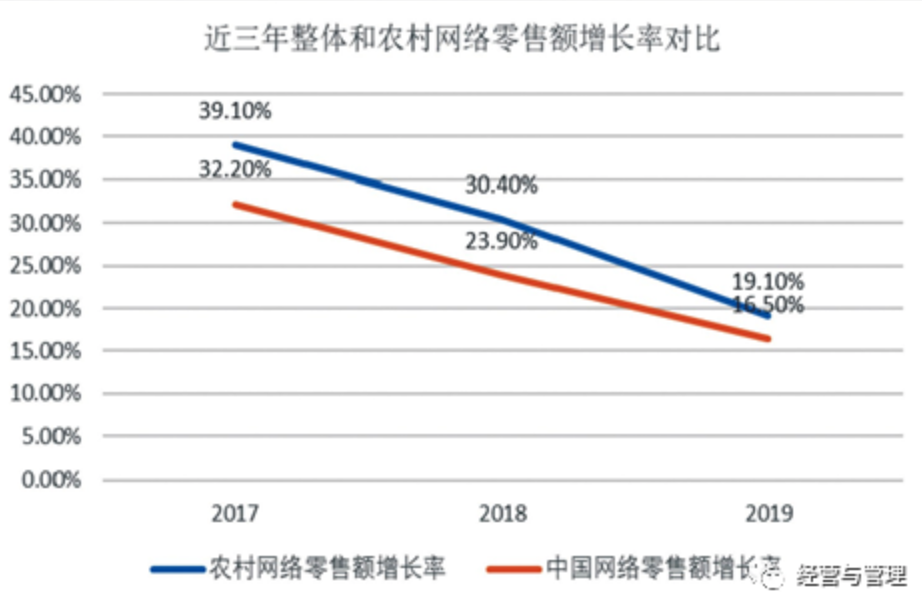
Figure 1 2017 - Retail sales growth comparison of our network and rural network in 2019
( Data source: " 2020 Sinking Market New Consumption Research Report " by Yibang Power Research Institute )
From the chart we can see 1 , in the three years 2017-2019 year, the overall growth of online retail downward trend , but our network of rural retail sales growth rate is higher than the national growth rate of overall retail sales network. The future growth opportunity of my country's online retail sales requires great attention to the development and consumption scenarios of rural online retail.
In 2020,Q2, the number of monthly active net increase in mobile Internet users in different city levels in China is shown in Figure 2:

Figure 2 The scale of monthly active net additions of mobile Internet users in different cities in China in Q2 2020
Note: The scale of monthly active net additions = the average MAU of the target user group from April to June 2020-the average MAU from April to June 2019
(Data source: QuestMobile "China Mobile Internet 2020 Semi-Annual Report")
According to Figure 2 the data found , leading the growth rate of China's retail sales network , thanks to the expansion of the sinking gauge the scale of the user market . Among them, from the perspective of cities , third- and fourth-tier cities are the main source of net increase in users.
(3) Characteristics of the sinking market
Sinking two characteristics of the market: First, the potential of sinking market size and growth of the large total of the following third-tier cities and rural areas, 1 billion people; second is the lack of quality of supply, not fully meet the needs of residents , sinking market There is still a big gap in the supply of goods and services compared with first- and second-tier cities .
Third, Tongcheng Yilong's sinking market development status
According to Tongcheng Yilong’s financial report for the third quarter of 2020, Tongcheng Yilong’s total transaction volume in the quarter was 39.7 billion yuan, achieving total revenue of 1.915 billion yuan, and total revenue increased by 59.5% from the previous quarter . Under the influence of the epidemic, Tongcheng Yilong achieved three consecutive quarters of profit .
An important factor for Tongcheng Yilong to achieve business growth in the third quarter of 2020 is its strategic layout in the sinking market in China. As of 30 September 2020 , registered users with Cheng Yi Long living in first-tier cities in China's non-registered users of the total 86.1%. The third quarter payment with Cheng Yi Long added on the micro-channel platform users about 67.2% from the domestic third-tier cities and less , and 63.3% compared to the same period in 2019 increased by 3.9%. At the transaction level, in the third quarter of 2020, Tongcheng Yilong's operation and development in low-tier cities will see a year-on-year increase of nearly 30% in hotel room nights.
Tongcheng Yilong leads the full recovery of the tourism industry , and through continuous innovation and improvement of its own technology and services , it provides consumers and users in the sinking market with a simpler and happier travel consumption experience.
4. Planning suggestions for the development of banking institutions in the sinking market travel scenario
(1) Establish an ecosystem based on "mobile banking + travel" scenarios
As soon as possible, establish an ecosystem based on the “mobile banking + travel” scenario to increase the activity and utilization rate of mobile client users of banking institutions. Banking institutions should actively embrace the digital technology capabilities of the Internet, deeply integrate the beneficial resources of their partners, and become the creators of the ecosystem. Banking institutions conform to the development trend of scenarios, seek new development opportunities through innovative cooperation with enterprises, and create a new type of cooperation and win-win financial ecosystem .
Banking institutions in the mobile banking client in, you can increase the same way eLong's travel scene goods and services, such as hotel reservation, air ticket booking, ticket, book bus tickets, etc. , both rich mobile banking itself the scene of goods and services , but also can make use of the same Cheng Yilong's strategic goal of sinking the market has created more market growth space and development opportunities for bank business operations. Mobile banking and cooperation with Cheng Yi Long product value model , shown in Figure 3:

Figure 3 The value model of product cooperation between mobile banking and Tongcheng Yilong
At the same time, the third-party payment platform is a market-oriented enterprise , and a large number of users' capital transactions and fund deposits are collected by the third-party payment platform , which may bring great risks and hidden dangers to the stability of the national financial system. But in the future to promote the use of digital currency, but they can solve the security problems caused by third-party payment platform , digital RMB applications for banking institutions in the field of payment and settlement also brings significant new opportunities.
( 2) Based on mobile banking and WeChat payment capabilities , jointly design and promote new products such as travel co-branded credit cards
With mobile banking and micro-travel scene letter ability to pay, jointly design and promote travel scene joint credit cards and other new products, establish long term of business objectives . When both mobile banking and WeChat payment are connected to travel products and services, users can increase their choice of payment consumption scenarios . Mobile banking also has a payment function . Users can use mobile banking to realize diversified services such as hotel booking, air ticket booking, balance checking, and transfer according to their own preferences.
According to business cooperation, a joint card marketing cooperation model in the mobile banking and WeChat payment scenarios is constructed, as shown in Figure 4:

Figure 4 Co-branded card marketing cooperation model in mobile banking and WeChat payment scenarios
Taking hotel reservation service cooperation as an example, banking institutions and Tongcheng Yilong can jointly design travel scenarios co-branded credit card products in two ways . The Mobile Banking entrance (micro-channel pay entrance) and hotel reservation service scenarios are summarized in the scene layer and function of ecological services layer , also unified service layer called the user's needs.
The mobile banking payments can force (micro-channel ability to pay) and co-branded cards offer pay equity into the marketing operations layer, it can be collectively called the user's payment consumer level. When the demand service layer improves user demand is triggered , the convenience of the hotel reservation portal is beneficial to the full satisfaction of users' multi-scenario demand plan , and the payment consumer layer uses joint marketing activities to enhance users' desire for consumption and lower the threshold of user consumption.
(3) A joint promotion model that transforms from "coming in" to "going out"
Relying on the branch layout ability of banking institutions and the technological innovation ability of Tongcheng Yilong, the form of customer "walking in" is adjusted to the joint marketing model of customer manager " going out " to deeply tap the consumption potential of China's sinking market.
The outlets of banking institutions are the "most expensive" channel resources of banks . Therefore , various banking institutions are also striving to seek business transformation opportunities for traditional outlets and quickly find new competitive advantages for their own development . However, the branch resources of banking institutions are irreplaceable in three aspects: one is that services such as audit nature need to be handled at the branch of the banking institution; the other is that compared with online services, the branch of banking institution can improve customer service experience. It is more deeply rooted in the hearts of the people; thirdly, the branches of banking institutions have the role of image display , which can establish bank brand information, convey brand ideas and values, and fully win the trust and satisfaction of customers.
It has a strong ability to develop the economy and user consumption potential, based at sinking the perspective of banking institutions can own network layout capabilities and team resources under line of external business cooperation and opening up , by means of scientific and technological innovation with the way eLong product enabling and development by the public Welcome new products. Outlets of the bank account manager can "go out" promotion strategy , for consumers and businesses within the network coverage to provide a wide range of goods and services, to enhance the breadth and depth of banking institutions customer service , increase user of banking institutions and with the way eLong Common brand recognition.
In order to reflect the value of marketing and banking institutions with Cheng Yi Long sinking market-based cooperation, design marketing scene with banking institutions grew Union model, as shown in 5:

Figure 5 Market growth model of banking institutions and Tongcheng Yilong marketing alliance
The "going out" marketing alliance is essentially a process of division of labor and cooperation between the two parties, through customer service and product value to obtain opportunities for sinking market growth, and the ultimate goal is to achieve a win-win alliance and cooperation . Only by deepening the value of the cooperation goals , can the cooperation energy of the marketing alliance be better utilized.
V. Conclusion
Sinking market has a huge potential for economic growth, both for the development of banking institutions , or to operate the same way in terms of eLong , should seize the opportunities and challenges of sinking market development. Through various forms of in-depth cooperation , we will continue to provide customers with high-quality products and services, combined with the country's expansion of domestic demand to drive economic growth , open up new markets together , and finely manage shared customers , so as to achieve a win-win situation for both parties. The goal.
The value of the highly collaborative innovation cooperation between banking institutions and Tong Cheng Yilong can provide a strong innovation driving capability for the economic recovery of the tourism industry, become a model of cross-industry cooperation , and ultimately aim to achieve high-quality economic development in China.
NURSING AWARD PUTS UTA ‘AMONG THE BEST IN THE COUNTRY’
ELIZABETH COUCH

The National League for Nursing (NLN) has named The University of Texas at Arlington as a Center of Excellence for the University’s sustained efforts to advance the science of nursing education.
It is the fourth time in recent years that UTA’s College of Nursing and Health Innovation (CONHI) has received a Center of Excellence designation from the NLN. Comprising 40,000 nurse educators and 1,200 member institutions, it is considered the premier organization for nurse faculty and leaders in nursing education.
CONHI is the No. 1 producer of baccalaureate-degreed nurses in Texas and a leader in addressing state and nationwide shortages of registered nurses. The college practices innovative health care research with internationally renowned faculty members specializing in cardiovascular conditions, aging, esophageal cancer, osteoporosis, bone disease, patient safety, health disparities and more.
UTA Interim President Teik C. Lim said CONHI’s continued commitment to innovation and its array of accessible programs has made it the premier nursing program in Texas.
“This prestigious recognition reinforces UTA’s position as one of the finest academic centers for nurses in the nation,” Lim said. “Through innovative and accessible degree programs that attract thousands of the brightest nursing students from Texas and beyond, UTA’s College of Nursing and Health Innovation has become an established leader in the critical field of educating, training and improving our nation’s nursing workforce.”
UTA becomes one of just a small number of universities nationwide to earn the Center of Excellence designation across all three NLN categories for nursing education: Advancing the Science of Nursing Education; Enhancing Student Learning and Professional Development; and Promoting Pedagogical Expertise of Faculty.
“This latest NLN designation highlights our commitment to conducting nursing education- related scholarship and research to generate the new knowledge needed to continually advance excellence in nursing education,” said Elizabeth Merwin, CONHI dean. “These designations are evidence of our college’s investment in training the future of our profession. We are thankful for our faculty and staff, who work tirelessly to ensure our college provides a world-class learning environment for all of our students while being a leading center for nursing education instruction and research as well as health care research.”
Megan Rogers, associate chair for undergraduate nursing, said the pandemic has demonstrated that advancing the science of nursing education is crucial to producing a qualified workforce for a field with ever-growing demand. “This designation puts us among the best in the country,” Rogers said. “It is a testament to the University’s investment in our faculty and to our core belief that you can know nursing, but you must also know how to teach to achieve the student outcomes we need.”
Kathryn Daniel, associate dean for academic affairs in nursing, pointed out that NLN designations require peer review from a variety of nursing leaders, making them especially significant.
“Nursing leaders across the country recognize that UTA performs at the highest possible level in terms of educating future nurses and future nursing leaders,” Daniel said. “UTA’s diversity in faculty, who bring their experience in a multitude of settings and roles within nursing, bolsters our place as a leader in nursing education.
“Employers who hire our student graduates can vouch for them. I would encourage future students to ask employers from where they want graduates. I can almost guarantee you they’ll say UTA.”
Data Science in Marketing: A Comprehensive Guide

Most marketing teams are leaving a lot of money on the table. According to Sitecore, the average US brand collects eight pieces of data per user, ranging from address to behavioral insights. Brands are collecting an extensive amount of data at various stages of the customer journey. Data science helps us leverage this data into actionable insight that results in a greater return on investment.
Data science methods like machine learning, clustering, and regression have moved marketing from a creative domain to a scientific one. By leveraging data science, marketing teams can extend their top-funnel approach to incorporate the full-funnel and uncover product and customer insights at scale in an unprecedented way. To do this, growth marketers should understand what data scientists can and cannot do as well as some of the methods and how marketing teams use data scientists.
What Data Science Is and Is Not?
There is a lot of confusion about what a data scientist does and does not do. Specifically, people often interchange the terms of data science and data analytics. The easiest way to differentiate between the two is that a data scientist looks to predict the future, while a data analyst looks to summarize the past. Data scientists make predictive models using regression, machine learning, and other advanced statistical methods, while a data analyst uses descriptive statistics to analyze past patterns.
A data scientist is not a software engineer. Their programming ability is enough to run machine learning and statistical analyses they need using platforms like R, Python, and SAS, but not to develop software or manage infrastructure like an engineer would. Data science is the intersection between business expertise, programming, and statistics, where programming is simply a medium to derive insights using statistics and business or domain expertise.
The data scientist toolbox uses artificial intelligence and mathematical modeling to unlock a new set of insights. A marketing data scientist can answer questions such as: Who are your most promising customers? What choice alternatives do consumers of your product have? How do people feel about your brand? What other products do your customers want to buy? By leveraging the data scientist, a marketing team can eliminate waste and target customers in ways that are cost-effective and personalized.
Understanding Data Science Workflow
Understanding the data science workflow will allow your marketing team to communicate with the data scientist effectively. After you have defined your task and gotten access to your data, the data scientist will perform some exploratory data analysis to get an idea of the right model to find the insight we are looking for. This could mean testing models on historical data sets and measuring its accuracy or a variety of other methods to create a benchmark against which to measure the success of whatever model we pick. After the model is chosen, the data is formatted in a workable way. This could involve figuring out how to deal with missing values, duplicates, or other variables that make the model harder to apply. The model is then run on a partition of the data in order to train it. The method chosen will mold itself to the data and then will allow you to apply the model to any dataset with the same parameters. Finally comes fine-tuning the model. This means the model isn’t overfitted to the data and that it runs as it is supposed to.
Examples and Use Cases of Data Science Applications in Marketing
Let us take a look at a scenario that most marketing professionals are deeply familiar with. A company is spending a small fortune on marketing, and the ads are getting a lot of visibility, but the return on investment is nowhere near expectations. Enter the data scientist. Through data collected on the website and social media pages, the data scientist can understand the customer base’s demographics. This understanding goes beyond age, geographic location, and gender of yesteryear. A simple affinity analysis (also known as a market basket analysis), wherein we analyze certain consumer behaviors’ co-occurrence, will give you details about what else this customer is likely to shop for.
Below is a visual depiction of an affinity analysis for grocery items. Using an affinity analysis, a marketer can see patterns like people who buy male cosmetics are also likely to buy bottled water.
While the market basket analysis has been employed for years by retailers, in the new age, it gives you insights beyond people who buy almond butter are also likely to buy bread. It might give you a less intuitive, but equally actionable insight such as foodies are also likely to be home décor enthusiasts and are likely to watch, “Yoga with Adriene,” on YouTube (affinities produced with the Think with Google toolbox). This allows you to market in new places where your client base is present, while still exposing you to a new audience, increasing your visibility without breaking the bank on marketing material.
Data Scientists Seek to Optimize Every Chance They Get
In data science and growth marketing, the name of the game is optimization. A growth marketer is aware that business success is, in large part, driven by profitable revenue. Tying a business’s marketing strategy to key performance indicators like customer lifetime value, incrementality, and cost per customer acquisition is absolutely necessary for a competitive business landscape. Businesses simply cannot afford to spend on marketing that does not contribute to their bottom line. A favorite tool of every data scientist and one that is absolutely necessary to the modern-day marketer to help with this is segmentation.
Some Key Benefits of Segmentation
Helps determine market opportunities
Tailor-made marketing initiatives
Product development and design insights
Pricing model insights
We can define segmentation as grouping or clustering of customers into groups based on different characteristics. Every marketer knows that different audiences respond to different narratives. This is where our data science toolkit comes in. Clustering customer segments together when you only have a few input variables is easy. However, the task becomes much more challenging as the number of variables grows. Data scientists use a machine learning method called clustering to figure out where the segments really are.
How Does Clustering Work?
Clustering algorithms are unsupervised, meaning the algorithm figures out what variables are similar to each other without input from the user. These clustering algorithms strive for the most mutually exclusive, collectively exhaustive segments. When employed correctly, this approach optimizes clusters in the most efficient way possible. It does not segment where segments are not needed and does not miss segments necessary for a targeted campaign. Not only are points within clusters similar to each other, the clusters themselves are dissimilar, meaning marketers can then tailor that each segment will respond to, rather than a generic campaign with low ROI.
If we look at the graph below, we see that the clustering algorithm groups the raw data into three separate clusters optimized for minimum distance between points and maximum distance between clusters. This particular algorithm works by cycling through a series of cluster centers and finding which one is most mutually exclusive, collectively exhaustive.
Full Funnel Optimization Leveraging AI
Machine learning and artificial intelligence are how marketing reaches the full funnel. Marketing campaigns have traditionally focused on awareness, acquisition, and activation. Through the use of data science, the growth marketer gets all the way down to retention, revenue, and referral. A business can forecast the customer lifetime value of new customers through the use of several machine learning and artificial intelligence methodologies. Rather than just focusing on a first sale, growth marketers employ data science insights to help companies to target longer customer relationships.
Data science allows you to understand the customer journey in a much deeper way than previously possible. Where do your best customers come from? Data scientists give you the insights to curate your marketing strategy to the customer that makes the most sense for you. Suddenly, your marketing team is directly impacting your revenue growth. Machine learning can predict churn rates, helping you develop a strategy to target customers who are not as engaged with the brand as you would like them to be. Your marketing team is now working on retention. This works all the way down to referrals. Artificial intelligence can help you determine which customers are influencers for your brand through qualitative analyses on the quality of content, brand affinity, and brand engagement. You can then target them to make their referral process simpler and more effective.
The insights artificial intelligence give you are seemingly endless. Marketers and data scientists alike know that at the end of the day, data is really about understanding people. In the age of social media, businesses have access to unfiltered, unbiased, real-time commentary from their customer base and people exposed to their brand. In the past, companies would spend a small fortune to hire a research firm to survey how people feel towards a product or campaign. In the 21st century, the data scientist is your research firm.
A simple sentiment analysis will give you an idea of how the public feels about your product. This information is invaluable. Sentiment analysis works by associating words with sentiments and then mining sources for text to measure the overall themes in the text. Most commonly for marketing, this is done through polarity, meaning words are assigned a value of positive, negative, or neutral. Finally, the outcome of the analysis is measured, giving the marketer feedback on how people responded to an ad. Here is a graphicby Irena Spasic, a data mining professor at Cardiff University, outlining components and expertise required for sentiment analysis.
This process is completely automated through the power of machine learning. Growth marketing bridges the gap between data and society. By understanding the power of data and its insights, growth marketers can make sure their campaigns speak to the society they live in.
Insights and Experimentation
Equally important as predicting these segments is understanding “why.” Data scientists look for causal relationships that growth marketers can then reverse engineer into an effective campaign. For example, let us hypothesize that clicks and conversion rate are positively correlated. The data scientist can test if that is true with a regression analysis, then the growth marketer, in partnership with the data scientist, can come up with experiments to test which campaigns produce more clicks, therefore a higher conversion rate.
The growth marketer is not just a creative, but a scientist, whose process involves constant experimentation.
An effective marketing strategy must always attempt to be ahead of the curve. This requires some level of risk, but with our data science toolkit, that risk is minimized. In the business world, we often get caught up in the “best practice,” rhetoric, when in reality, every business we have seen scale has done so by taking risks. The best practices of sixty years ago were risks at the time. Progression happens through experimentation, and data science equips you to perform a large volume of micro-experiments that together give you immense insight without making drastic or sudden changes, thereby mitigating the risk inherently present when trying something new.
The growth marketer can communicate the pain points of a business, while simultaneously understanding the public sentiment and developing a marketing strategy around that.
An oft-told adage in the data science world is that data scientists are storytellers. The insights derived from the data science toolkit are not just numbers. They help tell your business a narrative. What are our customers feeling? Where are we doing well? Where are we struggling? Data science in marketing is about answering these questions in a more efficient and cost-effective way. Similarly, marketers understand the importance of the narrative. Studies show that a consumer is much more likely to remember an ad when there is a narrative attached to it. The most effective advertisements are told as a story. The growth marketer is the 21st-century hybrid—a master of data and storytelling both to the business and the public. The growth marketer can communicate the pain points of a company, while simultaneously understanding the public sentiment and developing a marketing strategy around that.
Should You Hire a Data Scientist?
So, as a marketing executive, where should you start? It is just as important to recognize where your company is not ready to employ artificial intelligence as it is to recognize where it is necessary. Someone considering hiring a data scientist should be asking themselves questions like do I have enough data? Is that data sourced in a way a data scientist can access? An early-stage startup may not have the infrastructure or volume of data to necessitate hiring a data scientist. A large enterprise may need to consider its data pipelines before it can consider hiring one. Understanding what a data scientist can and cannot do is essential in deciding whether one is right for your team.
Maybe your company has some need for data science tools but has not employed them before. As is in marketing, when thinking about where to integrate data science and growth marketing tools into your marketing strategy, it is often best to capitalize on the low hanging fruit first. Certain tools and methods are easy to implement using data your company is already likely to have. For example, your company has likely already done demographic research and has the raw data somewhere. Clustering is a natural next step from there. Similarly, most businesses that are past the startup stage have the data to do at least some churn rate prediction, and from there, they can take steps to minimize it. Once your business has a big enough pool of data, you can venture into natural language processing and sentiment analysis to understand how consumers feel towards your product.
If you think you’re team could benefit from some advanced data analysis but not enough to hire a full-time employee we would love to talk about your needs to see if a NoGood squad acting as an extension of your teamcould solve your problems.
Three Examples of How Some Leading Brands Incorporate Data Science Into Their Marketing Mix
Netflix
At Netflix, they have a team of data scientists devoted to driving the messaging of their marketing campaigns. The growth data science team at Netflix measures the effectiveness of marketing and messaging through a causal approach, specifically incrementality. The Netflix model employs experimentation to understand how their audience is responding to notifications sent out for new content. At Netflix, the data scientist becomes both an engineer and a strategist. The data science team is responsible for driving the innovation roadmaps to improve experimentation and modeling techniques. This means that the data scientist decides what questions to ask to get to know the audience and work with business stakeholders to shape the strategy. A similar model is being employed by most companies running large marketing campaigns, including Facebook and Google.
Facebook has a marketing science team that consults across a variety of insights to give insights on understanding the impact and effectiveness of their client’s marketing campaigns. The goal of the team is to quantify, measure, and create strategies that effectively target consumers. The Facebook model is built on research and empirical methods and provides services such as Ads Research, Client Measurement, Consumer and Advertising Insights, and Auction and Delivery, everything from marketing strategy to programmatic buying.
The marketing data scientist at Google develops, optimizes, and implements actionable quantitative models for advertiser and publisher customers to drive marketing effectiveness and return on investment for Google’s clients. Google’s marketing data science team aims to improve data savvy to its clients by helping them interpret insights. Additionally, Google helps clients develop and implement new processes to optimize marketing efficiency and return on investment.
Optimization and Scale
The future is growth. Growth marketing is not just marketing for startups or scaleups; growth marketing is about optimizing your progression as a business. For a large enterprise, that might mean developing a new product to maintain your position. For a startup, it might mean driving conversion rates on your company’s website. Companies like Google, Facebook, and Netflix have created a new position in their marketing departments called the growth data scientist to find the insights while the growth marketer applies them. As the business landscape becomes more and more competitive, the growth marketer’s skillset, combining data literacy and marketing know-how, is essential to finding that path of least resistance to acquiring new customers and growing your business sustainably.
Practical Applications of Data Science in Marketing:
So what do we do with all of this insight? The answer is optimize. Here are a few practical applications that data science can help marketers trim the fat on their campaigns and better understand and target their customers:
Channel Optimization
By taking a look at where your greatest conversions are, you can choose what channels to use to bring your product to market. Data science can help you automate this process and make sure you are always getting the greatest possible ROI.
Customer Persona Development
Marketing and data science both take common approaches in their strategies, making assumptions, then validating or invalidating them. Data science can help you test the research and assumptions you make to develop who your customers are and then pivot if need be. Once you have a solid understanding of who your true customer persona is, the data will show you deeper insights about what channels they prefer and what content they are likely to respond to, hence further increasing marketing efficiency.
Lead Targeting and Lead Scoring
Seasoned marketers know that a business or product does not have just one customer persona, but several. The problem often arises that businesses are not sure which one will provide the greatest ROI. Data science allows you to track which customers have the greatest lifetime value (LTV) and then create a model to rank and target leads by LTV or any other KPI that makes sense for your business.
Sentiment Analysis
Sentiment analysis is a marketer’s natural best friend. Any marketer knows that the most important trait a marketer should possess is empathy. Sentiment analysis allows you to collect data at scale to help you empathize with the customer. It allows you to monitor their reactions and beliefs towards the information they receive and gives you feedback on content and how people are engaging with your campaign.
Product Development and Pricing Strategy
Data science will help you match the right product with your customer. By looking at insights given to you by customer persona data you can perform various clustering analyses to see what else they are likely to buy and what price they are likely to buy it at. These insights let you know exactly what your customer is looking for both from your current collection and give you data to develop new products they might be interested in.
Real-Time Data Insights
Data science also gives you the power to communicate with your customers quickly based on real-time data. For example, a marketer may want to target customers who have delayed flights. Data science allows you to find customers who fit the mold and market to them immediately. This helps marketers improve their customers’ experience by further personalizing content.
Beyond COVID-19 Digital Trends Market Report
Four months since the World Health Organization declared COVID-19 a worldwide pandemic, the world is slowly reopening after an unprecedented lockdown. The consumer market is changing, with declines in some...

Four months since the World Health Organization declared COVID-19 a worldwide pandemic, the world is slowly reopening after an unprecedented lockdown.
The consumer market is changing, with declines in some traditionally strong markets and drastic increases in others. A survey run by Statista highlights that 43% of people are likely to spend more than before on health and hygiene, followed by 40% in household cleaning products and 31% in online shopping for food and drinks. These changes extend into industries including travel, healthcare, fashion, and retail among others.
eCommerce vs Traditional Retail Trends
Over 40% of digital grocery shoppers during the lockdown were new to online grocery shopping prior to the pandemic, according to a Business Insider report. According to emarketer.com, both “food and beverage” and “health, personal care and beauty” were the fastest-growing eCommerce categories prior to the pandemic. Forecast for food and beverage sales were raised from 23.4% to 58.5% and health, personal care and beauty sales from 16.6% to 32.4%. Of new grocery online-shoppers, 68% would continue to shop online in the future, according to another study run by Aki Technologies and TapResearch.
Strong consumer brands (like Nike), that stayed emotionally connected with their fan-base during the pandemic, have witnessed a lift in online sales. That trend isn’t expected to fade away.
As shoppers flocked to Nike’s website for sneakers and workout gear, digital sales soared 75%.
Nike in-store sales will surpass the online ones though, as the country reopens. The Nike in-person shopping experience is hard to top, even with the best e-commerce site.
“Digital” is now a necessity and consumer brands are investing in improved e-commerce sites as well as stellar customer service and impeccable delivery.
Delivery Services
Even if ordering food became the norm from mid March to mid May, the 75% jump was only temporary. With lockdowns being lifted and restaurants reopening, people are going back to dining outside.
According to Twitter data, there were 250.000 tweets about ordering delivery from March 9 to March 22 (there were 80,000 Tweets about pizza alone), almost a 300% increase from the previous month.
People showed their support for their favorite restaurants by ordering from them, and platforms like Instagram rolled out interactive “food order” and “gift card” story stickers with their own unique content aimed at driving awareness of the new ways in which people can support their favorite local restaurants.
Grocery shopping apps experienced an increase in downloads with Instacart leading the way with a 218% increase in app downloads.
The company reportedly added over 300,000 people to their workforce to face the increase in demand of March and April.
Only about 3% or 4% of grocery spending in the U.S. was online before the pandemic. That market share has surged to 10% to 15%, according to research by consulting firm Bain & Company.
Experts say that will likely remain at a higher level because many customers have downloaded apps, tried new services and discovered their convenience.
Searches for recipes reached a peak two weeks from the lockdown as people tried to normalize their stay-at-home routines. The lift is comparable to the ones normally seen at Thanksgiving and Christmas.
Food Retail
The grocery store experience has been slow to evolve over the last century. While many companies have attempted to automate and digitize their processes, the industry as a whole has been stagnant in that regard. After the large scale shutdowns during the pandemic, online grocery shopping rose in demand dramatically.
Instacart, a grocery delivery service, reports its orders increased by 150% since the shutdowns. Instacart app downloads increased by 218%. The increase in demand has caught many companies by surprise, with companies like Amazon and Instacart going on hiring sprees in order to fill the gap. Amazon hired 175,000 operations and delivery specialists, but simultaneously limited online grocery shopping signups until they can keep up with sudden demand. Kroger even turned one of its physical stores into a fulfillment center for online orders.
While initial demand for groceries overall increased, it is hard to tell whether this will sustain itself as the pandemic settles, however the move to digital in the grocery industry is more permanent, with many companies opting to restructure their businesses around online delivery. Bain & Company reports that online grocery spending has increased by up to 4-fold since the beginning of the pandemic and the trend seems to only be getting stronger.
Travel Industry
Travel was not only one of the hardest sectors hit by COVID-19, with the biggest hospitality companies cutting up to 40% of their workforce, but one of the industries hit the most by venture capital disinvestments. VC-backed deals in travel tech have declined by 400% compared to the same time period last year due to the pandemic.
The industry group Airlines for America reports that about 2,400 aircraft have been grounded (more than a third of the US fleet), with cancellations “far outpacing” new bookings, causing airlines to burn through $10bn a month. The passenger “load factors”, a measure of the planes’ utilization, has gone from 80% to just 11% during the first four months of 2020.
85% of international flights were cancelled and airlines are still flying semi-empty planes but while flight searches have not yet returned to pre-covid numbers, people are starting to look for holidays, hotels and vacation rentals again.
In a survey commissioned by Airbnb, nearly half of US respondents said that once the lockdown restrictions lift, they would prefer to stay within a day’s drive for their first trip.
Since February, the number of Airbnb trips made within 200 miles from home, a distance most travellers could drive in a day, has increased from 30% to over 50% of total bookings.
According to the search trends for local accommodation, travel in the United States seems to be In recovery.
From May 17 to June 6, 2020, Airbnb processed more bookings for US listings than during the same time period in 2019.
During that period, 55% of the nights booked for travel to listings in the US were with Superhosts, compared to just 45% during the same time period in 2019.
Globally, over the first weekend of June, Airbnb saw year-over-year growth in gross booking value for all reservations made around the world for the first time since February.
Fashion
The Boston Consulting Group predicts that the fashion industry will lose up to $600 billion in sales in 2020 as opposed to 2019 due to the coronavirus pandemic. As the global economy contracts, the fashion industry will take an especially hard hit as retailers are closed and most of the world has ordered some version of shelter-in-place restrictions. The contracting economy also means less money to spend on luxury goods such as name brand fashions.
This is not without precedent. During the Great Depression, the 1918 flu outbreak and the Second World War, fashion shifted from luxury to practicality and then recovered as each crisis subsided in a relatively consistent fashion. Most experts expect the same drop and recovery to happen once again.
Collaboration and Video Conferencing Software
Since the beginning of the pandemic, an estimated 34% of workers are working from home. Research firm Gartner reports that 74% of organizations plan on keeping some of their employees working remotely on a permanent basis.
Consulting firm Global Workplace Analytics, estimates that around 30 percent of the workforce will continue to work from home at least part time after the pandemic is over, compared to the low single digits before the pandemic.
As we shift to a new workplace setting, we see technology play a more important role now that knowledge workers have familiarized themselves with collaboration tools and understand the value they pose. Platforms Zoom and Slack will likely carry into day-to-day activities long after the pandemic is over.
Slack added 9,000 new subscriptions between February and March, and 80% increase over the preceding 6 months
Microsoft teams grew its active users by 70% in a single month
Google Meets exceeded 100 million users in April
Zoom announced 300 million users, up 100 million users in a single month.
The growth in the number of users and the movement towards more permanent work from home policies indicate that collaboration softwares and tools will continue to grow after the pandemic.
Healthcare
The pandemic has forced lawmakers to allow telehealth accommodations that were previously only available to areas with restricted access to in person healthcare. Adoption now, due to pandemic-related democratization is at an all time high. Experts say that the pandemic has advanced the telehealth revolution by a decade or more with 42% of American adults having used telehealth services since the beginning of the pandemic, according to The Harris Poll.
Policy makers are now pushing to reform the healthcare industry to allow for more telehealth accommodations after the pandemic is over. Telehealth will serve as the new doctor’s office with physical visits being reserved only for procedures and hospitals for more urgent or invasive matters, such as responding to a pandemic or surgeries. Additionally, as the pandemic has hit manufacturing centers such as China hard, there has been a move to diversify drug manufacturing supply chains to avoid shortages caused by border closings or other global trade complications according to officials at the Food and Drug administration. This also means a return to local drug manufacturing, with many pharmaceutical companies looking to establish local factories to be able to quickly replenish supplies as the pandemic continues.
The Impact of 2020 Election Year on Paid Media and Performance Marketing
According to an estimate from the Center for Responsive Politics, new political election spending projections for 2020 will now hit $10.8 billion – 50% higher than the 2016 presidential election....

According to an estimate from the Center for Responsive Politics, new political election spending projections for 2020 will now hit $10.8 billion – 50% higher than the 2016 presidential election. According to the group, the 50% increase over the $6.5 billion total in 2016 would be another political advertising election record.
Google alone has seen $620,249,000 in total political ad spend since May 2018, as shown in its transparency report.
According to Wesleyan Media Project (in conjunction with the Center for Responsive Politics), since mid-April, the Biden campaign has spent $101.8 million across Facebook and Google, while the Trump campaign has spent $135.2 million. So far, a cumulative $2.19 billion has been spent during the 2020 cycle.
Political campaigns are relying on digital ads in 2020 far more than they ever have before. As a result, many advertisers are seeing a rise in CPMs and CPAs over the past few months due to the increased competition.
Here are a few tips by our performance marketing experts to help you navigate and weather the election time:
Review your CPM and CPA by states. You may want to pause ads in swing states that typically see heavy ad spend before and during elections. In 2020 the primary swing states are Arizona, Florida, Michigan, North Carolina, Pennsylvania, and Wisconsin. We can see disproportionate spending on these states on Google’s transparency report.
Focus on your high-value audiences. The broader your audience is, the more likely you will be competing for users’ news feed inventories come election time. Identify which audiences yield the most significant return and cut the excess during election time. For example, if your campaigns rely heavily on prospecting audiences, consider doubling down on high-value audiences such as retargeting or any other first-party customer lists. Consider layering on audience targeting to refine your audience size.
Double down on email or SMS. Instead of paying more to reach the same audience, keep your current customers and leads engaged with a robust email strategy with tailored content. Email and SMS can be a great way to reach your audience with more personalized messaging, and it has a better chance of being noticed in their inbox or phones versus their crowded social news feeds.
Get creative with ad creative! An excellent creative always wins attention and performs, political or not. A good creative that drives engagement will decrease your CPM and CPA, which will help make up for the increased costs from the influx of political campaign money into the ad auctions. Review your creative library, make sure to run your winning creative, and continue to experiment with new creatives to get to a CPM and CPA that makes sense for your business.
Having a diversified performance strategy is key to weathering an election year’s impact on your ad buying economics. Consider moving budget to platforms that don’t allow political ads during this time of year. Here is a breakdown of ad platforms and their stance on political ads.
Complete Guide to Performance Marketing for eCommerce in 2021
Let’s face the facts, marketing in the DTC and eCommerce space is difficult. Ads are getting more and more expensive. Customer acquisition costs are rising and the unit economics are...

Let’s face the facts, marketing in the DTC and eCommerce space is difficult. Ads are getting more and more expensive. Customer acquisition costs are rising and the unit economics are not looking so good.
Simply put, managing all this can give even the most experienced marketers headaches. With so many choices, brands and companies fighting to get noticed, the question is:
What can I do in 2021 to grow my eCommerce business? Performance Marketing might just be the answer!
Nowadays we track and optimize everything from our steps and calorie intake to our sleep patterns and location. So it only makes sense that you are tracking and optimizing marketing results for your eCommerce business. Performance marketing will leverage tactics to understand the how, when, why, and where for all of your marketing efforts.
In this complete guide to performance marketing for eCommerce, you’ll learn all the steps you need to launch your own effective performance marketing strategy. If this is your first introduction to performance marketing, you are in for a treat!
Please reference our marketing glossary as often as you need.
You can skip ahead using any of the links below.
What is performance marketing?
What is performance marketing for eCommerce?
Step 1: Make sure your site is ready
Step 2: Set real goals and stick to them
Step 3: Define your target customer
Step 4: Define your value props
Step 5: Find the right channels for your target customer
Step 6: Find the right channels for your budget
Step 7: Write ad copy that converts
Step 8: Optimize
Ready to kick off performance marketing for your eCommerce business?
Performance Marketing Glossary
What is Performance Marketing?
To put it simply, performance marketing is digital advertising that can be clearly measured and evaluated in real-time. This means leveraging channels like Google Ads, Facebook, Instagram, and others to create trackable marketing that allows you to make effective decisions based on concrete data gathered from your actual market.
Performance marketing at its core is made of 2 parts: acquisition and optimization. Keep reading and we’ll tell you how to effectively use both.
“What gets measured, gets improved.” – Peter Drucker
What is Performance Marketing for eCommerce?
Performance marketing for eCommerce is using strategic digital advertising tactics to drive online sales. It is especially critical to use performance marketing strategies because the customer is already online. This means that the barrier to get them to click over to your site is greatly decreased.
You can then leverage the data to determine where and when your customers are hanging out online and how to effectively reach them. For example, if your eCommerce business sells basketballs and you know that your target customer is in their 20’s, lives in the US, is a frequent online shopper, and is part of a basketball league – you could set up Facebook ads to target them specifically. From this, you can determine other attributes shared by customers who purchase and then optimize your ads to get even closer to the people you know will convert to customers.
A DNVB (digitally native vertical brand) cannot go without this type of performance marketing because they sell online. Their customers are online, their brand is online, and their marketing should be as well. Just look at the most popular sites in the US based on a study done by Statista. The clear winners are Google and Facebook. If the majority of people in the US are on these sites, chances are your customers are too.
Most popular websites in the US as of Feb 2016
What makes performance marketing different than other types of marketing?
The ability to pay per action and only for results is what sets performance marketing apart from other more traditional advertising channels. You can take out an ad in a newspaper and assume that you will reach everyone in their audience, but you will never know for certain. Some companies have attempted to make up for the lack of measurement tools by including a unique coupon code in their ads. You may get close to knowing how many coupon codes were used, but you will never get the same finite data that you would from the calculated approach of performance marketing.
Knowing exactly where your marketing dollars are going and what ROAS (return on ad spend) they are driving is expected by most advertisers and it should be by you as well.
Our tried and true approach
Below you’ll learn the exact steps we take when we start mapping out a performance marketing strategy. Follow the steps as closely as you can and you will be able to create your very own effective performance marketing plan.
Step 1: Making Sure Your Site Is Ready
You can drive all the traffic in the world to your site, but if you don’t have a clear buy button how do you expect to make any sales? Before allocating your budget to the performance marketing tactics we’re about to share; spend some time cleaning up your site.
Is your checkout easy to navigate? Is every call to action clear and accessible? Also, consider what will happen post-purchase. Do you have an email drip campaign set up to follow up with email subscribers, cart-abandoners, or buyers?
Ensuring your site is prepared to handle all the conversions send to it is the first step in setting yourself up for performance marketing success.
Step 2: Set Real Goals and Stick To Them
Performance marketing for eCommerce is extremely methodical. The first step is to create a plan and to set clear goals. The most obvious goal is sales, but other types of goals include email sign-ups, LTV (life-time value), avg. session duration, clicks, or app downloads.
Often people will start their marketing strategy by creating Instagram posts or sponsoring email newsletters. Try not to be distracted by these types of things. While they can definitely be helpful, they are not performance marketing tactics that will drive measurable growth quickly.
Step 3: Define Your Target Customer
Who is most likely to complete the action you set out in your goals above? This doesn’t have to be just one person, define different target personas for people who you believe will convert. Staying with our basketball example, personas may include parents who have kids that play basketball, basketball enthusiasts, and even coaches or schools who represent basketball programs.
The goal here is to set defined personas. It would be ideal to use your current customer base to create these personas but the more information you have from the start the better. If you don’t, conduct research and do the best you can. The best part about performance marketing is that you can continuously optimize.
Step 4: Define Your Value Propositions
Why should someone buy basketballs from you specifically? How are your basketballs going to improve their lives? It’s really important to get this message across to customers. Don’t just tell your customers that your product is the best, let them know how it is going to solve a problem and improve their lives in some way.
A basketball is great, but a basketball that inspires your teenage son to hang out with his dad on a Friday night is better. List some of these defined value props and save them. You can use them as inspiration for your advertisements later.
Step 5: Find The Right Channels For Your Target Customer
Look back at the customer personas you created earlier. Do you have a persona that spends their time on Snapchat? Are you trying to reach a professional crowd who scrolls through LinkedIn? The most important part of performance marketing is meeting your audience where they already are! Think about this and research what kind of people are hanging out on each channel, then you can choose the ones that align with your ideal audience.
To determine what channels you want to start with, think about your product holistically. Assess your goals and pair personas with channels that make sense. Most people use Google and a lot of people are also on both Facebook and Instagram. These are some of the better channels to start with – not only are they the most popular, but they are able to drive conversions at the lowest CPC (cost per click) when compared to other channels.
Keep your goals and target audience in mind when choosing the right channels. Are you trying to drive sales but your eCommerce business is fairly new? Facebook and Instagram are designed to encourage discovery which means that these channels might be a good fit. Google, on the other hand, might be better for people searching for something specific. If your customers don’t know you exist yet and you sell a product that is widely available, this could be a tougher channel for you. However, if you sell a product that people search for, and your brand is new – you might find success with Google.
Each channel has its own positives and negatives, and you will need to determine which ones are right for your business. Some of the most popular performance marketing channels are Google Ads, Google Shopping, Facebook, Instagram, YouTube, Pinterest, LinkedIn, Snapchat, Reddit, and Twitter.
Here is a list of other channels that may suit your business:
ChannelWho should consider testing this channelGoogle Search AdsMost businesses, eCommerce DTC brandsGoogle Shopping AdsMost eCommerce companies selling a physical productInstagram AdsMost eCommerce companiesFacebook AdsMost eCommerce companiesReferralsAll eCommerce companies Ad Networks like Taboola or OutbrainMost eCommerce companies Pinterest AdseCommerce companies targeting women aged 20-45Snapchat AdseCommerce companies targeting people under the age of 30YouTube AdseCommerce companies selling physical products that are highly visual or would benefit from tutorials. Examples of this would be beauty, home goods or even building suppliesBing AdsCompanies targeting a slightly older and wealthier crowd who are frequently womenLinkedIn AdsB2B companies, recruiters, SaaS companies with big budgets. LinkedIn tends to be one of the most expensive channels on a CAC basisTwitter AdsUnless you have a specific reason for testing twitter, most eCommerce businesses should avoid testing itReddit AdsThis channel is designed for and attracts an extremely anti-ad crowd, so while you may read otherwise elsewhere we don’t recommend testing Reddit ads unless you have a very specific reason.Affiliate ProgramsMost eCommerce businessesSearch Engine Optimization (SEO)All eCommerce businesses
Step 6: Find The Right Channels For Your Budget
Not every customer is on every platform, and not every company has the required budget to excel on every channel. Determining the right channels for your business and allocating your budget effectively will be essential.
Start with your average customer acquisition cost or CAC. Once you determine how much it costs before a customer pays you, you have a better understanding of your budget. If you don’t know how to calculate this, check it out in our glossary. Not all channels cost the same and you will want to start with the lowest hanging fruit (lowest costing channel with the highest rate of conversions).
Step 7: Write Ad Copy That Converts
You don’t need to be Shakespeare to write ad copy that converts to sales. Take a look at this ad copy created by Zendesk:
They have a defined value prop and easy call to action. A customer’s mindset once reading ad copy such as this may be: “Do I want my customers to be more engaged, more satisfied, and more likely to buy what I’m selling? Yes! Does this mean I should try Zendesk chat? Maybe!”
Zendesk is also leveraging neuro-marketing through the arrangement of their colors and fonts. If you’re interested in learning more about this, watch our video Neuro-Marketing: Hacking Into Consumers Minds.
The most important thing to keep in mind when writing ad copy is defining how your customers will benefit. Don’t go on bragging about every single product feature. Potential customers want to know why they should care. As an example, it’s great that your new clothing line has a jacket with 10 pockets, but why should consumers care? In your ad copy, translate how this feature will create value for your audience. Write concise copy that provides the ultimate solution for customers.
An exercise that can help is to write all of the potential problems a customer might have if they shopped at a competitor and what effects this would cause. Try to write out as many as you can.
For example, if someone was shopping at a competing basketball eCommerce site, our list would look like this:
ProblemEffectSolutionIf shopping at competitor X, the basketball quality is poor.Basketball won’t last as long, causing them to replace it often and costing them more money. Our basketballs are designed to last up to 5 years. Less money spent, more baskets made.If shopping at competitor X, ship times are very long.Basketball won’t make it in time to play this weekend causing them to miss out on quality family time.Overnight shipping available so that when your kid finally has time for you, you won’t miss your chance to show him what’s up.
Step 8: Optimize and Improve
Your campaigns are launched, congrats! Now is when you take a good look at the data. Are the results meeting the goals and expectations you set at the beginning? Probably not. It is very unlikely that every part of your strategy will be successful. This is when performance marketing kicks into full gear.Through performance marketing tactics you can optimize and start to improve your results.
Determine which channels are performing the best, the worst, and understand why. Are doing things on certain channels that you could leverage in others? Take a look at your budget. Are you spending your budget appropriately? In some cases, you have done everything to improve and optimize a specific ad or campaign but it still fails to do well. In this case, leverage what works and continue to push channels that are effective. Shut down what doesn’t work, but make sure to learn from those failures so you can bring these learnings forward for any other strategy you may create in the future.
Another optimization strategy that often gets overlooked, is managing the days and times in which your ads are being served, or your ad schedule. In both Facebook and Google Ads, you can review what time and day your ads are converting the most. If you’re running your ads 24/7, you may be wasting your budget on clicks that have lower intent. Take a look at the times and days that work best, and then optimize to ensure your ads will show when you need them to.
As mentioned earlier, performance marketing in 2021 is all about measuring, learning, and optimizing.
Ready to kick off performance marketing for your eCommerce business?
You’ve made it to the end of this guide and now you’re ready to implement performance marketing tactics for your eCommerce business! I’m sure you realize the importance of performance marketing and how vital it is for your business. Old traditional marketing tactics simply won’t get you the results you want in 2021.
However, we understand that getting traction and implementing a performance marketing strategy is not easy. Perhaps your best course of action in the beginning is partnering with a great agency that can deliver immediate results for you. So if you are a small to medium-sized business generating at least $3M in annual revenue, consider reaching out to our team for a possible partnership.
Performance Marketing Glossary
The following are the top acronyms, definitions, and formulas you will need to know to run a successful performance marketing campaign for your eCommerce business.
CAC (customer acquisition cost) – This is the overall cost for you to get a new customer. This can be calculated by dividing the total amount spent on acquiring customers by the number of customers you acquired with that spend.
Example: If you spent $5000 acquiring new customers and from that you got 500 new customers, your CAC would be $10.
Channel – A specific platform you can reach customers.
Conversion – When a customer takes the desired action. A conversion can be a sale, email sign up, button click, etc.
CPC (cost-per-click) – The amount you pay for a click on your ad.
CTA (call to action) – A button or link that tells your customer where to take action on your site.
Customer Persona – A hypothesis of your customer; where they consume content, who they are, and ultimately how they are most likely to take action with your service or product.
eCommerce – electronic + commerce; refers to transactions conducted via the internet.
DNVB (digitally native vertical brand) – A brand born online, which sells and ships its own product.
Drip Campaign – A flow of emails set to deliver to a subscriber after they take a specific action on the site. For eCommerce, this may be after email sign-up, abandoned cart, or purchase.
DTC (direct to consumer) – A direct to consumer company manufactures and sells its own product without the need for a middleman. This is also known as a vertical retailer.
Impression – When your ad has the potential to be seen in front of a user. This is the least expensive action as it often doesn’t lead to a conversion but is often used to promote brand awareness.
LTV (lifetime value) – Can be the estimated profit, revenue, or value a business will achieve throughout the entire relationship with a customer.
Performance Marketing – Any type of marketing that has clear and measurable data such as sales, email sign-ups, pdf downloads, etc.
PPC (pay-per-click) – This is an ad model where you pay only when your ad is clicked on.
ROAS (return on ad spend) – Your return on investment, so to speak.
Example: If you spend $1000 on an ad and it converts to $6000 in sales – you have a 6x ROAS! ($6000/$1000 x 100= 600%)
Value Propositions – The value that is promised as a result of taking an action.
TikTok Advertising: The All-in-One 2021 Guide
From banana bread to Tiger King, 2020 has been a year filled with activities centered around being at home. We baked at home, shopped from home, and of course, worked...

From banana bread to Tiger King, 2020 has been a year filled with activities centered around being at home. We baked at home, shopped from home, and of course, worked from home. But one platform has managed to keep all of us on our toes and connected across the globe.
TikTok, since its 2016 launch, has found a way to be the next biggest thing in the world of social media, especially in 2020. In a tough year for many brands. TikTok not only prevailed but it also thrived—being named Ad Age’s No.1 Marketer of the Year. Not only are individuals using it for content creation- but it has sparked a new era of influencers, shopping, and even news updates. TikTok’s increasing growth has made it one of the rivals of Snapchat, Facebook, as well as the new social media for marketers to master. With over 2 billion downloads and 100 million active users in the U.S., the platform has continued to attract brands looking to reach younger audiences.
Similar to Facebook, Instagram, and Snapchat- brands, businesses, and individuals have the opportunity to use TikTok as a means of advertising their business. Companies across the globe have already begun to take these strides in 2020- finding unique ways to show their creative side, show off new collections, and even provide more transparency into their organization.If you’re looking for some help getting started on TikTok we’d love to talk about your goals and how we could help your brand grow!
This blog breaks down our top 10 favorite TikTok ads of 2020 and gives you a look into using TikTok advertising. After all, a new year means new ads!
Who is Using TikTok Advertising?
Although influencers like Charli D’Amelio and David Dobrik have taken the TikTok world by storm- companies from all industries have found ways of promoting their brands across the globe. From the newest collections at Paris fashion week to your local pop-up shops- TikTok advertising allows companies of every type an opportunity to show their products. Luxury industries like Burberry, Gucci, and YSL have showcased their luxury in addicting bite-sized bits for us to lust over.
The fast-food industry has taken speed and savings to a new level. Using TikTok advertising, companies like McDonald’s, Chipotle, and Wendys have found unique ways to connect with customers and turn up the cravings around new product launches. Tech companies have also found their way into TikTok advertisements. Apple’s iconic keynote featured a product release of a whole suite of their products- now a quick 30-second clip when you open the Tik Tok app.
We’ve seen a lot of brands and companies find unique ways of honing their voices and product lines during this year- but TikToks have just been the start:
How to Use Tik Tok Ad Manager
Check out these simple steps to get started with your TikTok business account:
Create your TikTok business account by going to TikTok Business Center. By clicking sign up in the top right-hand corner you can create up to three accounts in their respective time zones.
Add your users and members through email or send them a link using the feature labeled “Members”. They can have two access points: General Business account and Ad account access. Within these two layers come additional restrictions that can be customized to your team.
Manage your assets and Tik Tok Formats through the “Ad Account”. You will have to set-up a new Ad account and add your business account information. As a user, you may have to inform your administrator and have them approve your request.
Create your ads and start engaging your audiences! Once you’re all set, make sure to explore Tik Tok’s community and see how you can leverage various formats to support your growth!
What are the TikTok ad formats?
How exactly do you start advertising on TikTok and which is the best way to do so? TikTok offers a variety of ways to spread the word about your product, brand or service and have users engage with it. We’re breaking down all the ways you can start-
Brand Takeover- an ad is shown on the app launch screen. Prior to landing on your “For You” pages and starting your daily scroll, you’ll be greeted with a short and sweet ad. These will either be a 3-second static image or a 3-5 second video without audio. Given the format, these ads are best suited for awareness campaigns but advertisers should expect to pay premium prices for this spot especially since TikTok will only show one Brand Takeover Ad to a user each day.
TopView ads– The easiest way to think about TopView ads is just as a slightly delayed Brand Takeover Ad. They are 60-second videos designed to target your audience in the most effective way possible. These placements are guaranteed to be the first thing your user sees and will most likely interact with.
In-Feed Ad- similar to ads you’re familiar with on Facebook or Instagram, but they’re a part of your daily “For You” feed. This ad format can run up to 60 seconds of video with sound and blends seamlessly into your scrolling and exploring.
Branded Hashtag Challenge- The TikTok staple that has people trending and using products in more ways than ever. This format encourages user-generated content. Users actively participate in creating themed content that incorporates the branded hashtag. This content is then compiled in a hashtag challenge page and can be viewed by others. This feedback loop has been a great way to create community and build an average engagement rate of 8.5% for this ad format. Tik Tok will even help get you started if you’re interested in launching one for your brand.
Branded Effect- Similar to Instagram filters and Snapchat lenses these visual stickers, filters, and special effects are created for users to engage and use them on their own feed. Branded effects are accessible on the first page of the effects panel for three days at a time and available to search even beyond that time frame.
The wide variety of ad formats allows your brand great creative flexibility and room for experimentation. Other brands have already created powerful and engaging TikTok ads that have significantly increased their visibility on the platform. Let’s have a look at them now.
Top Brand Ad Campaigns of 2020
December is always a month of “Best Of” lists and this year TikTok hopped aboard the trend, highlighting brands and campaigns that inspired them in 2020. One standout snippet from the report: “43% of heavy Tik Tok users feel that the advertising on TikTok seamlessly blends in with the organic content enjoyed on the “For You” feed.” The platform prides itself on their “Don’t make ads, make Tik Toks” ethos, and it’s clearly paying off as the platform is one of the best at ad integration.
Meaningful connection was more important in 2020 than ever before, and looking back we’ve seen partner brands in nearly every vertical bring our community together through authentic, unforgettable, and inspiring TikTok videos.
~ Bryan Thoensen, Head of Content Partnerships at TikTok
Pepsi
Pepsi’s #ThatsWhatILike campaign ushered in a new decade by encouraging consumers to unapologetically do what they enjoy, even in the face of others’ judgment – whether it’s clapping at the end of a movie, wearing an over-the-top costume for the fun of it, or simply enjoying a Pepsi. The campaign resulted in over 13 billion views and expertly played into the TikTok ethos by encouraging a barrage of silly videos that usually included Pepsi in some way. At the core of any good hashtag challenge is free advertising and Pepsi won big on this one.
L’Oreal
L’Oreal’s #LetsFaceIt campaign aimed to de-stigmatize mask-wearing this summer by reminding us that looking and feeling your most beautiful is never out of style, even while wearing a mask. Given the thriving ecosystem of beauty/makeup in 2
Bagel Bites
Bagel Bites #BagelBopsContest offered up a chance to win $10,000 for people who made videos featuring an official audio clip the brand commissioned about pizza being the perfect food for anytime of day. The contest encouraged users to “remix”- sing, lip-sync, or dance to the official audio and use the hashtag for a chance to win. The contest drew a total of 3.6 billion views over its 1 month run time.
Gushers
In addition to having a great organic presence on the platform, Gushers TikTok ads are some of the best. They really take the mantra of “Don’t make ads, make TikToks” to heart. Their first ad featured a boy fishing with Gushers captioned “Worms catch fish… Gushers catch friends?!” made a big splash and blew up their comments section. Users were asking if the video was even an ad because it looked like a post that would be on the “For You” page organically.
Cheetos
Similar to the Pepsi campaign above the Cheetos #DejaTuHuella campaign encouraged users to show the world “what they are fuego ????” at, whether it’s “film, fashion, art, dance, or food.” The campaign surrounded Cheetos’ new product releases focused on their iconic, finger-staining, Flamin’ Hot Cheetos. The campaign hashtag translated literally into “leave your mark” or “leave your heat” and was accompanied by a Bad Bunny song right on the tailwinds of him being announced as the most listened to artist of 2020 according to Spotify’s year end Wrapped streaming report. The campaign is still relatively new [as of 12/16] but has 120 million views and growing. Earlier in the year Cheetos also ran the #CantTouchThisChallenge which gave users a creative outlet to showcase their best “Cheetle” covered fingers rendition to the TikTok community.
Bumble
Working closely with TikTok, Bumble created an entirely new, always-on acquisition channel with significant scale, using clever TikTok-style direct response ads. The brand also worked with notable Creators, such as David Dobrik and Brittany Broski, to build native video content that seamlessly blended into “For You feeds”. By tapping notable creators with significant organic followings Bumble successfully leaned in to the “Don’t Make Ads, Make TikToks” and served relevant, relatable content to an engaged audience. The campaign is listed as a case study on the TikTok site along with the results of the campaign – 5X increase in App Install Volume along with a 64% decrease in cost-per-registration
NYX Gloss
NYX Gloss partnered with TikTok to develop the #ButterGlossPop Branded Hashtag Challenge. This premium branded campaign was specifically designed to have viral impact and inspire content across the platform. The #ButterGlossPop challenge prompted the TikTok community to apply Butter Gloss with their own personal flair to be entered into a sweepstakes for a chance to win $1200 in NYX Makeup. The campaign was a knockout success because of an original, high energy catchy song and clear instructions made it easy for creators to release their creative potential. The campaign resulted in 2M+ user-generated videos and over 11B+ video views along with 42% lift in brand awareness.
In addition, the campaign included an integrated shopping experience that positioned the easily accessible product line directly in front of an engaged and interested audience, inspiring lower funnel action.
ASOS
ASOS leveraged a Branded Hashtag Challenge Plus for the brilliant #AySauceChallenge. It invited the community to “channel their ASOS vibe” and show off their three best outfits with a series of outfit changes over the course of three weeks in the U.K. and U.S., set to bespoke music and an interactive augmented reality Branded Effect.
The Branded Hashtag Challenge Plus also included a spot on TikTok’s trending hashtags list and a bundle of additional ads—TopView, One Day Max and Brand Premium In-Feed Ads—all of which turbocharged exposure for the campaign and pushed users to the central challenge page, where all UGC entries were housed. ASOS also worked with 28 popular U.K. and U.S. Creators to kick-off the challenge and provide inspiration for users to follow while also building the credibility of ASOS’ brand presence on the platform. Using Creators allowed ASOS to tap into an enormous combined following, paving the way for almost 500k videos created and 1.2B+ video views in just 6 days.
Simmons
Simmons Mattresses, working collaboratively with agency partners and TikTok, launched the #Snoozzzapalooza Branded Hashtag Challenge, one of TikTok’s premium Branded Solutions that is specifically designed for virality. This Hashtag Challenge encouraged the quarantined community to literally stage dive into a bed over the summer festival season without any live music due to Covid-19.
Simmons partnered with comedians, dancers, athletes, and celebs to cast a huge net and inspire as much of the community as possible to participate. Each of the creators uniquely imagined the challenge, transforming their rooms and creatively using the platform to showcase their vision of the ideal at-home music festival. To drive maximum participation and awareness, Simmons equipped the #Snoozzzapalooza Hashtag Challenge with a fun, upbeat original track that got the community moving.
The campaign resulted in 2M+ videos, amassing six billion total views, and an engagement rate of 20%. The six-day campaign boosted brand engagement through creative participation, raised brand awareness among Gen Z on the platform, and spurred a +107% increase in traffic to Simmons.com week over week.
Overall, we know that everyone has been counting down the days of 2020 and TikTok has been no exception in making this year unique. Brands and companies all over the globe have been able to creatively engage users, create content, and advertise their companies in new ways during this unprecedented year.
Growth Marketing Trends & Predictions for 2021
A new year is always significant- it’s new plans, new workouts, and of course, new trends across the board. From the latest fashion to this year’s key areas of growth,..

A new year is always significant- it’s new plans, new workouts, and of course, new trends across the board. From the latest fashion to this year’s key areas of growth, we have got your back. As we wrap up the first week of this year, the start to 2021 feels different from 2020, and we think huge opportunities are opening up for your growth space.
Our 2021 growth trends and predictions come from a few different areas but are sure to help shift your eyes from a 2020 vision. If you’re looking for a growth partner to help make these trends a reality for your business – we have the squad for you!
Adapting to New Requirements
Technological advancements have fueled the majority of the growth marketing trends on this list. However, each advancement is coupled with concerns about the use of personal data and privacy.
2020 kicked off with California instituting the California Consumer Privacy Act (CCPA), which required large companies to disclose what they’re doing with the data they collect on their users. It also gave users the ability to request those companies not to sell it (with harsh penalties for non-compliance). While significant, this law will just be the tip of the iceberg.
Government Regulations
Election years always add increased tensions, and while 2020’s election has been one for the history books, the emergence of the tech world and regulations has been making headlines. Facebook’s lawsuit by the Federal Trade Commission and 48 states demonstrated a long awaited conversation around competition and social media’s depth in our lives. This was on the heels of Google’s antitrust lawsuit paving the way for more privacy concerns, data protection, and just how much technology guides our everyday lives.
As regulations and frustrations continue to grow, we can expect more regulations are coming to us in 2021. Tech giants like Google and Facebook are preparing for this after nearly two decades of no significant push back. We can all see this coming, but what does this mean for growth? On the other hand, an opportunity arises for privacy-first based companies. Browsers and internet companies such as Brave and Ghostery have room to accelerate their growth and be at the forefront of this sector.
Privacy
Regulations are just the stepping stone in terms of what’s on the horizon for tech. Privacy has been a mounting issue across the board for a few years, but in 2021, we can see growth and changes being implemented immediately. The upcoming security updates with iOS 14 between Facebook and Apple have marketers and companies rethinking strategies and getting ahead of the curve in terms of their transparency.
Tracking cookies and browser-based tracking are about to die, and that’s going to cause a massive headache for advertisers. Apple’s Intelligent Tracking Prevention (ITP) and Firefox’s Enhanced Tracking Protection (ETP) have been blocking third-party cookies for years now, and Google’s Chrome browser – by far the most popular among users – is about to do the same. In a world with no more cookies and closed off access- marketers need to be at the forefront of understanding how this will be impacting their targeting efforts and which directions to move their strategies. These will be areas marketers are doubling down on, making branding all the more critical.
Skate to Where the Consumer is Going
With the above mentioned new rules and restrictions on data usage, many of the tried and true tactics will no longer be available, which means many marketers will have to start a new playbook. However, as technology continues to advance, there will always be new channels opening up. Smart marketers will work to make their impact first, while there is still time to stand out and innovate.
Voice Search
While it may not be among the newest growth marketing trends, voice technology develops in both its power and adoption, growing to an estimated 122.7 users in 2021. The brands that thrive will be the ones that adapt the best and the quickest.
As Google evolves from a “search” engine to an “answer” engine, their Featured Snippets (or SERP Position Zero) have led to a rise of zero-click searches and a drop in organic CTR. This not only makes this spot incredibly important for SEO (or perhaps more accurately, VEO), but the holy grail for capturing the voice search as this will be the result that Google Home or Alexa will read from.
Another trend to keep an eye on is Alexa Skills Marketing. Similar to how when smartphone apps took the world by storm and every brand decided they needed one, brands are starting to move into the Alexa Skills space. Like apps, the winning brands will be the ones that offer a useful utility, as well as a strong CTA. Ask Purina, Johnnie Walker, and Zyrtec – Your Daily AllergyCast are all great examples of brands that found a way to bring value to their customers, while also developing brand relationships and finding ways to facilitate product sales into the experience.
SMS
Again, not a new technology, but one that will take on a renewed importance going forward. If you look back at some brand patterns, it makes sense. After social media continued to decrease organic reach on their platforms, brands realized the importance of their email lists, as it was the only consistent way they could stay in front of their customers. While email remains important, it’s becoming more and more crowded, making it difficult for brands to stand out. Why compete in a crowded inbox for a 20% open rate and 6% response rate, when you can go straight to SMS for a 98% open rate and 45% response? 54% of consumers want marketing text messages, but currently, only 11% of companies are utilizing this channel!
Of course, like all things, there will be rules to follow. The Telephone Consumer Protection Act (TCPA) is a federal law that forbids companies to send text messages to consumers who have not given their consent. Privacy needs to be top of mind when planning your message strategy. Ensure customers have opted to receive text messages, always provide them with the option to opt-out, and don’t spam users with too many messages.
Subscription Models
The beauty of the subscription model is that it allows paying consumers to engage with various platforms, content, or services and keep them hooked. Their subscription fee gives them access at a price point that can’t be beaten and a product line worth so much more. Creators of all types have launched their forms of subscription and content channels. These mediums can be anything from OnlyFans to Patreon or Substack. A subscription allows for a new content channel while gaining a mass following. It also enables creators to build community with one another as well as build a brand. With this type of growth opportunity, a content subscription is the next big thing for every creator with content and a wifi connection.
Performance Branding
The primary purpose of a marketer is to get one thing: conversion. Marketers have been finding ways to personalize messages, retarget, and optimize their budgets to ultimately get a better and more precise understanding of their customers’ journey. Over time this has been especially true in terms of marketing budgets that focus on improving lead generation and building brand awareness and trust. While these processes have been tried and true, there’s no doubting one thing: data speaks for itself. The movement towards data-driven performance marketing allows marketers to hone in on their customer journey, especially when strategies are increasingly more digital. With regulations in place and growing technologies, your data is more granular and precise in analyzing your shoppers’ preferences. There is no longer a “one-size fits all” strategy to marketing- it is based on the individual level, specific customer journeys, and clear data sets. We’re sure this works, and it will be driving growth through 2021.
Brands are Building Community for Conversions
It’s no secret that humans crave community. The more the world becomes digital, the more people search for other like-minded individuals to discuss their shared interests, answer questions, and build relationships.
In many ways, 2020 was the perfect storm for online communities. Not only were we more isolated and more desperate for connection, but one of the more contentious elections of all time drove everyone to define the causes and issues that matter most to them. This resulted in not just massive opportunity for community-related platforms, but also for brands to build affinity by showing what they believe in.
Aligning with Values
For years, we have seen companies run reports regarding customer sentiment, brand, and trust. The key to selling products and services is identifying what your consumers care about. 2020, of all years, brought the idea of values to the consumers’ forefront. Although we’ve known this for years, brands realized the power of community and values. With the intersection of social media and social movement in the spotlight, brands realized that their values need to be transparent. Building community is rooted in values. Companies like Fenty, Patagonia, and Glossier have seen immense success by finding communities and building relationships within these areas.
In 2020, this was highlighted through politics, activism, and social movement. It’s no longer enough to just be mission-driven, but instead transparent, community-building, and involved with what’s going on in the world. Through the Black Lives Matter Movement, we’ve seen political tension and a global pandemic which brands have aligned themselves and how consumers have responded. Brands with communities are at the forefront and measure the brand’s success. To build that community, you need to be aligned with your consumer’s values-based on real-world issues and taking a stance. In 2021, building a brand is impressive; building a community is innovative.
Niche Communities
In a year where travel was limited, technology was necessary, and socializing was all done at a distance, community means more than ever. It connects those closest to you and those too far to reach, but ultimately it is contingent on values and interests. Social media has done wonders in terms of revolutionizing the community. Platforms like Facebook, Instagram, and Twitter have moved past physical barriers to cultivate a different world that existed online.
However, these platforms have had their limitations. There is a growing decline in engagement and value that brands get from mainstream platforms such as Facebook, LinkedIn, and YouTube. 2020 opened a space for content growth and a new form of creativity. Creators exist in so many ways and are finding their spotlight through new mediums of content generation. The rise of the smaller quality and niche communities have moved individuals off these platforms and to new mediums in which creators find their talents emerge and build them with others.
Examples include:
For Gamers – Twitch
For Writers – Medium, Substack
For Investors/Entrepreneurs – Clubhouse
For Designers/Creatives – Behance, Dribble
For Musicians – Soundcloud
Adapting to a Post-Covid Culture
You can’t write a piece about 2021 trends without acknowledging the role COVID-19 has had in re-shaping our daily lives. While many of us are eagerly waiting for things to get back to normal, people have adopted several new habits that may not be going away any time soon.
Remote Collaboration
Collaborative spaces, WeWork, and flexible work schedules seemed like the new normal in 2020. Now flexibility is the new normal with the ability to work from anywhere at any time. The shift to remote work opens up a new era focused on video conferencing, collaboration tools, and messaging applications. Companies, co-workers, partners, and employees all have found new ways of working and connecting from all around the world. Companies such as Zoom, Notion, and Slack have been the real winners adapting to this landscape and growing culture at this time. This makes possibilities endless- companies can grow and recruit from anywhere in the world. The tools that help you get there are growing and adapting at incredible rates, telling us the story of this shift one day at a time. Building these communities are going to be critical in 2021.
Retail
The retail industry has found a new surge in the eCommerce market. If you’re a retailer, you know brick and mortar was on its way out, and omnichannel strategies were the new normal. Now more than ever, with platforms like TikTok, Shopify, and Amazon, connecting from consumer to retailer is more vital than ever. Not only have the strategies and mechanisms for retailers shifted, but the types of products at the forefront have changed as well. Before the Covid-19 pandemic, consumers focused on luxury, preparation for new collections, and spring and summer fashion. With people being at home, staying at home, and even working out from home, retail has switched this focus to loungewear, activewear, home care, and home organization. Companies across the globe have switched from couture to comfy, making home feel like an all-inclusive space. Not only in clothing, but home improvement, activities, furnishing, and grocery have used innovative strategies to make sure consumers were happy being at home. Brands such as CVS, Walmart, and Target have grown to the top of the retail world over this past year and continue into 2021.
New Start-Up Hubs?
Many people first saw the US shift from one coast to another with the rise of Silicon Valley. Then, we have the images of once-bustling cities like New York abandoned during the coronavirus pandemic in 2020. Now, in 2021 everyone’s moving again- only this time it is South (Beach). Miami has been home to nightlife, college spring breaks, music festivals, and more. But 2021 could make it the new growth start-up and VC hub. Miami has a new partner in crime also emerging. Austin, Texas, is becoming the next hub for huge companies like DropBox and icons like Elon Musk. “Recently, it emerged that hedge fund Elliott Management Corp. is moving its Manhattan headquarters to South Florida, and that private equity giant Blackstone Group Inc. will open an office there. Goldman Sachs Group Inc. is reportedly considering relocating part of its asset management operations to the region, too. It’s not just happening on the East Coast. In the last few months, the venture capitalists David Blumberg and Keith Rabois decamped from the San Francisco Bay Area to Miami.” The dramatic shift to Miami and Austin comes from a few different places, but no doubt its impacts are felt- leaving cities like SF and NYC in the dust. This shift could be detrimental to the existing cities, not only in terms of businesses but also in tax revenue. NYC is estimated to lose upwards of 1 billion dollars.
Utilizing Growth Trends for 2021
As you build out your 2021 marketing plan, it’s likely building off what was successful in 2020, and rightfully so. Marketing isn’t always about quantity or changing your whole plan, but rather making the improvements needed to give you the edge and learning where you can go.
However, each plan should include some optimizations, such as f prioritizing quality or maybe your copywriter. Within the above growth marketing trends, think about what makes sense for your business or what could have the most significant potential impact. If you’re stuck or need a partner, you know where to find us.
Banza’s Marketing Strategy: How The Pasta Brand Dominated The Category
In the 2005 bestseller and business classic, Blue Ocean Strategy, authors W. Chan Kim and Renee Mauborgne define market strategies as either “Red Oceans” or “Blue Oceans.” In a Red...
In the 2005 bestseller and business classic, Blue Ocean Strategy, authors W. Chan Kim and Renee Mauborgne define market strategies as either “Red Oceans” or “Blue Oceans.” In a Red Ocean, a business enters an established market space, exploiting existing demand and striving to beat the existing competition. On the other hand, in a Blue Ocean, a company creates a new market space where competition doesn’t exist, so the challenge becomes to create and capture new demand.
Both strategies have their own pros, cons, risks, and benefits. For example, while a Red Ocean may be more competitive, a business knows that there is demand, so the challenge is differentiation. However, constant competition often results in having to drive down prices to compete, which puts somewhat of a ceiling on growth. In a Blue Ocean, while there’s a risk in seeing if you can create demand in your new category, the rewards are much greater.

When Banza launched in late 2014, they were the first to create and enter the chickpea pasta market. With a great product and robust marketing strategy, they’ve been able to dominate the space, launch distribution deals in 12,000+ stores, including Whole Foods and Target, and raise funds from some of the most prominent players in the food industry.
Creating a Category
If creating a category was easy, everyone would do it. As mentioned, there is some risk in this strategy. There are no guarantees that you’ll be able to create demand for a product people have never heard of, let alone capture it and convince someone to buy. However, a business can still set itself up for success with smart strategy and data.
In a NY Times interview in 2016, founder Brian Rudolph said, “I couldn’t find a single person who didn’t want a healthier pasta.” While this statement by itself is a bit anecdotal, there is some data to support this.
For one, interest in gluten-free diets had been steadily rising for several years, reaching its apex in November 2013, according to Google Trends data.
Additionally, Rudolph says that he first created Banza in his kitchen while following the Slow Carb Diet, coined and popularized by Tim Ferriss in the Four Hour Body, released a few years earlier. Tim Ferriss has a famously active fanbase, so Rudolph knew he had a passionate audience he could tap into, leveraging communities like Reddit to reach potential fans.
Combine that with the fact that the average American consumes nearly 20 lbs of pasta per year, and it becomes a much safer bet that a significant population would be interested in a more healthy alternative, even if only for some of their meals.
In many ways, Banza followed in the footsteps of Chobani, who set the standard in creating a healthy alternative to an existing popular food. (Banza even joined the Chobani Incubator while getting started, where they received some valuable grant money, and even more valuable advice and guidance).
Launch and PR Rise
Rudolph first toyed with the idea in college, when, on his path to eating healthier, he began experimenting with chickpeas, specifically in pasta. He first tested the waters with his product with a crowdfunding campaign on Venture for America. The campaign raised nearly $18,000, where it won the VFA contest worth an additional $10,000.
From there, Banza got the opportunity of a lifetime, getting featured on the CNBC reality show “Restaurant Startup,” where they ultimately convinced judge and restaurateur Joe Bastianich to invest in the company.
From there, Banza continued to rack up recognition from various entrepreneurial and innovation groups, scoring some major press wins, including Time magazine’s Top 25 Inventions of 2015, CircleUp25’s Most Innovative Consumer and Retail Brands of 2017, and CNN’s Best Products of 2018.
Driving Engagement
While PR wins are always worth celebrating (and valuable SEO backlinks), they aren’t the cure for long term success. Long-term success requires getting in front of your customers on a regular basis via multiple touchpoints.
A brand in a Red Ocean would likely accomplish this by competing in the advertising world. They’d launch campaigns across search and social, selling specific benefits of your product versus their competitors and driving users down the funnel in a way that they’re likely familiar with.
However, these tactics aren’t as turn-key for a brand in a Blue Ocean. There is only so much real estate on a text or social media ad, which makes it difficult to tell your product story in a quick and concise way.
On top of that, even if Banza were able to grab some attention with its differentiation, consumers would be understandably skeptical, and perhaps timid to try it.
Banza realized that for long-term growth, they needed to find a way for users to engage with their products, and have real people vouch for its quality and taste. That’s where influencers came in.
Food has long been one of the top industries for influencer marketing. Food is not only an essential, daily element of people’s lives, but it also becomes an area for creativity and craft. Social media has become the go-to spot for people to share tips or their latest food porn creation. Besides food, health and fitness are among the next biggest industries for influencers, as many people love to share their secrets to success and their fitness journeys. Banza was at the perfect intersection of these and used it to their advantage.
In the early days, Rudolph himself reached out to influencers and bloggers who he thought would be interested in his product. He then sent them personalized messages, with references to things they had made or written about, along with an invitation to try Banza. This strategy built up a great deal of momentum, where not only did Banza build up demand among consumers but also among influencers who wanted to share their own creations.
Because of the different interest segments that Banza is able to tap into, the influencer content was always able to remain fresh. Some users re-created classic Italian dishes but made them more healthy by swapping out traditional pasta for Banza. Others focused on the health element, creating dishes that showed their readers how they could re-introduce pasta to their diets and maintain their fitness goals. Others just wanted to show off their creativity.

As of 2018, Banza said they received around 30,000 pieces of user-generated content, 80% of which came from users who had never posted about Banza before.
Product Expansion
A Blue Ocean can only stay blue for so long. Once people start to see growth in a new category, competitors flock in to steal market share, competing on price, taste, or other product variations. Banza, however, had built up enough brand equity to not only stand out in their category but safely expand into new ones.
User-generated content doesn’t only help spread the word about your brand. It can also provide valuable insights about how consumers are using your product, what they like and don’t like, and what they might like to see next. After seeing post after post of Banza being used as a carb substitute in grain bowls, the next product launch became clear. In 2019, Banza released chickpea rice with three times the protein, twice the fiber, and 30% fewer net carbs than brown rice. This product was easy for customers to adopt, as not only had the market been made for chickpea as a carb alternative, but clear user signals showed they were ready for this product as well.
This expansion continued in 2020 when Banza entered another carb-heavy category – frozen pizzas. This release also piggy-backed off user comfort with chickpeas, but Banza also paid attention to the creativity they saw within their UGC. That why with pizzas, they released both pre-made pies as well as plain crusts for consumers to put their own creative juices to work.
Takeaway
Much like marketing, product creation can often be a copycat game. Where there’s demand, a smart marketer can almost always find room within a category with their playbook of strategies and tactics. It’s almost formulaic.
But there will always be a ceiling to growth in those categories. Take some notes from Banza’s marketing strategy, and look for your own blue oceans. Instead of battling your competitors at the margins, what are some areas where there is no competition? Look for those spaces that still solve problems, and it’s full steam ahead!
Klarna’s Marketing Strategy: The Unique Growth Story Behind The Brand
There are a lot of theories exploring the relationship between emotion and reason. The push and pull between the two concepts have long been at the basis of the multitude...
There are a lot of theories exploring the relationship between emotion and reason.
The push and pull between the two concepts have long been at the basis of the multitude of approaches to marketing. In 2006, in his book called The Happiness Hypothesis, psychologist Jonathan Haidt introduced a new metaphor to illustrate the underlying forces of behavioral change. Haidt’s analogy argues that human nature has two sides: there is the emotional side, the Elephant, and the rational side, the Rider.
This concept of duality in human behavior and nature is known by many other names, including System One and System Two presented in another book, Thinking Fast and Slow, by Daniel Kahneman. And while the same idea of a human mind following emotional or reason-driven cues to make decisions has many different names today, one thing is true: it plays a crucial role in how brands develop their growth marketing strategies and connect with consumers.
When Klarna was founded in 2005, it entered an arena saturated with companies and brands speaking to the reason of their customers, offering logical solutions on how to save money, and focusing on the transactional aspect of shopping. In this sea of brands, Klarna’s marketing strategy developed in a different direction. In addition to a superior checkout experience, the Swedish bank started speaking to the emotional nature of its customers. It offered an end-to-end inspirational and “smoooth” shopping journey, which became the key driver of Klarna’s exponential growth.
What Is Klarna?
Klarna is a unicorn financial technology company, also a bank, with its roots in Sweden that has been transforming how consumers shop and pay for products online. The Swedish company offers a payment service that allows online shoppers to make purchases from major retailers without necessarily completing the full payment at checkout. Instead, shoppers can divide their payments for their purchases in four interest-fee installments automatically charged every two weeks, or choose to pay the full amount within 30 days. They also have the option to also take advantage of Klarna’s credit options to finance larger purchases over six to 36 months.
Early Years: Speaking to the Rider
Founded in Stockholm in 2005, Klarna was on a mission to make online shopping as easy as possible. Since then, Klarna has become one of Europe’s largest banks with 90,000,000 customers, over 200,000 merchants, and at least 1,000,000 transactions a day.
Before it became the fintech unicorn with an edgy identity and a promise of a “smoooth” shopping experience, Klarna entered the Swedish market with a simple and logical pitch — “Buy now, pay later” and “Buy safely online.” Just like many other players in the field, from PayPal to Afterpay to commercial banks, Klarna speaks to the customers’ inner Rider, appealing to their reason by offering secure and easy ways to shop and save. Early-stage Klarna’s blue, trust-inspiring color is different from today’s eye-catching, playful, and young pink color palette the company has adopted.
As the company expanded in Europe, entering competitive markets from Austria to the UK, it reached more than $2 billion in valuation by 2015, officially claiming the title of a unicorn. That year, the company officially launched in the US and prepared to take the payment industry in the United States by storm. By 2016, Klarna had successfully been ranked 8th on CNBC’s 2016 Disruptor 50 list, surpassing such iconic startups as Snapchat, Slack, and Spotify.
The Rise of the “Smoooth”
The period between 2016-2017 was that exact turning point that made Klarna the wild success story it is today.
The transformation began with the launch of the proprietary concept of “Smoooth” shopping — spelled exactly like that, with three “o’s.” The bank began the process of shedding the older layers of seriousness so typical to the financial industry; it began taking solid steps away from the traditional, reason-driven marketing and growth pattern so many competitors in the field complied to — and with it, kicked off the disruption of the payment industry immediately.
The campaign that crystallized the “smoooth” idea involved a series of odd, quirky, whimsical videos infused with color and animation. The execution of the campaign videos was so realistic, that the unicorn was contacted by animal rights criticizing the company for a video featuring an animated wish on a slide.
Smoooth, indeed.
Klarna also took its final step in completely abandoning the cold and serious (or as they call it, boring) blue hues and instead embraced the bold imagery and the pink color the brand is recognized for today.
Once the “smoooth” term, along with the appearance and identity of the brand, was coined, Klarna added a new touchpoint for customers to interact with the brand — the Klarna application. This launch was significant for a few reasons.
First, it took the concept of “smoooth” purchasing yet another step further, taking over the end-to-end shopping experience and expanding beyond an easy and simple checkout process. With the app, Klarna now promised inspiration, product browsing, and exploration that would lead to complete purchases. Essentially, Klarna ensured consistency in “smooothness” of the entire shopping process including inspiration and motivation to buy, easy payment, and a seamless post-purchase process.
As another key touchpoint for interaction with customers, Klarna created another opportunity to maintain consistency in tone, identity, and mission that would apply the concept of “smoooth” shopping beyond the product itself and to the strong connections the brand was building with its customer base.
“Every aspect of what we do oozes smoooth,” the Klarna website says. “Smoooth payment experience, smoooth technical solutions, smoooth office, smoo… OK, you get the point.”
And then came 2019 — and with it, the most daring campaign that set Klarna apart from all other players in the rigid fintech industry, for good.
Klarna kicked the year off with their biggest marketing campaign to date, “Get Smoooth,” featuring Snoop Dogg as spokesperson and investor. As an homage to the campaign, Snoop Dogg even changed his name to “Smoooth Dogg” temporarily. Klarna’s Chief Marketing Officer, David Sandström, told Campaign Live in an interview: “We asked: ‘Can one of the smoothest people in the world be even smoother by using our product?’ Banks are seen as stiff and we’re trying to change that with Snoop Dogg.”
The campaign became an immediate success with extensive press and social media coverage worldwide — and crystallized Klarna’s status as an emotion- and creativity-driven industry disruptor.
Klarna Today: a Creative Disruptor
Klarna’s fresh marketing and branding strategy was a pivotal point in its efforts to gain market share and establish a strong foothold in an otherwise saturated marketplace, creating a brand that consumers have come to connect with. Across all the possible touchpoints where customers interact with the company, Klarna makes sure it puts its reinvented brand at the forefront at all times, developing emotional bonds with shoppers and stepping outside of the traditional logic-driven and “serious” marketing strategy so typical of the fintech industry.
Klarna is, no doubt, disruptive in every way possible. From a superior product offering to a growth strategy driven by strategic partnerships, customer-centricity, and an agile internal organization, the brand has taken the fintech industry by storm and continues to push the boundaries of the payment industry “normal.”
Customer Centricity
The role of the customer is also indispensable in Klarna’s strategic growth and expansion. At the root of every strategic decision Klarna makes is in the best interest of the shopper — and this connection the brand has built is deeply emotional and personal.
Klarna goes the extra mile to create experiences uniquely tailored to the preferences and personalities of its users.
The brand hosted a pop-up experience in October 2019, “House of Klarna”. The pop-up consisted of a series of talks by C-suite executives, beauty and lifestyle sessions, and even yoga. The 10-day experience wasn’t simply a strategy to gain more publicity; Klarna designed an out-of-the-box, premium customer experience for its current and potential shoppers to interact with the brand and develop a liking towards it. On the brand’s behalf, this was a push to truly engage the shoppers’ internal Elephants — something unprecedented in the payment and fintech industries.
Around the same time, Klarna also tapped into the world of dog owners and dog lovers through its first-ever pop-up — or rather, pup-up — grooming salon for a quirky, whimsical grooming experience. The campaign, ironically called “Who Is a Great Shopper,” didn’t just provide grooming services; it was an opportunity for dog owners and aficionados to shop for the ones they loved the most — their best animal friends. Klarna put the shoppers and their furry friends at the heart of the campaign, celebrating their love relationship while essentially nurturing a relationship of its own — namely, one between Klarna’s brand and its shoppers.
In October 2020, Klarna hosted an immersive gaming experience, Playing for Keeps, to announce the new partnership with GameStop and engage the global gaming community in an online interactive event. The community was given the chance to play against two professional gamers, SypherPK and KittyPlays. All of the items in the gaming experience, from consoles to gaming chairs and even apparel, were winnable and taken away from the live stream in real-time, one by one, after each player’s victory. The event also featured celebrity guest appearances by Snoop Dogg and Lil Yachty.
Strategic Partnerships
Klarna’s list of partners has been growing exponentially and already involves over 200,000 merchants worldwide. Major names like Zara, Nike, ASOS, Missguided, and Sephora chose Klarna for its customer-centric and extraordinary approach to engage users and scale.
Klarna’s genius lies in its ability to select strategic partnerships that share similar ideologies as the company when it comes to inspiring customers, prioritizing their needs, and having a loyal following and a wide reach — especially among younger shoppers.
Among Klarna’s partnerships that fall into this category of bold, young, and inspirational brands is Missguided. In October 2020, the partnership brought a seamless shopping experience to the Missguided customers in the US, while Klarna got the opportunity to tap into the merchant’s loyal customer base of young and edgy women. “Missguided is synonymous with bold, forward-thinking fashion that lets millennial women express their self-confidence,” said David Sykes, Head of US at Klarna. “We’re very pleased to partner with Missguided in the US to ensure their customers here can shop and pay with the same level of confidence and freedom that they bring to every other aspect of their lives.”
Another symbiotic partnership in the one with ASOS, which gave Klarna access to ASOS’s 80 million active customers in 240 countries. ASOS’s mission of “Giving young people the confidence to be whoever they want to be” closely aligns with Klarna’s inspirational, “elephant-centric” promise.
Internal Agility
Klarna’s nature as a creative disruptor isn’t just externally driven; its internal structure is also unlike any other in the industry. The company’s internal teams and departments, including and especially the marketing department, operate like startups — autonomously, ensuring a flat structure and capacity to scale and grow quickly while each team having different priorities to focus on.
Today, the European unicorn has four marketing domains: Branding, Merchant Acquisition and Growth, Communications and PR, Consumer Growth, and Loyalty. Each of the domains has different competencies. The Branding domain, responsible for the creative genius driving the emotional value of the brand, has a combination of marketers, designers, and copywriters.
Klarna has formed an in-house Brand Studio — the creative force behind the brand’s unique identity that sets the brand apart and creates inspirational experiences for the users. The Studio’s mission is to build a lifestyle brand in an otherwise rational and facts-driven industry. It also facilitates the partnership with external agencies, ensuring brand consistency across all the channels, from the app to social media and beyond.
Klarna’s Growth Loop
Klarna’s path to growth is, by all means, fueled by its emphasis on building brand equity through emotional relationships with the buyers and the superior (or “smoooth”) shopping experience that the brand provides. But the success of Klarna’s model goes beyond its creative approach to marketing in an otherwise reason-driven industry. Klarna’s genius is in developing a growth loop that is driven by its quirky brand and premium checkout service.
Essentially, Klarna built a sustainable model that attracts new customers and keeps bringing them back continuously. This customer acquisition model provides the brand with a solid, uninterrupted pipeline of shoppers that —instead, the number of buyers using Klarna increases quickly while keeping the overall customer acquisition cost low.
So what does Klarna’s unique growth loop look like and how does it operate? Let’s take a look.
Klarna places its logo on partner brands’ websites and at the checkout points, promoting their easy, pay-in-four-installments checkout option and reminding the buyer of all the creative marketing activations that established an emotional connection.
The new (or returning) buyer sees Klarna’s logo as a stress-free payment method upon checkout and clicks on it.
The buyer signs up for the payment service, potentially downloads the application, and seamlessly completes the payment.
The buyer receives customized email updates and push notifications that inspire to shop for new items — all based on the shopper’s unique purchasing behavior. Having gone through a smooth and enjoyable shopping experience, returning users will click on Klarna’s method again when they shop next, while new buyers will see Klarna’s logo and immediately be drawn to the simple checkout experience the brand promises.
In this loop, everything works together to remind the customer about the “smooothness” of shopping with Klarna. With the careful placement of Klarna’s pink and recognizable logo, the brand draws in new customers with the buy-now-pay-later promise and leers loyal customers back through the pleasant and inspirational experience that all of Klarna’s touchpoints (from checkout to in-app browsing) offer. At the same time, all of Klarna’s creative marketing efforts contribute to helping the customers remember and associate enjoyment, seamlessness, and inspiration with the shopping service.
In other words, Klarna’s growth strategy isn’t solely based on brand or performance; the brand doesn’t concentrate its efforts and investment into creativity or analytics one at a time. Instead, the unicorn’s success lies in bridging the gap between brand design and performance marketing, creating a holistic performance branding strategy that results in rapid and overarching growth — a more successful approach than the traditional focus on one marketing direction or the other.
Takeaway

Klarna’s epic entrance into the payment industry has changed the game rules, to say the least. While the competitors have been following the same common patterns of speaking to the Riders of their customers, appealing to their sense of reason, focusing on the transactional aspect of shopping, Klarna moved in the complete opposite direction; they put the customer at the center of its brand strategy and develop an emotional bond with the shoppers all while connecting with their inner Elephants.
Klarna’s creativity-driven approach to growth and scaling allowed the brand to provide a full, end-to-end shopping experience that inspires shoppers to find what they love and complete the purchase seamlessly. What Klarna has mastered is consistency — its promise of a “smoooth” experience extends beyond the purchase process and into all interaction points with customers, from pop-up experiences to marketing campaigns and in-app experiences. The brand exudes the concept of “smoooth” through and through.
What Klarna did was create a whole new approach to marketing in the fintech industry.Klarna has built brand equity around seamless customer experiences and customer loyalty, and leverage the powerful brand image it has built to activate a growth loop that continuously adds new users to its funnel while keeping the returning customers engaged and loyal.
Relentless customer-centricity and creativity in Klarna’s approach to internal and external processes have helped the brand become a one-of-its-kind disruptor in an otherwise stern industry. Klarna has carved out its own niche in the market, making other industry players rethink their relationships with customers and the value of emotional bonds that last a long time.
Content Marketing Strategy: An Expert’s Guide to Content Success
Content is the backbone of any company. Your website (and the copy on it), blog posts, emails, social media, and pretty much anything that communicates an idea or message to...
Content is the backbone of any company. Your website (and the copy on it), blog posts, emails, social media, and pretty much anything that communicates an idea or message to the outside world is a form of content. When marketers think about content marketing they often only think of a blog, but the most successful companies often leverage content in many different formats, with different goals for different stages of the Buyer’s Journey. Content is a huge investment of time and energy, but when done right the compounding effects of a successful content marketing strategy can pay off in the form of cheap future growth.
Skip to the TLDR and Content Marketing Strategy Guide
The State of Content Marketing
The internet today is almost inconceivably large and ever-expanding. It’s estimated that there are approximately 600 million blogs currently running, with more than 1.7 billion websites in existence. The explosion of content marketing as a growth strategy began in the late 2000s and has only accelerated since then, making it harder every year to actually break through and drive organic traffic.

Despite all this growth, there seems to be more noise and lower-quality content than ever before. In every industry, we’ve seen an influx of spending and a massive increase in content creation, but often a lack of a cohesive content marketing strategy to follow suit. Many companies think about content as just keywords and SEO but people and increasingly search engines know the difference between fluff content and real valuable content.
The Internet as we know it has been around for about 20 years now, and it’s massive. But that doesn’t mean you can’t find a niche or approach to content that sets you apart from your competition. With this guide, we’ll help you develop a strategy to do just that.
To get the most out of this guide, we recommend reading through it once and then going back through it a second time to really sit down and execute each step. It’s perfectly fine to use materials you’ve created in the past as a starting point, but don’t let that tie you to your current approach or limit your thinking.
If you want to create a great content strategy that actually cuts through the noise in 2021, you need to think outside the box. In the content game, it can be easy to get caught up in a particular routine or strategy and produce so much “content” that it becomes just a task with no purpose.
Creating content that really stands out in such a crowded landscape is no small feat and, at least for now, requires a lot of effort and time. For now, we humans are still ahead because we’re able to connect disparate ideas together in ways that even the most sophisticated AI can’t imagine. That said, GPT3 is just around the corner, and with the right priming and guidance, AI-powered text generators will enable a company or individual to create a full blog following a strategy like the one outlined in this guide in months instead of years.
We’re excited to see how GPT3 and other AI-enabled products will start to reduce the effort involved in content creation in the next few years.
Content is hard.
In many categories, oversaturation makes it difficult to ever break through to the first page of Google, let alone to really stand out and make an impression. Regardless if you’re starting from scratch or working to expand content at a semi-established company, the continual process of producing content takes time, energy, and a lot of effort if you want to do it right.
Content marketing is a marathon, not a sprint.
We’d be remiss to talk about the difficulties of content without also mentioning SEO, a crucial element in the content puzzle. We only briefly dive into SEO in this guide because it’s already long enough, but we highly recommend this guide as a deep dive and refresher for anyone unsure about the intricacies of search engine optimization. Content marketing strategy is inextricably linked to SEO and one without the other is a recipe for failure.
Given the incredibly competitive organic search landscape for certain industries, traditional content marketing based solely around a blog is notfor every business. Luckily, there are many approaches to content you can take and it really depends on the target audiences and the goals a business is trying to achieve.
When done right, Content Marketing is a much cheaper way to attract new customers, especially if your business is lucky enough to be solving a new problem or working in a new niche or category.
Content marketing is expensive and can also require a lot of patience. Compounding is a powerful and often overlooked force, but it’s the name of the game when it comes to content, as well as investing, learning, and many of the most important aspects of a successful life.
Content can be a significant investment that can take time to take off and show results, and this is where many B2B companies run into trouble. Paid channels can be easily turned on and off, for whatever reason. Content, on the other hand, takes months, often years, to really build solid momentum. If you’re going to spend that much time working on content, you better have a solid strategy.

Inbound isn’t all it’s hyped up to be
Contrary to what the content marketing “experts” at Hubspot would have you believe, inbound traffic is not always better. When content is created with the sole purpose of ranking in search, we often end up with fluffy, non-meaningful content.
As marketers, we often live in a dichotomy between certain metrics and KPIs like views or likes that don’t necessarily correlate to success at a larger scale. Just because your website is getting more organic traffic doesn’t necessarily mean your business is growing if your content isn’t serving its intended purpose. We’ll get into creating actionable goals and metrics later, but the main takeaway is simple: focus on quality over quantity.
Two very important things to keep in mind: just because content lives and is consumed on the web doesn’t mean it’s SEO. Second, more traffic is not always quality traffic.
Content and SEO should definitely overlap, but great marketers know that they are ultimately designed to achieve different goals. The two should go hand in hand and work together to drive your overall marketing strategy. Without quality content, you won’t be able to take full advantage of SEO, as relevant and useful content will motivate your visitors to stay on your site longer which will positively impact your search rankings.
The New Paradigm in Content
In the early days of the internet and into the 2000s, search engines were far less sophisticated than they are today, and SEO strategies were able to game the algorithm to create content that would rank regardless of its actual value.
Google’s goal is to get customers to click on ads to find what they are looking for with the least amount of effort. Today, it is estimated that less than X percent of searchers ever view below the 5th organic result. In order to better achieve this goal, over the past decade, Google has introduced a flood of new features like featured snippets and widgets along with ads that crowd out search results and push organic content deeper down the page. At the same time, Google has begun to give greater weight to engagement factors like bounce rate and time spent on-page, which give a better indication of “value” to the reader.
Old [SEO-Stuffed Content]
Utilitarian: Looks and reads like a Wikipedia page or a mere how-to guide, no lasting expression of the brand
Non-expert: Can often be written by someone with zero relevant experience
No value add: Consolidates existing content without adding new data
Boring: Often very forgettable content with questionable impact on your business. Boring to write and boring to read
New Approach
Contrarian: Strong opinions that inspire discussion, social sharing, and backlinks
Expert: Demonstrates deep industry knowledge and experience
Value-added: Adds new data, opinions, and analysis to the discourse
Differentiated: Not just another boring SEO post
The old approach can still be used to rank for a lot of keywords, but that doesn’t always correlate with sales. It’s not enough to just get people to your website, you need to build trust. You need to show expertise and build credibility by bringing new ideas to the table. It’s a large and tedious task to get someone to part with their money, and SEO content is bad at driving sales because it doesn’t give a potential customer any reason to trust you.

Compare that to the new method: doing the opposite of the old, SEO-crammed utilitarian content.
If you want to write content that really gets a reader’s attention you need to have an opinion, provide truly thought-provoking ideas, or material that’s fortified with deep insight and expertise. Articles tend to consolidate information available elsewhere on the internet rather than taking a stand of their own, which may save readers a little effort but is unlikely to persuade them to buy anything.
“Information alone is rarely valuable. It’s the expert interpretation of that information that matters.”
Content that focuses on quality and big ideas before SEO can have a much bigger impact on the business itself because it builds that trust. This is the type of content that a potential customer will turn to during a sales call. For a brand just starting out, one or two pieces of content written by a CEO/founder will often do much more than 5-10 SEO-focused articles, assuming you have a funnel that is at least somewhat optimized and some alternative channels to reach customers. It’s never too early to start building an email list so you can take charge of communicating with your customers, and an opinionated expert article that stands out and adds value to the conversation is the way to do it.
High-quality content that fleshes out an argument and takes a stance may not always show up at the top of Google, but it’s far more likely to generate backlinks and organic shares on social media or across the web. These organic shares and subsequent readers will find value in the quality of the ideas, and this expert aura will then be bestowed upon the company itself.
Harry’s Marketing Strategy: How The Men’s Razor Brand Dominated The Category
As marketers, looking at past successful campaigns is an integral part of staying ahead of the trends and gaining inspiration from new strategies. If you’ve ever looked at noteworthy brand case studies, you’ve surely seen mentions of New York men’s razor company Harry’s. So what makes Harry’s so noteworthy and how did the brand go from the new kid on the block to a multi-million dollar company in a matter of months?
Company Background
Harry’s was formed in 2012 by Andy Katz-Mayfield and Jeff Raider with the goal to create a high-quality razor experience, without the exorbitant costs associated with the majority of existing players in the industry. With the increasing success of (predominantly) mail-in product services like Warby Parker and MeUndies, the duo knew they wanted to incorporate this business model within the shaving world (while producing a product that differs in quality from the likes of Dollar Shave Club). Andy and Jeff then set out to work out product production logistics and found the ideal existing high-quality razor factory all the way in Germany (which they eventually fully purchased after a few years). The factory, currently consisting of over 600 German engineers, designers, and production workers, was able to deliver the exact top-notch product that the duo was looking for.
Once the main business and production plan was set in motion, it was time to deliver a pre-launch strategy that would set the basis for the company’s success. Below, we highlight the different factors that turned the little startup into an industry giant.
The Power of Storytelling
Storytelling is a vital yet often underused aspect of marketing, and one that really helped cement Harry’s as the powerhouse it’s become. The brand had a tough feat ahead of them, trying to go head-to-head with Gillette, which at the time owned 70% of the market for razors. Everyone loves a good underdog story, and Harry’s capitalized on this fact by branding themselves as the new kids on the block that could take on the giant. A true David vs Goliath story, rebels going head-to-head with the empire, they created the perfect rootable product. Harry’s was designed to free the market from paying a ludicrous amount of money on shaving equipment, while still offering a high-quality product that couldn’t compare to Gillette’s cheaper alternatives.

To make matters easier for Harry’s, their hero fell right into place when Gillette began attacking the brand, claiming people were leaving Harry’s and switching back to using Gillette products. Harry’s saw a golden opportunity here to surge their underdog hero status and combat Gillette head-on. They began an entire paid advertising campaign debunking Gillette’s false claims, directly acknowledging the attacks and displaying direct comparisons between the two products. This is the moment the audience craves in any epic saga, the main battle between the hero and the villain, the final showdown between Luke and Vader (too many Star Wars references?).

Not only were the ads successful, but Harry’s took it a step further and created an entire landing page comparing the two products and highlighting the benefits of their brand. This included everything from category breakdowns to screenshots of tweets from real customers confirming the opposite of Gillette’s claims, and switching from the giant in favor of Harry’s.
The final hook on the landing page? Giving users the option to try out Harry’s for themselves with a cheap trial set that’s sure not to break the bank. Ultimately, Harry’s was able to take all of the negative attention being directed at their brand and use it as a means to not only increase sales, but their overall reputation.
The storytelling aspect of Harry’s marketing strategy was also able to drive a ton of organic support for the company. People loved the underdog narrative so much that they went on social media to showcase their support for the brand, while also trying to combat the corporate beast that is Gillette. Create a hero archetype and expect people to want to come to your defense.
Time to Reach Out to Some Old Friends: The Stellar Referral Program

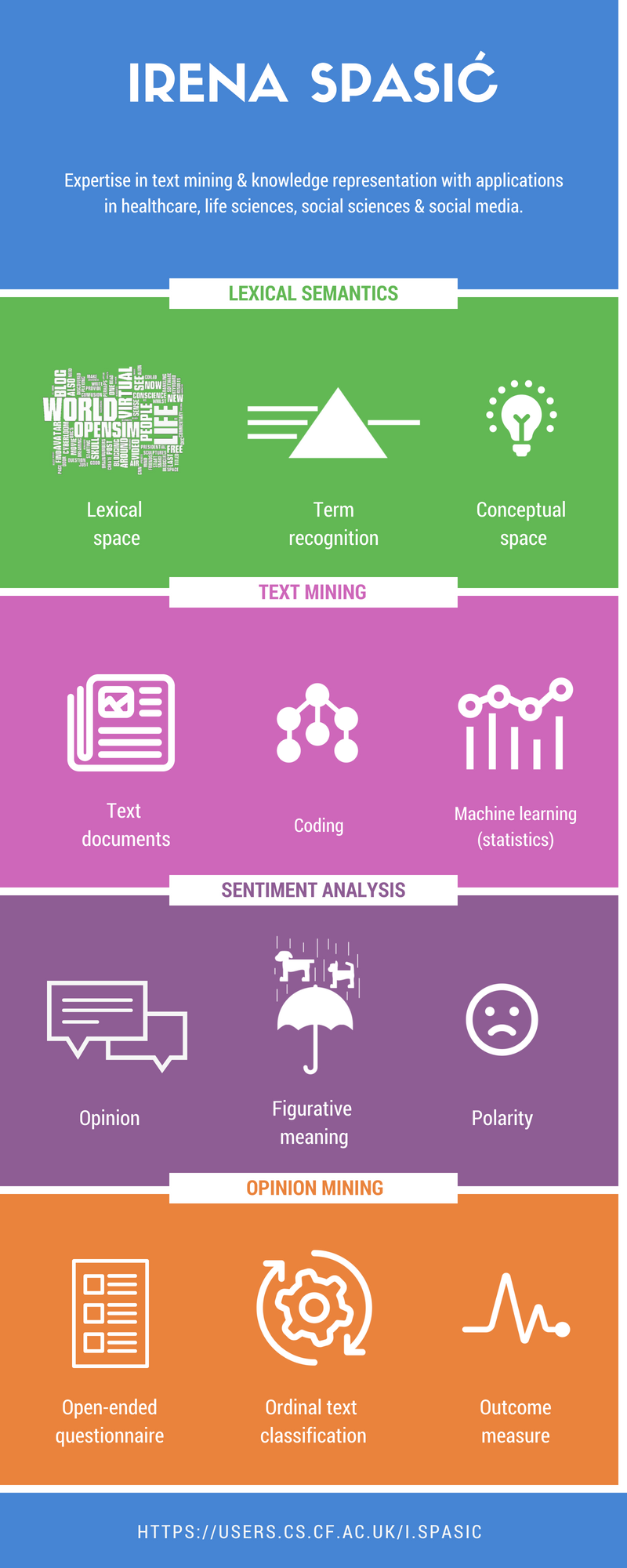
It’s impossible to talk about Harry’s success without diving into its superb pre-launch referral program. The brand wanted to create buzz around the product and did so through mystery and with a slew of product incentives. The pre-launch site was simple and didn’t reveal too much about the product just yet. All it took was a simple picture of a razor with language hinting at “Harry’s is coming.” From a consumer perspective, this attracted people to want to sign up and learn more about this new sleek razor. The main CTA for the page was to get users to sign up to be the first to learn about the launch and details of the brand.
Upon signing up, users were then taken to a page encouraging them to invite their friends to add their emails, and the more friends they referred, the more free prizes they received. 5 referrals got you a free shaving cream, 10 got you a Truman handle with a blade, 25 a free shaving set, and 50 a one-year free supply of blades. It’s easy to see why people were driven to invite so many of their friends and colleagues — a feature that got Harry’s a total of 100,000 email sign-ups in a single week.
Let’s talk about the simplicity of this referral program. All Harry’s had to do was create an incredibly simple and cheap landing page, and the rest fell into their lap. A solid referral program makes your audience do your work for you by having them spread the word and increase brand awareness organically.
Today, there are countless examples of great referral software that can help you achieve your goals and stay organized in the process. These vary by price depending on the different functionalities you want to include, and the severity of how large you want your referral program to actually be.
All About Partnership
Visibility was critical for the brand in its early pre-launch stages. The referral program was an excellent way to increase word-of-mouth awareness for the product, but the team didn’t stop there. In order to really tap into a wider audience, Harry’s conducted mass outreach to publications, blogs, and magazines with their product to test. Authenticity was key here, and they weren’t interested in running bling media sponsorships. The Harry’s team included personalized notes to each sender, with individuals ranging from grooming editors at magazines to podcast hosts. They drove this type of awareness without the need to spend advertising dollars and ended up receiving organic praise on the product. This led to positive reviews from the likes of GQ editors who gave the product a glowing review to podcast hosts who would be asked about their razors organically without the conversation coming off like a paid advertisement. The main prerequisite to a solid partnership for the Harry’s brand was a mutual appreciation for the product itself, which was more important to them than inauthentic advertising of the brand.
On top of mutually beneficial promotion partnerships, Harry’s massively benefited from a retail deal with Target in 2016 to sell their Harry’s products in stores.“Our brands share many of the same values,” co-founder Katz-Mayfield expressed while discussing the partnership. “For example, we both appreciate exceptional design, we’re focused on offering high-quality, affordable products and we always try to put customers first.” With Walmart’s brand-new redesigned website in 2018, they knew they wanted fresh new products to appeal to millennial consumers… enter Harry’s. The corporation partnered with Harry’s to initially sell its products in 2,200 U.S stores.
It’s important to remember that these big partnerships came about years after Harry’s initiated their early success. You have to establish yourself as a leader in your category and showcase enough potential to be able to have the big guys throw the big bucks your way, and that’s exactly what Harry’s did.
Decide for Yourself
Besides perfecting a flawless shave for a low price, Harry’s also excelled in delivering a near-perfect user journey. The company gave its prospective customers different options in order to acquire them as a new business. A consumer didn’t complete their purchase? They’d shortly get a cart abandonment email reminding them to complete their purchase. But their efforts don’t end there. Harry’s offered more incentive for the end users by offering them a free trial of the product in order to decrease the initial commitment. If the free trial didn’t work, they also promoted their lowest-cost product pack for only $15. In this case, offering alternative options, even if it meant getting prospects to spend less money on their order, was the perfect way to finalize the deal to buy someone in on the product. Once the consumer was ready to make their purchase (based on any of the options they might have chosen from their email), they were then offered an upsell opportunity in order to try to increase the overall order value. For extra customization, Harry’s allowed the customers to choose their own designated shave plan during their free trial, as well as a handle color, to make the entire experience uniquely personalized.
Another big feat for Harry’s was their hyper-personalized and to-the-point advertising. If a user expressed any type of interest in the company, the ads fully acknowledged their place in the funnel process and tried to win them with very direct language. The creative in the ads offered more benefits and reasons why this interested yet not activated customer should make the switch, getting their attention with snappy language and offer-based headlines. Similar to the cart abandonment email campaigns, these ads also offered the user a trial offer to get them to fully buy into the product.
Conclusion
The Harry’s marketing model was something to be admired and studied, not only within the shaving industry but within all marketers and brands alike. Multiple organizations have and continue to model their digital efforts after the shaving company’s strong overall plan.
One of the biggest lessons from the work Harry’s achieved is careful consideration for every step of the marketing process. The company didn’t need a big team or a ludicrous advertising budget; what they did have was exemplary storytelling, the ability to build strong relationships, and well-thought-out strategies to drive their consumers to not only purchase their product but to promote it within their networks.
With these specifically curated tactics, the new grooming company wasn’t only able to make a dent in the industry, it was able to command it.