
Tourism season is approaching, cultural tourism real estate drainage strategy
Industrial real estate think tank

Summer is coming, many enterprises and institutions to give their employees travel travel benefits, at this time, all kinds of schools began to have holidays, some self-driving tours, outdoor travel and other industries of the crowd, in this time planning travel destinations and routes. These people from different industries form the annual traveling army. These huge traveling army will soon go to the famous cultural tourist attractions around the country. The climax of the traveling is coming. The huge tourism crowd provides the consumption foundation for the cultural tourism business and contributes to the huge consumption. In this period of tourism peak season, a lot of drainage effect stronger cultural tourism attractions and its supporting businesses, the use of services consumers can contribute to the year's major performance.
Culture and Tourism Market Size
In 2019, prior to the epidemic, data showed that 60.6 million domestic tourists visited, up 8.4 percent from a year earlier. In 2020, the number of domestic tourist arrivals was 287.9 million, down 30.2 million or 52.1% from the same period last year. With the continued stability of the epidemic situation, the increase of the number of vaccinated, the formation of mass immunization, tourism travel warming development has been the general trend. For cultural tourism business, the beginning of tourism peak, means the start of "robbing people war," In the face of this irreplaceable online experience travel consumption, and tourists are most willing to spend, cultural and tourism businesses are gearing up and ready to go.
Integration of business travel and culture
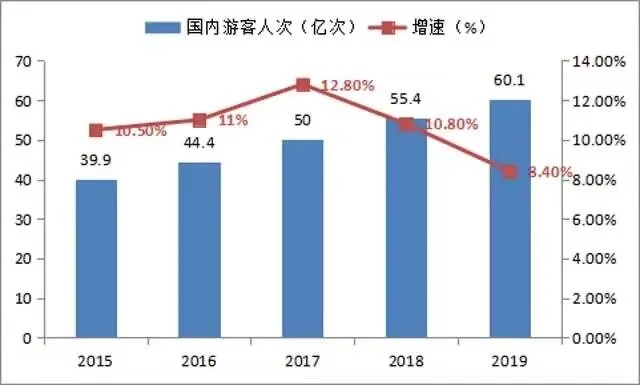
Domestic Tourist Arrivals and Growth Rate from 2015 to 2019
As for drainage, cultural tourism business has an advantage over the commercial sites represented by pure shopping centers. Cultural tourism businesses mostly have cultural tourist attractions that can be relied on to drain water, and then through commercial services to turn the attracted traffic into performance. There is a huge tourism consumer, the corresponding will also have a huge cultural tourism business, there is no competition between consumers, business will be competitive, In the final analysis, the main competitors of cultural tourism business come from cultural tourism counterparts, the success of drainage depends on the characteristics of attractions, popularity and supporting business services, the purpose of drainage is business tourism cultural integration development, one-stop to meet the needs of cultural and tourism consumers.
In competition, the traditional saying is that people have no self, people have my excellent, Bioma China Commercial Real Estate Consultants believe that, Cultural tourism business in the drainage, as attractions can not change what, but can change the business, can change format combination, commercial content, commercial operation to make a person without me, people have me excellent reasonable change, to achieve drainage.
Travel Commercial Drainage Advice
1. Precise FitManagement's market positioning.
Cultural tourism business, although with an obvious cultural tourism attribute, but still needs a correct and reasonable market positioning in line with cultural tourism consumer. Among the traveling army, the main force at present is the new generation group represented by the post-90s. There are many differences between post-90s and the previous generation in their tourism focus, tourism consumption, consumption hobby and consumption intention. In the positioning, we should take into account the unique, diversified and trend-oriented consumption characteristics of the post-90s and Z generation young groups, and give a scientific and reasonable positioning. In addition, the needs of cultural and tourism consumers are diverse, such as experiencing exotic food and beverage features, experiencing exotic leisure and health features, buying exotic souvenirs, local products, medical and health supplies, going to summer, Some cultural tourism business positioning is the whole format, some positioning focus on leisure experience, and some positioning emphasis on retail light luxury, For cultural and tourism business, suitable for their own positioning is successful, positioning success, cultural tourism business will have a successful basis for protection.
2. Featured business portfolio strategies.
After determining the positioning, the business will have a basic frameworkwork, backbone, around the backbone of investment placement, placement in line with consumer demand business forms interconnected combination, forming a popular linkage, A link link complementary to meet the needs of consumers one-stop, on the one hand to save consumers' time, and on the other hand to improve consumers' random consumption, consumers also like one-stop shopping needs to meet, rather than take the demand apart north and south everywhere.
3. Characteristic creation of merchandise.
The characteristic product is the key of drainage, can arouse the consumer's desire to buy, this is not only cultural travel business, any business can apply. The featured products are mainly as follows: delicious food and beverage, special local products with health care function, special massage, acupuncture and bone-setting health service, Characteristic regional attribute food, yak meat, homemade yogurt, black wolfberry, Tianshan snow lotus and other tangible and intangible goods, give consumers the most direct experience of the feeling, produce consumer desire. Color, smell and taste of the characteristic snacks, can instantly ignite consumers desire to taste, since the media era word of mouth to realize drainage.
4. Cover all kinds of publicity online and offline.
The popularity of cultural tourism directly affects the popularity, the more well-known cultural tourism business flow will be greater, In the tourism season on the eve of the promotion of visibility is essential, today's fierce competition is also afraid of the alley deep, propaganda films, endorsements, shaking sound, little red book, B station and other online advertising.
5. Internet celebrity, well-known travel blogger, game anchor cooperation.
Invite traffic internet celebrity, well-known travel blogger, to the project experience, personally visit the project more representative shops, And can record video, live broadcast, take pictures and so on, show to a large number of consumers to watch comments, cause Walter heat, in the consumer psychological impression, attract consumers to experience, wake up consumers desire to experience.
6. Fusion innovation.
Innovation is still the magic weapon of cultural tourism business, doing business with heart, exploring innovation is the most effective core play of cultural travel business. One-stop to meet the needs of consumers business travel culture, providing innovative service initiatives, spiritual material dual meet consumers.
Epilogue
In essence, cultural tourism business is still centered around cultural tourism consumers, creating a spiritual satisfaction, social attributes of the lifestyle. Characteristic social attributes are still the core of drainage, Bioma China Commercial Real Estate Consultants believes that with the rise of a new generation of Chinese cultural travel consumers represented by Generation Z, The format structure and positioning of cultural tourism business should also take into account the needs of the new generation of consumers. More and more research shows that Emerging cultural travel consumers expect travel destinations to be cultural, comfortable, social and unique, cultural travel business should pay attention to these, in order to attract the younger generation of consumers, to determine the basis for success.
Who is suitable to do business investment park work?
Industrial Real Estate Watch
Among all positions in the field of industrial real estate, the requirements of investment officers are the most extensive. As long as the project can bring customers, everyone can do investment personnel.
Although there are no restrictions on investment work, but investment work pressure, performance is not good, and not the average person can be competent for this job. Then, who is suitable to do the work of investment park?
One, well-connected, have certain connections
Networking is very important to the investment work, including expansion, negotiations, project landing and other links play a key role. Some people will find that their efforts to do business for a few months, not as fast as colleagues rely on contacts to bring customers.
Some park projects in the recruitment of investment personnel, will understand the candidate's family background and social relations, priority to admit a certain relationship.
If you have a background of contacts, working in the park investment is a good choice.
II. Having been in charge of an enterprise and having entrepreneurial experience
It is a complex process to do business investment in the park, and it is the process of serving enterprises, which requires business investment personnel to understand enterprises and industries.
A person who has been in charge of an enterprise or has entrepreneurial experience, has a deep understanding of the enterprise, knows how to locate an enterprise, and can provide professional consulting services for enterprise customers.
Therefore, this kind of people do business investment easy to seize the pain point of enterprises.

Zhongye Huigu · Huai'an Science and Technology Industry Park
III. Strong learning ability and adaptability
If you do not have two advantages in front of the investment personnel only through continuous learning enrichment, so that their faster growth. In the process of investment promotion work, accumulate contacts and project follow-up experience.
For most people, engaging in investment work is starting from scratch, No experience, no contacts, no resources, rely on the investment in the front line of work, increase their knowledge reserves, accumulate investment experience, improve market acuity.
Therefore, the talents with strong learning ability can persist in the job of investment promotion.
How the I-55 Corridor is shaping the new e-commerce supply chain
Ajlatrace
Rooftops. Population. Talent. These are just a few of the buzzwords you’ll hear developers and brokers mention when they talk about the I-55 corridor. And there’s a good reason for it.

Running from downtown Chicago southwest out towards Bolingbrook and then further south to Bloomington/Normal, Springfield and beyond, I-55 provides a combination of easy access to Chicago population density, the sprawling industrial rooftops of Will County, and everything in between. And you’ve also got Midway airport, the Bedford Park Rail Yard and the CenterPoint Intermodal Center all within reach.
It’s no wonder why I-55 has really become known as being one of the region’s main logistics and distribution corridors. Developers are building spec facilities at a feverish pace and yet tenants continue to line up to occupy these new Class A spaces along the route.
“In Chicago, the focus tends to be on O’Hare, and O’Hare is ground zero for where institutions want to place money and where people want to be,” says Nick Siegel, Chicago Region Partner with Bridge Development. “But I-55 has a lot of the same dynamics as O’Hare: a good, modern highway system, access to labor, access to the city of Chicago, and access to rooftops.”
“Frankly, [the I-55 corridor] is our most modern distribution submarket that can reach Chicagoland quickly,” Siegel adds. “It checks all the boxes of somewhere that you want to locate.”
And indeed, the I-55 corridor is witnessing somewhat of a “Field of Dreams” effect, if you will. If you build it, they will come. And they just keep coming.
Some of the companies with a big distribution and logistics presence along the corridor include RJW Logistics, Best Buy, Crate & Barrel, and of course, there was also Amazon’s $50 million purchase of the 119-acre former Old Chicago amusement park in Bolingbrook which the e-commerce giant plans to use as yet another major distribution center for the metro area.
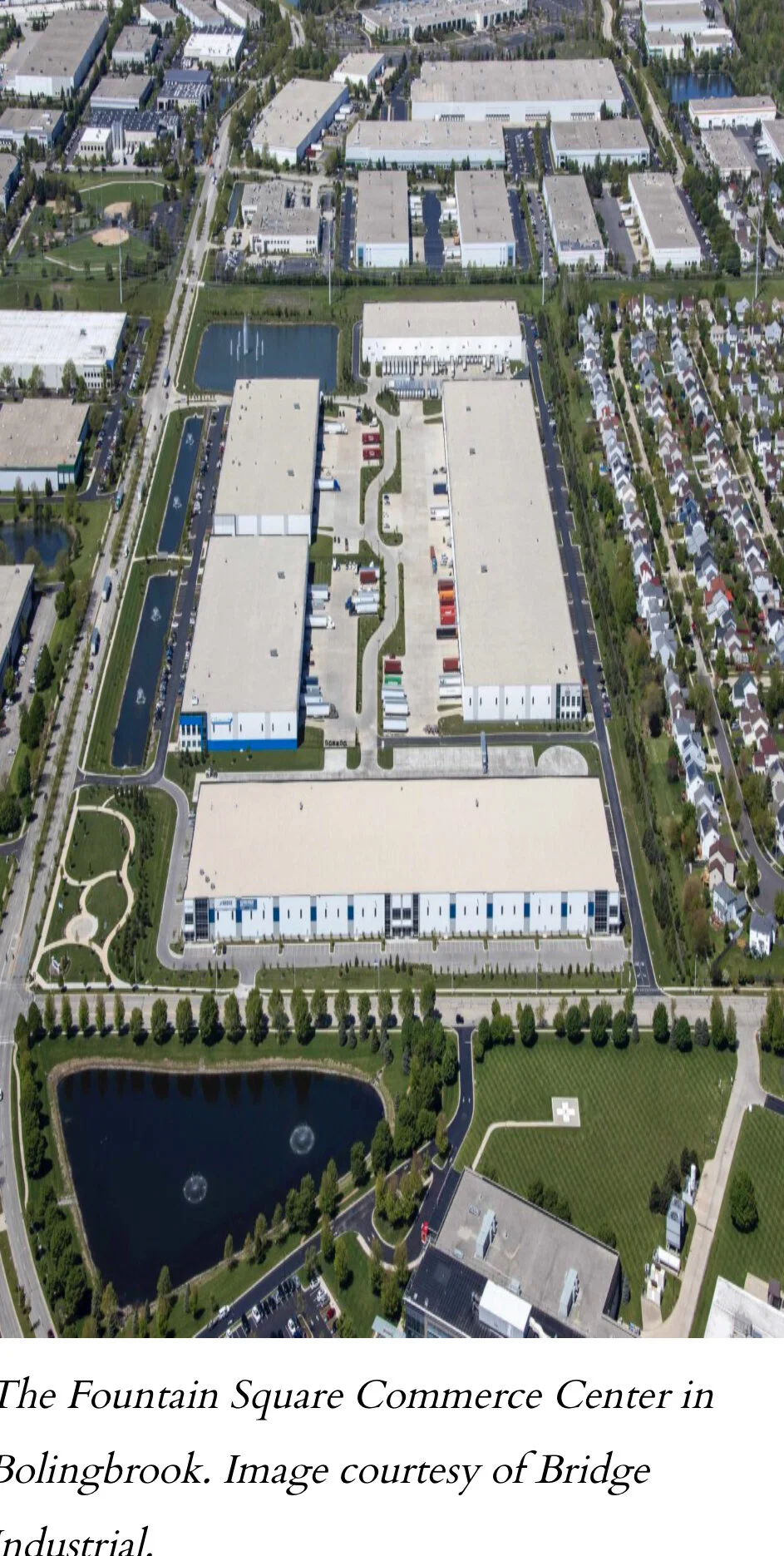
And then there’s the upcoming Wayfair fulfillment center in Romeoville being developed by Duke Realty. The online furniture retailer will bolster its Chicago distribution via a 1.2 million square-foot facility spanning over an 81-acre site.
“I-55 is a very important piece of our strategy for Chicago,” says Susan Bergdoll, midwest regional leader and SVP of Leasing and Development for Duke Realty. “I have four projects under construction right now and three of them are in the I-55 submarket, so that’s how bullish we are on that market.”
Because it’s a mature, built-up submarket, there are additional layers of complexity when planning new developments. For instance, Duke has already completed at least one redevelopment along I-55 where the existing structure was demolished and a new one built in its place. And for deals like the Wayfair facility, it required patience and timing to piece together multiple properties in order to create the one large industrial site.
The nature of I-55’s reputation as a distribution and logistics corridor, combined with the increase in e-commerce shopping and even the supply chain disruptions for raw building materials equates to scarcity of industrial product in the corridor, meaning that landlords are finding themselves in an even more ideal situation in terms of leverage and negotiating power.
“Rents are going up as we speak. Typically, people were used to a 2-3% increase per year, but if you’re coming up on your lease now, you could be getting a 20-30% increase,” says Jeffrey Kapcheck, Executive Vice President with CBRE. “I’m in the process of representing different tenants with lease renewals and new leases, but the renewal part is the most glaring aspect of it because of the large increases that landlords are asking for, and getting for the most part.”
Until supply catches up with demand, the industrial landscape throughout the I-55 corridor will remain a landlord’s market. But the continued strain on the supply chain for building materials isn’t helping.
“We’re up to 92 million square feet [of industrial space] and the vacancy rate is down to 7%, so I think developers and landlords realize that with the scarcity of land, they’re taking advantage of the lack of product on the market,” Kapcheck adds. “And I mean, COVID didn’t help because construction is down 40% from last year.”
At the end of the day, it’s the shifting buying habits of consumers and the need for labor that is helping drive the industrial e-commerce boom in the Chicago area.
“It’s not that we’re buying more products, it’s that we want them quicker,” Kapcheck says. “I think everyone right now is reimagining and reinventing their supply chain. It’s usually a three-step process where you’ve got the larger building, the mid-sized building, and the smaller urban logistics or last mile building.”
Kapcheck elaborates, suggesting that the larger distribution centers, which can range from 1 million to 2 million square feet might be located out along the I-80 or I-57 corridors, while the mid-sized facilities that span 500,000 to one million square feet are more likely to be found along I-55. Then there’s also the smaller last-mile hubs of 100,000 to 500,000 square feet which will be the closest to the population center.
While there’s been a lot of emphasis put on and attention paid to e-commerce, there’s much more to the Chicago area’s industrial market when you zoom out of the I-55 corridor, Bridge’s Nick Siegel suggests. And in many ways, having a healthy blend is good for landlords, tenants, and the municipalities that rely on the good jobs and taxes that industrial facilities provide.
“If you step out of I-55 and look at the market in general, Amazon is leasing a lot of space, but they’re also not,” Siegel says. “The leases in our portfolio that we’ve done on our spec buildings are with large manufacturing companies. We’ve done two separate manufacturing consolidations; one in Wood Dale and one in Itasca.”
And the blank slate spec building is designed to be flexible for a reason, Siegel adds. We can’t predict how markets will evolve and which industries will be hot, but if you build a space that meets the demands of many different types of businesses, you’re going to be safer in the long run.
It’s trying to get the right mix of users, which not only further promotes economic development, but provides stability and insulation from any future economic downturns. After all, real estate is a cyclical market, and there’s always a need for some level of caution when looking at the big picture risk. But Chicago’s geography, infrastructure, talent and sheer size also help provide further insulation from fluctuating economic conditions.
“One thing that I think gets lost in the mix is that we’re the second largest industrial market in the country,” Siegel says. “So this is just a massive, massive market with so many factors at play and I think we’re insulated from a lot of that risk because we’re not so dependent on one user type. We’re a really diversified, mature market and I think that benefits us tremendously when it comes to leasing velocity and keeping supply and demand in check.”
Industrial on pace for record-setting sales? It could happen in 2021
Dan Rafter

While the COVID-19 pandemic has devastated commercial real estate sectors such as retail, office and hospitality, it has provided a boost to industrial, a segment of the industry that was already thriving before the pandemic hit.
And today as the pandemic continues to recede in the United States? The industrial market continues to boom.
That’s the takeaway from the June National Industrial Report released by CommercialEdge. According to the report, lease rates for industrial space across the country averaged $6.59 a square foot in May. That’s an increase of 4.4 percent when compared to the same month in 2020.
Not all cities are seeing the same amount of rent growth, though, with CommercialEdge reporting that the highest rent growth continued to be seen in coastal cities, with the Southern California markets of Inland Empire and Los Angeles ranking first and second in year-over-year rent growth.
The national industrial vacancy rate hit 5.7 percent in May. And in the Midwest, the Nashville, Tennessee, industrial market’s vacancy rate fell to 3.1 percent in May.
Another impressive number? As of May 31, $18.1 billion in transactions closed across the U.S. industrial markets that CommercialEdge tracks. The average sales price per square foot for industrial space was $103 in May. That’s 16.3 percent higher than in May of 2020.
CommercialEdge doesn’t expect the good times to end throughout the rest of this year, either. The company said that U.S. industrial sales could match or even beat the record $44.4 billion in transactions closed in 2020.
The numbers also show that sale-leaseback transactions have become increasingly popular in this sector. Such deals accounted for 7 percent of the total U.S. industrial sales closed last year and 9 percent of property trades made since the start of this year. Among the industrial transactions closed during the previous 17 months across the markets tracked by CommercialEdge, sale-leaseback deals amounted to $4.8 billion.
These deals have been valuable. CommercialEdge says that since the beginning of 2020, the price of a sale-leaseback deal has averaged $116 a square foot, significantly higher than the overall average of $93 a square foot of industrial space sold during that same time.
CommercialEdge found three markets that have already exceeded $1 billion in industrial deals closed since the start of 2021. That includes Chicago, which has seen $1.1 billion in industrial sales since the beginning of the year, behind only Los Angeles and Inland Empire.
CommercialEdge found, too, that there is plenty of industrial space now under construction. In May, 410 million square feet of industrial space was being built in the U.S. markets the company covers.
And Chicago ranks high here, with 20 million square feet of industrial space under construction at the close of May. This figure is behind only the 28 million square feet set to come online in the Dallas-Forth Worth metropolitan area.
Chicago’s white hot industrial market means all hands on deck for property managers
Ajlatrace

As commercial real estate’s wild ride continues well into the warmer summer months, industrial landlords and investors have found themselves in one of the best imaginable situations compared to other asset classes. With high demand for and investor interest in industrial space, it truly is a landlord’s market in 2021.
However, this doesn’t mean that industrial property management is a set it and forget it proposition. If anything, the white hot demand for industrial means that landlords have to be more involved than ever in their lease deals.
“I think in today’s environment, [industrial property management] has really shifted to being much more hands-on,” says Victoria Knudson, Partner & National Leader of Property Management for Stream Realty. “Tenants want to understand their lease, what is their responsibility versus your responsibility — there is a lot of a lot more communication as it relates to how things run and managing expenses.”
And not only has tenant management become more hands on, the number of phone calls with other layers and players in the industrial segment have also increased dramatically, Knudson adds
From inquiries about available space, discussions about the local workforce, and talks about budgets, industrial landlords have also had to become comfortable with wearing multiple hats and expand their breadth of knowledge when it comes to the many different aspects involved in a site selection process or deal negotiations.
But the biggest issues for industrial tenants, particularly in logistics, warehousing and light manufacturing, remain costs associated with fuel and access to labor, Knudson says. Real estate is more or less a fixed expense, but it’s finding that balance of tapping into the right workforce and also being located where it makes the most sense for fuel and transportation costs.
With there being so much demand for industrial space, industrial landlords haven’t had to have the painful conversations about concessions and deferral arrangements that office and retail property owners and managers have been faced with throughout the pandemic. Instead, it’s almost been the opposite, Knudson suggests.
“Our [industrial] occupancies across the country are in the mid-90s percentage wise, and I run our national platform for industrial property management,” Knudson says. “Industrial is the hottest commodity and it can’t be built fast enough to be filled … so there’s no concessions and no rent credits. Our accounts receivable does not exist; it’s zero.”
Leasing has also been very strong for Duke Realty, which is currently building a handful of new industrial developments across the Chicago area at the moment. Susan Bergdoll, Senior Vice President Leasing and Development for Duke Realty, is leading the charge in the Chicago area and greater midwest for the REIT.
“Our [Chicago area] portfolio is 17.2 million square feet and I have two vacant spaces right now,” Bergdoll says of the strong demand and limited availability for Class A industrial space in the Chicago region. And tenants paying top dollar will expect all the bells and whistles, such as efficient overhead LED lighting, modern HVAC systems, and plenty of trailer parking.
But there’s still much more on the way. Currently, Duke is working on four new industrial developments in the Chicago area, including two spec projects: a 300,000-square-foot development in Bellwood and a 370,000-square-foot facility in Woodridge. Both of these new facilities are anticipated to be completed by the new year.
And similar to other major property owners and managers, Bergdoll says that her team has not had to offer free rent or other concessions to tenants. “The industrial market is so strong right now that we aren’t faced with some of those painful conversations that office and retail landlords are faced with,” Bergdoll adds.
However, if it means keeping a tenant and a lease renewal, all options are on the table, Bergdoll suggests. In this intensely hot and competitive market, it’s truly survival of the fittest.
“You’ve got to know who you’re competing against,” Bergdoll says. “You could be competing against a building that’s been sitting vacant for 12 months and that guy might be a lot more willing to offer up some concessions.”
One of the biggest unknowns facing industrial real estate right now is just how long the hot market will go on for. Both Bergdoll and Knudson aren’t too worried, at least for the meantime. Nevertheless, the near future looks just as bright for industrial landlords and property managers.
“We’ve been on an upward trend with industrial for a long time coming and it just continues to grow and grow,” says Knudson. “I don’t have a crystal ball so I don’t know that it can sustain forever, so at some point things will give, but for the foreseeable future — I’d say the next 24 to 36 months — I don’t see a decline; the demand is just too great.”
Lee & Associates sums it up: Columbus’ industrial market is red-hot today
Dan Rafter

A torrid pace. That’s what Lee & Associates is predicting for the industrial market in Columbus in its latest research report.
According to Lee & Associates’ second quarter Columbus industrial report, 8.87 million square feet of industrial space is currently under construction in the Columbus, Ohio, market. That’s a big number, and is up from the 6.63 million square feet of industrial space that was under construction in the first quarter of this year.
And Lee & Associates isn’t predicting a slowdown in new construction anytime soon. According to the company, several big industrial projects are ready to start later this summer, bringing what it says is much-needed new product to the Columbus area.
In the Southeast portion of the Columbus market, CT Realty has already delivered its first two spec buildings along Airbase Road, buildings that total more than 1.146 million square feet. Hillwood/NorthPoint completed their two spec industrial buildings at Bixby Road for 872,158 total square feet.
And Core5 delivered its 437,154-square-foot spec industrial building at Southgate Parkway in Licking County.
The numbers for Columbus’ industrial market tell the story of a particularly strong sector that is only gaining momentum. The market saw 2.88 million square feet of net absorption during the second quarter, according to Lee & Associates. And that comes after an even stronger first quarter of the year, when the Columbus market saw 5.02 million square feet of net absorption.
The vacancy rate for industrial product throughout the Columbus market stood at 5.6 percent in the second quarter, up a bit from 4.9 percent in the first quarter of the year. But that increase is mostly thanks to the new industrial product that has been delivered to this market.
The averate listing price for industrial space held steady in the second quarter at $4.41 a square foot.
The area has been no stranger to big deals this year, either. Lee & Associates pointed to Bath & Body Works leasing an entire spec industrial building developed by VanTrust in the Commercial Point industrial park. That building was more than 1 million square feet.
Also, tenants TJX Companies, NFI, Covetrus and Geodis leased more than 100,000 square feet each in Columbus’ Southeast market.
When will those offices fill up? Avison Young’s numbers show Twin Cities office market still struggling even as pandemic recedes
Dan Rafter

Photo by Toa Heftiba on Unsplash
The numbers still show an office market struggling with the impact of COVID-19. But those numbers don’t tell the whole story. According to the latest research from Avison Young, reopening efforts and increasing vaccination rates have the Minneapolis-St. Paul office market ready for the start of a recovery in the second half of the year.
According to Avison Young’s second quarter office report, the unemployment rate in the Minneapolis-St. Paul market has dropped from a high of 11.8 percent to 4.1 percent. That’s a good sign for the office market: As people return to work, companies will eventually begin filling office space again, both in the urban centers of the Twin Cities and across its suburbs.
And while a dipping unemployment rate is good news, so is a rising rate of vaccinations. Avison Young said that vaccination rates across the Minneapolis-St. Paul area continue to outpace total U.S. numbers. So far, 54.5 percent of adults here have received a COVID-19 vaccine.
At the same time, the state of Minnesota recently announced a new recovery budget designed to further stimulate the local economy. The hope is that this combined with the rising vaccination numbers and dropping unemployment figures result in an increase in the number of people returning to their offices and a resulting rise in demand for office space.
The raw numbers in Avison Young’s report show that the office market in the Twin Cities still has a ways to go before it enters recovery mode. Avison Young reported that office leasing activity has largely paused, decreasing by 45 percent when compared with long-term historical averages.
At the same time, the office vacancy rate for the Twin Cities market stood at 10.2 percent at the end of the second quarter of this year. That’s up 190 basis points from the sector’s pre-pandemic vacancy rate of 8.3 percent.
The market’s office sector has also seen negative 1.38 million square feet of net absorption from 2020 through the first quarter of 2021. This amount of negative net absorption has significantly surpassed the lows of the global financial crisis in 2008 and 2009.
Not surprisingly, the amount of office sales has also dipped significantly since the start of the COVID-19 pandemic. As Avison Young says, office sales activity has temporarily paused. The Minneapolis-St. Paul office dollar volume of sales hit $1.3 billion from the start of 2020 to this point of 2021.
That’s a significant drop from usual sales activity, with Avison Young reported that the dollar volume of office sales in the Twin Cities market has decreased by an annualized rate of 29 percent compared with the prior five-year average dollar volume.
Again, these numbers sound ominous. But the good news is that COVID-19 cases continue to fall and a growing number of people are receiving their vaccinations. If that trend holds, there is hope for at least the early stages of an office market recovery in the Twin Cities during the second half of 2021.
Opportunities in the Industrial Real Estate Industry
Industrial Real Estate Watch
Now the industry real estate industry is bustling, various enterprises rush into gold. However, opportunities and challenges often exist side by side. Behind the bustle may be riddled with all sorts of traps.
For example, there is a well-known industrial real estate operators in a city development park project, investment smooth, sold very well, so immediately launched the second phase. However, after the launch of the second phase, no customers, unable to complete the investment. The reason for failure is that a city's enterprise customer base is fixed, the first phase has digested the customer, to the second phase there is no customer. Experienced industrial real estate developers will miss, let alone cross-border developers.
So where are the opportunities in the industrial real estate industry?
Simply put,Industrial real estate opportunities from industrial transformation and upgrading.
Because economic environment, industrial policy and other factors have changed, the industry needs transformation and upgrading. Enterprise production, technology, customers, market changes,Companies will either transform and upgrade or fail. In this context, the demand for carriers and services in enterprises has led to the development of industrial real estate industry.In other words, if the industry does not need transformation and upgrading, there is no industrial real estate.
Industrial transformation and upgrading bring two opportunities: First, industrial transfer; Second, industrial integrationIndustrial transfer is the cross-region migration of enterprises, while industrial integration is the agglomeration of enterprises in regions. Based on this, the customers of the project enterprises in the park can be divided into foreign enterprises and local enterprises.
For private real estate developers, the opportunity lies mainly in industrial integration, that is to say, the investment target is mainly local enterprises.Although foreign enterprises can be imported, it is relatively difficult. Because the enterprise is very cautious in the location, dare not move easily, for fear of staff loss, market loss and other problems. When enterprises choose to migrate across regions, it considers a lot of factors, such as land, preferential policies, subsidies, these are not private industry developers can meet.
Some developers hope that after the completion of the project can introduce a large number of foreign enterprises, which is unrealistic. In fact, to undertake industrial transfer is a matter for the government to attract investment. If private industry real estate to participate in the transfer of industry, must be homeopathic, follow the government's investment policy.
So, more precisely,Opportunities for Private Industry Real Estate Developers from Industrial Integration. Private property developers need to focus on local businesses to find gold from this sector.
The number of local businesses determines whether there are opportunities and how large they can be.In doing industrial positioning, we need to investigate the number of enterprises in the region, roughly distributed in which industrial fields. If there are a large number of SMEs in the region, they have not solved the problem of industrial transformation and upgrading, this is the opportunity.
Industrial real estate must not blindly follow suit, see a park project done well, blind follow-up, this is taboo. After the completion of industrial real estate projects, if the introduction of enterprise customers, will inevitably lead to the project vacant.
Enter the field of industrial real estate, we should be fully prepared,In-depth research on industry and enterprise entry and determine the opportunity to re-enter.
Steps to Consider Before Investing a Divorce
Bernstein
Despite a couple’s best intentions, divorce remains remarkably common, with the American Psychological Association estimating that 40 to 50% of married US couples will eventually part ways. Divorce can be fraught with emotion and logistical considerations. But while the circumstances of a split can vary, a desire for clarity is universal—especially for the non-monied spouse. To help alleviate anxiety, structure is vital for the spouse earning less income, who is likely wrestling with many questions:
Will my settlement be enough to sustain my lifestyle?
How should I invest settlement funds?
The market is at (or near) an all-time high; is it prudent to wade in right now?
Does it make sense to invest all at once, or should I stage my entry over time?
While these questions may seem daunting, tackling them head-on—and sooner rather than later—can help lay a stable foundation during a transition. With robust modeling, a financial advisor can map out a course of action that makes the most sense for a recently divorced investor.
Strategize for a New Reality
Consider the case of Sheila, a 55-year old woman recently divorced from her wife, who was the high-income earner in their household. Sheila received a healthy cash settlement. However, it was clear she would need her assets to grow to meet her lifestyle needs moving forward. Her liquid and retirement assets totaled just over $9.0 million; her spending, just over $265K annually.
We started by determining Sheila’s core capital—the amount she’d need today to sustain her lifestyle with a high degree of confidence for the rest of her life. Then we determined if she had any surplus capital—wealth above and beyond her core that can be used opportunistically in the pursuit of secondary goals. From there, we mapped out Sheila’s investment strategy.
One of the more important decisions Sheila made was to decide on the appropriate asset allocation to meet her risk tolerance and income needs, which were very different from how the assets were invested during her marriage. Working with her Bernstein advisor, Sheila felt comfortable allocating 50% of her portfolio to stocks and the other 50% to bonds. However, as the time to deploy her cash came near, she felt torn.
Market Highs: A Red Flag?
The reason for her concern was valid: markets were close to all-time highs. Some analysts anticipated a correction, with high volatility and lower returns from traditional asset classes over the near term. While it’s understandable how these sober forecasts could give any investor reason for pause, they were even more concerning for Sheila. Her divorce settlement proceeds were her entire nest egg. Wouldn’t investing at a market high bring on the risk of losses in the months and years ahead?
Unfortunately, there is no way to fully remove the potential for market dips for an equity investor. But trying to time a perfect entry point almost always leads to losses. That’s because cash that sits uninvested for too long misses out on gains. Context is helpful: because the market has historically trended higher over the long term, it has traded near its all-time high roughly 43% of the time. Since World War II, investors buying at each market low earned an average of 11.5% annually, versus 9.6% for investors buying at each market high. The takeaway: buying even at market highs still provides an attractive return.
Inaction Is Action: The Cost of Delaying Investment
To aid Sheila’s decision, her advisory team ran a Wealth Forecasting Analysis, which quantified the cost of delaying her investment. The results were striking: If Sheila invested promptly, her assets were conservatively projected to grow at a rate that would meet her core capital needs. She would, in effect, have a secure financial future. If, on the other hand, she delayed investment for five years, she would forfeit critical portfolio growth, which could have increased her required core capital from $8.9 million to $9.8 million, costing her nearly $1 million and potentially putting her long-term financial security at risk.
Delaying Investment Increases Required Core Capital*
When to Enter the Market
Understanding the market’s historical patterns—and how they’re playing out today—helped reassure Sheila. However, she still wrestled with the potential for a market downturn shortly after investing her entire settlement. Sheila’s advisor recommended a dollar-cost averaging (DCA) strategy—keeping six months’ worth of expenses in cash and investing the remainder at regular intervals over the course of three months.
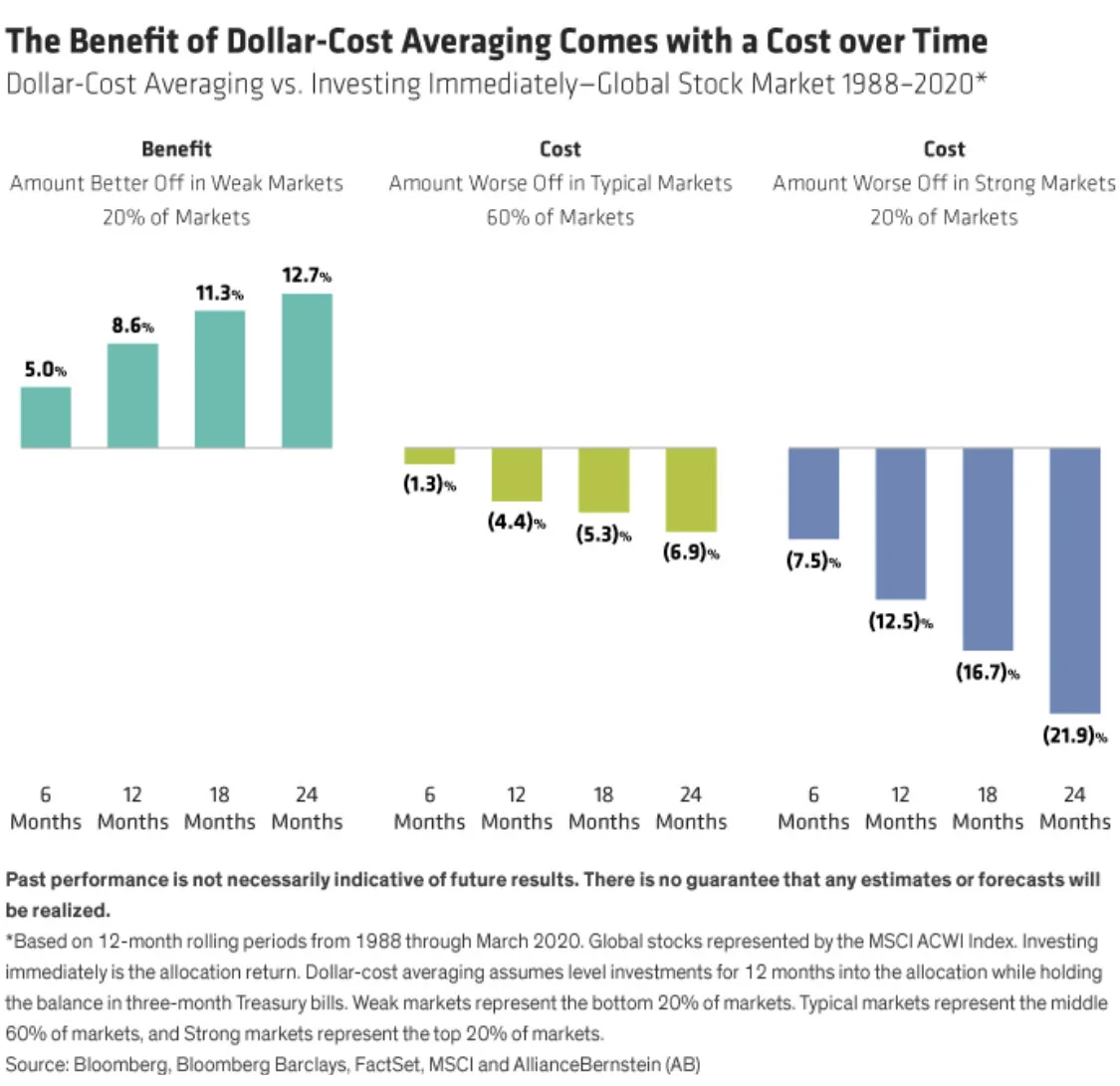
Dollar-cost averaging is an effective way to achieve the most important step for a reluctant investor—getting invested—while hedging the risk of a near-term portfolio decline. It is important to note, however, that because markets tend to climb over time, DCA strategies typically generate less overall wealth than an “all at once” approach. That’s the trade-off: the longer the investment period, the lower relative returns will tend to be in typical and strong markets; returns will, on the flip side, be relatively higher in poor markets.
In any DCA strategy, time is the key. Beyond a six-month investment period, the benefit is outweighed by the cost of cash sitting undeployed. That’s why Sheila’s advisor believed that a three- to six-month investment timeframe was ideal for balancing her concerns against her need for growth.
The Benefit of Dollar-Cost Averaging Comes with a Cost over Time
Your Goals Are Our Benchmark
Whether you enter the markets all at once or more gradually, as Sheila did, the most important thing is to invest. It’s natural for investors to turn to frequently cited indices like the S&P 500 or Dow Jones Industrial Average as benchmarks for evaluating performance. A better measure of success in our view, especially in periods of life transition, is to consider your progress in light of the personal and financial goals you and your advisor agreed upon when developing your investment plan:
Is your asset allocation matched appropriately with your time horizon?
Do your investments align with your values?
Is your portfolio operating in such a way that you are sustainably able to get what you want and need, while also sleeping at night?
If you can answer “yes” to these questions, you’ve not only weathered the transitional storm—but are well on your way to a financially stable and empowering future.
Porotech's Micro-LED technology to enter mass production
EDN Electronic Technology Design
Porotech, a spin-off from the University of Cambridge, has raised £300,000 for the next phase of development of its unique Micro-LED technology. Its display technology breakthrough heralds a new era of brighter, clearer and more vivid miniature displays for even the smallest devices.
Micro-LED is the next big leap for displays in products such as smartphones, smartwatches and VR / AR headsets. It is particularly useful in outdoor settings, where sunlight often makes it difficult to see on existing displays. But the performance of current Micro-LED technologies deteriorates as device sizes decrease.
Porotech has created a new class of porous gallium nitride (GaN) semiconductor materials that redefine what is possible. It provides performance improvements suitable for volume production and can be customized to meet individual customer needs.
Despite only being established on January 20, Porotech has already generated 10 months of revenue - and is working with some of the world's biggest names in display technology. In November 2020, the company launched the world's first commercial native red indium gallium nitride (InGaN) LED epitaxial wafer for micro-LED applications.
“Micro-LED displays using GaN-based material technology are widely recognized as the only technology capable of providing sufficient brightness and efficiency to meet AR requirements,” Says Dr. Tongtong Zhu, CEO and Co-Founder of Porotech, “With AR glasses expected to one day replace smartphones - or at least reduce our interaction with devices in our pockets - it's vital to develop advanced materials to improve performance. "
“Integrating AlInGaP red and InInGaN green and blue LED displays into modules with micron pixels is extremely challenging, Because of the high surface recombination speed in AlInGaP devices, this material is not suitable for highly efficient Micro-LED. Our breakthrough extends the emission range of InGaN LEDs to meet the performance needs of red displays while providing the ability to extend the wafer sizes required for miniature LED semiconductor display technology.”

Porotech's native red InGaN miniature LEDs have a wavelength of 640 nm at 10A / cm2, And at very small pixels and spacing than conventional AlInGaP and color conversion red has higher performance.
the next step
Porotech will now work to extend its new approach to incorporating InGaN based red, green and blue (RGB) Micro-LED is integrated into full-color miniature displays - and ultimately creates "smart" pixels that can be independently controlled for unparalleled response and accuracy just like AR gestures.
Currently, smart pixel technologies being tested are mainly based on aluminum indium gallium phosphide (AlInGaP) and quantum dot color conversion (QDCC). But AllnGaP struggled with the small pixel size required for AR - and QDCC had uniformity and stability problems. In addition, both methods require mixing different materials.
For more information on technology
Porotech's novel approach enables all three primary colors to be made using the same GaN material and integrated on a single chip without special construction. The company also plans to develop its own supply-chain ecosystem to help it develop and produce products more quickly.
Dr. Tongtong Zhu, CEO and Co-Founder of Porotech, said: “Porous GaN is basically GaN with holes of tens of nanometers. “This is a brand new engineered GaN material platform for building semiconductor devices. It provides performance improvements suitable for mass production, scalable wafer sizes - essential for the next generation of micro-display devices such as AR glasses.
“We have seen high demand for our standard and custom porous GaN substrates and Micro-LED epitaxial wafers, We can offer these on 100mm (4 ") to 300mm (12") sapphire and silicon platforms.
“Smart pixels will be our next direction - monolithic generation and integration of native self-emitting RGB micro-LEDs on a single wafer, To provide smaller, lighter, thinner displays that use less energy and provide the higher accuracy required for AR gestures and the like.”
Porotech's latest funding round was led by Speedinvest, followed by previous investors IQ Capital, Cambridge Enterprise, Martlet and Bridge Angels.
Rick Hao, head of Speedinvest, said: “With growing demand for smaller, lighter, clearer displays that are more accurate and environmentally friendly than ever before, Porotech develops revolutionary technologies that will transform the electronics industry. "This new porous GaN semiconductor material is suitable for existing industrial processes and is robust and flexible enough to be customized for different applications."
Learning to motivate subordinates correctly is an essential skill for a qualified boss
Burmington Management Consulting Group
Motivation, at any stage of life is a very effective way to promote a positive attitude.
Babbling babies receive encouragement from their mothers to speak bravely;
Children who are new to school will receive encouragement from teachers and play with unfamiliar classmates.
Sons with poor grades will receive incentives from their mothers to work hard to improve their grades.

In the workplace, motivation is a means for the boss to strengthen the motivation of employees to get better results.
However, incentive is also a kind of knowledge, is good is twice the result with half the effort, with bad is to be counter-productive.
So how is it right to motivate employees? Let's look at the following questions first:
There is a horse in the distance. How do you attract it?
A. With grass B. With whip C. With mare D. Walk over and bring

You will find that no matter which method, can achieve the goal. But on closer reflection, each answer has its own problems.
If the horse is not hungry, A may not be effective, and if it is hungry, C. B and D, also if you can get close to the horse, what if you go there and it runs off?
To put it bluntly, how to motivate, or depends on the needs of the motivated. What he wants, what you give, is the best incentive.
In the incentive process, the direct supervisor and the human resources department need to cooperate with each other.
What the immediate supervisor has to do is:
The first is to conduct an employee needs survey, the second is personality needs inspiration, the third is the implementation of spiritual inspiration, and the fourth is to stimulate policy implementation.
What HR does is:
The first is the organization of employee needs survey, the second is the common need to motivate, the third is the implementation of material incentives, the fourth is to stimulate policy.
The main four steps:
Step 1. Investigate employee needs.

Every year, HR department should organize all departments to carry out employee needs survey to understand what employees focus on. Line manager should cooperate with HR department to do employee needs survey, explain the importance of needs survey to employees, ensure the authenticity of employee needs.
Step 2. individual requirements and generic requirements management.
According to the survey results of employee needs, to the common needs, human resources department should establish the company level to meet the needs of countermeasures; On personality needs, and line managers to research specific personality solutions.
The third step, material incentive and spiritual incentive double management.
Human Resources Department is responsible for formulating the implementation plan of material incentives to meet the needs of employees. Line manager to develop specific spiritual incentive programs to meet the spiritual needs of employees.
The fourth step, incentive policy management.

Human Resources regularly complete the incentive policy, supervise all departments to implement in place, line manager is responsible for the implementation of incentives in place. Joint efforts by both sides are really effective incentives.
Why Robots Will Multiply in the Warehouse
The impact of the pandemic on the warehouse industry will have long lasting effects on the industrial sector. From concerns of worker safety to the rush to keep up with the surge in e-commerce orders, the need for increased warehouse automation became evident.

Viewed initially as “early adopter” technologies only affordable to e-commerce giants, robotics are now considered mainstream and are expected to grow in use and popularity. Technology continues to improve and costs have come down making robotics and other automation systems in scope even for smaller and middle market companies.
The Extra Mile
Even before e-commerce’s recent surge, working in a warehouse has long been physically demanding work. In certain warehousing operations, it is not unusual for workers to walk miles per day picking products. Labor productivity is a big focus in warehousing operations which is why “goods-to-person” automation systems make sense.
By 2023, it’s expected demand will quadruple for these systems. One of the reasons: order pickers frequently spend 70-75% of their time traveling. A goods-to-person system can reduce or eliminate that travel, allowing the person to focus 100% of their time on the productive work, and with a properly implemented goods-to-person system, productivity can triple, allowing one person to do the work of three.
The growth of e-commerce has put increased pressure on labor. Today, direct-to-consumer fulfillment operations can require up to 10 times as many employees to individually pick, pack and ship goods. Attracting and retaining qualified workers remains one of the biggest supply chain challenges.
A study last year by Auburn University found that 80% of supply chain professionals considered attracting and retaining labor as a top priority issue. Warehouse wages are increasing, too. For some companies, robotic solutions could offer a better return on investment.
Need for Speed
Millennials are the least patient when it comes to impediments to speed compared to their generational counterparts. Sixty-five percent of them say that long wait times for pick up or delivery negatively impacted their shopping experience, according to a consumer survey by Big Red Rooster, a brand experience company owned by real-estate services firm Jones Lang LaSalle Inc. (JLL).
By 2030, next-day and same-day fulfillment will be the dominant customer requirement, said 80% of the Auburn University survey respondents. The online grocery segment too is scaling to deliver in hours. Online grocery has been one of the fastest growing segments of e-commerce and is anticipated to grow to $100 billion in sales by 2022 according to the Food Industry Association (FMI). Proof of this demand is also reflected as Kroger Co.’s fourth quarter digital sales grew 118%, according to a report by JLL.
Kroger and Britain’s Ocado Group Plc, which opened the first of up to 20 fully automated fulfillment centers in April 2021, will use artificial intelligence, robots with totes and a proprietary control system to pick and pack deliveries. The adoption of robotics and automation systems could help make these consumer expectations a reality.
Reducing Risk
Providing for an employee’s well-being, especially in a fast-paced, competitive distribution environment, is a critical success factor. Workers face a greater risk of injury when they are tired from working long hours, or continually doing repetitive and physically demanding tasks. Not surprisingly, these activities are exactly what robots excel at and desire.
Robotics company Boston Dynamics has created a machine called “Stretch,” which is capable of moving 800 boxes per hour in the warehouse and can potentially be used to unload trucks, strip cases off pallets, and transfer cartons to conveyors. This was driven by the need to manage high-speed operations as well as mitigate the increasing cost of labor.
Eighty percent of supply chain professionals expect greater investments in automation by their companies in the next 10 years, and 88% say they’ll be more reliant on automation and robotics in the nearer future.
New technology and demographics continue to transform the industry, pushing expectations to new levels. From a supply chain perspective, the global pandemic put a huge spotlight on risk management with a special emphasis on people. When it comes to labor, although robotics and automation will never eliminate the need for qualified employees, it certainly can help mitigate the risk.
Shrinking Size, Rising Average Price " China Refrigerator Market of May 2021 Briefing
According to GFK China Yikang market monitoring data, in May 2021, the refrigerator market retail sales of both channels showed negative growth, online and offline decline of 7.1% and 9.5% respectively.

In terms of price, the average price of two-line market showed an upward trend compared with the same period last year, including the online average price reached 1,882 yuan, an increase of 10.3% year on year; The average offline price reached 5,327 yuan, up 15.9% year on year.

Category, multi-door refrigerator market retail sales share is still outstanding, online and offline respectively reached 33.4% and 60.7%; Retail sales increased by 21.8% year-on-year online and slightly decreased offline.

At the same time, the average price of multi-door refrigerator also showed an outstanding increase, with the online average price rising from 3667 yuan in the same period last year to 4319 yuan, The average price of the line rose from 6,675 yuan to 7,437 yuan, the two-line average price in all categories in the top.

From the volume segment, in May 500L and over 500L double-line market share of retail sales are significantly increased, This increased to 33.2% online and 53.8% offline. From the price segment, online channel 4K products accounted for the largest share of retail sales, accounting for 38.5%, compared with 40.8% in the same period last year slightly shrinking; Offline 10K + high-end products market share of retail sales increased significantly, from 22.4% to 30.0%.

Sub-brand, the main brands of two-line average price overall increase, only a few brands fell. However, from the two-line market share of retail sales, each brand in the dual-line channel performance is different, the share is up and down.

In the market new TOP model list, more than half of the categories online channels, online channels also occupy an absolute advantage.

Farewell Letter from Ambassador Cui Tiankai to Overseas Chinese in America
Dear Overseas Chinese,
Time flies, time flies. Since April 2013, I have been serving as Chinese Ambassador to the United States for more than eight years. I will leave my post and return to China soon. This is the longest foreign assignment in my diplomatic career. I have experienced many historic events, made many warm and friendly friends, and left me many unforgettable memories.
On the occasion of parting, I would like to express my heartfelt thanks to the vast number of overseas Chinese in the United States for their concern and support for my work. I remember vividly that shortly after I took office in April 2013, dozens of overseas Chinese organizations held a grand welcoming banquet for me. It was the first major event I had attended since arriving in Washington. I remember vividly that on holidays, I had a long talk with my overseas Chinese leaders, listening to you share your in-depth observations on the United States and offering suggestions for developing China-US relations. I remember vividly that every time a Chinese leader visited the United States, he was greeted by overseas Chinese everywhere he went. The Chinese and American flags were waved in the wind and cheers were heard. I remember vividly that whenever my ancestral home country suffered disasters and disasters, overseas Chinese did not hesitate to make generous contributions. In particular, I remember vividly that over the years, overseas Chinese have lived overseas in love with the people of China. They have worked tirelessly to promote mutually beneficial cooperation and people-to-people exchanges between China and the United States, and have spoken out firmly to promote the reunification of the motherland and safeguard national dignity.
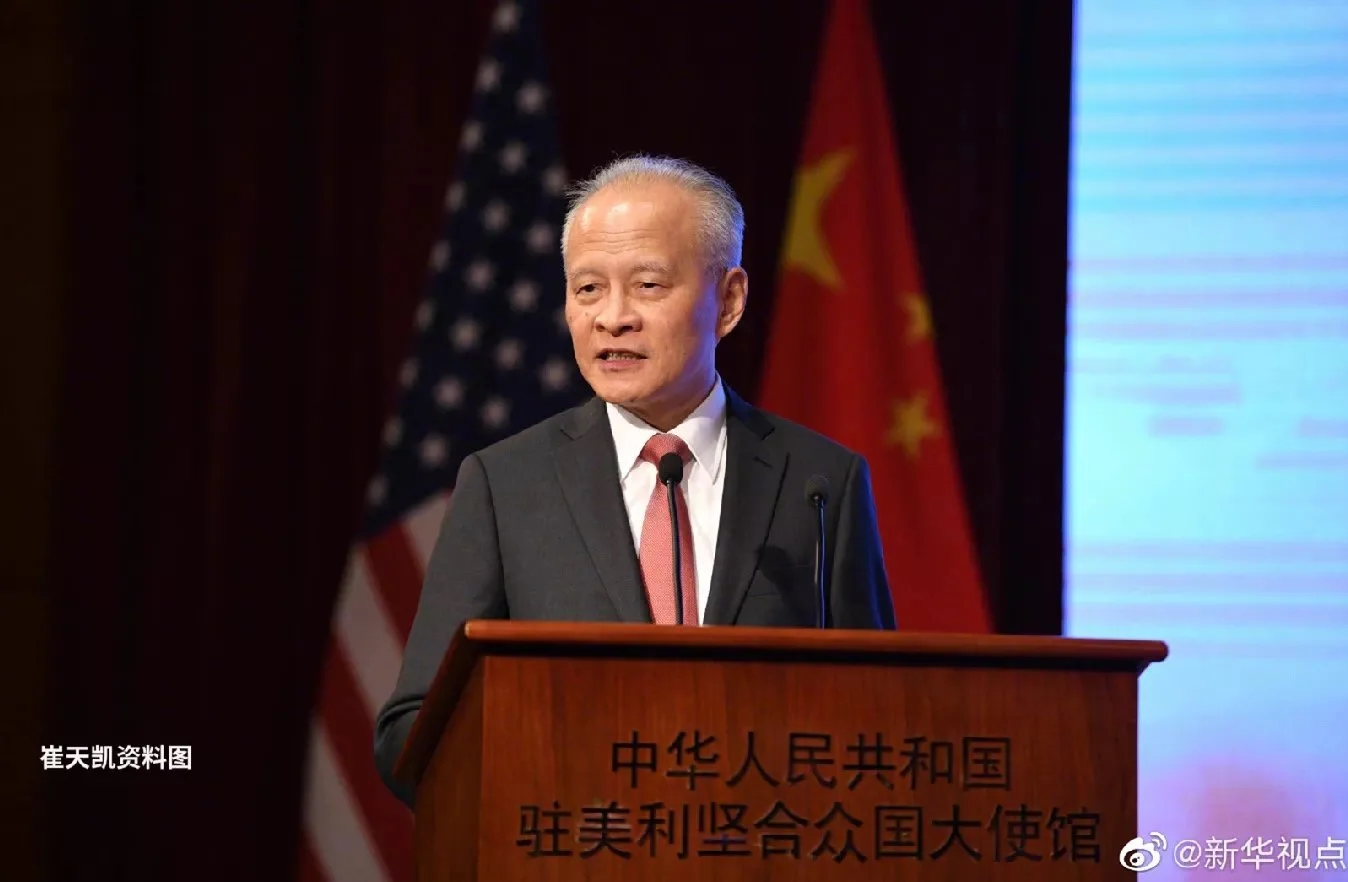
In a few days, we will mark the 100th anniversary of the founding of the Communist Party of China. Looking back at history, the sons and daughters of the Chinese nation are all filled with joy for the historic achievement of the great motherland from standing up, becoming rich to becoming strong. Generations of overseas Chinese have always adhered to the patriotic tradition and have never been absent in every period of China's revolution, construction and reform. They have made important contributions to the independence and liberation of the Chinese people and to the prosperity and development of the country. Looking forward to the future, China has embarked on a new journey of building a modern socialist country in an all-round way. This has provided broader and brighter prospects for the development of overseas Chinese. At the same time, we also need the vast number of overseas Chinese to exert their wisdom, contribute their strength, and make a unique contribution to realizing the Chinese Dream of national rejuvenation. I hope that the vast number of overseas Chinese in the United States will continue to cherish the hearts of their children, and work together with the sons and daughters of China at home and abroad to create a brighter future for China.
Since the establishment of diplomatic relations between China and the United States 42 years ago, bilateral relations have made historic achievements and the interests of the two countries have long been closely intertwined. Overseas Chinese in the United States have always been the private emissaries of Sino-US friendly exchanges with the advantage of integrating China and the West. At present, China-US relations are at a critical crossroads. The US policy towards China is undergoing a new round of restructuring and is facing a choice between dialogue and cooperation and confrontation and conflict. At this moment, overseas Chinese in the United States are shouldering more important responsibilities and missions. I hope you will continue to act as staunch promoters and active contributors to the sound and steady development of China-US relations, starting from defending your own rights and interests in the United States, safeguarding the fundamental interests of the Chinese and American peoples, and promoting world peace, stability and prosperity.
Friends at home, if the horizon neighbors. I will always cherish the deep friendship I have forged with all overseas Chinese during my mission to the United States. Finally, I sincerely wish you all good health, family happiness and good luck!
The People's Republic of China in the United States of America
Ambassador Extraordinary and Plenipotentiary
Cui Tiankai
21 June 2021
The Renewal of Old Projects: From Abandoned Steel Mills to Cultural and Tourist Resorts
Core tips:
Through re-design focusing on cultural tourism development, the old industrial plants and mining areas were turned into new city landmarks, cultural tourism leisure and consumer complex, It is not only an important measure to boost consumption, but also fits the development needs of urban leisure blocks. If the factory is the need of the times, then the transformation of the waste plant area is the market needs. However, all the lack of consumer main positioning and precise consumer group, based solely on nostalgia and petty bourgeois sentiment for the artistic transformation are illusory, out of the market, not down to earth, the result is doomed to failure.

In the industrial era, steel mills, mining plants and other industrial bases carry the glory and dreams of a generation. With the development of the times, industrial structure is constantly adjusted, and many industrial bases are gradually abandoned. How do these industrial sites, which witness the urban development, escape the fate of being submerged by the times? Under the blessing of culture and tourism, the industrial heritage is rejuvenated.
In this paper, Bioma summarized the successful cases at home and abroad, through the promotion of cultural tourism and creative architectural design, explore the new life after the transformation of old factory.
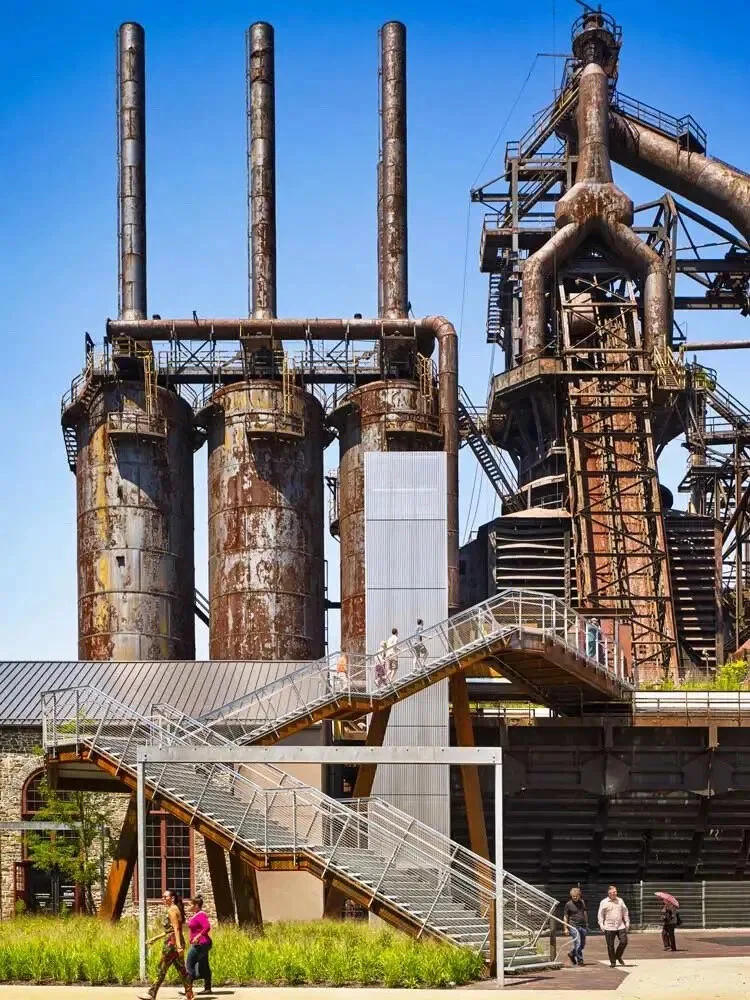
SteelStacks Arts and Culture Park
Steel Stacks is located in northeast Pennsylvania and formerly Bethlehem Steel, Founded in 1857, the 1,800-acre company was once the second-largest steel group in the United States and built 1,127 war ships and the Golden Gate Bridge.

However, the stagnation of infrastructure construction, real estate and automobile and ship industries in the 1980s led to the steel market facing a serious situation of oversupply. The plant was eventually closed, but the story didn't end there. In 2005, Beth Works Now Bass Studio acquired the plant's iconic blast furnace and 126 acres of surrounding land from International Steel Group. The following year with Sands Group Sands to jointly renovate and develop the blast furnace area of Bethlehem Steel.
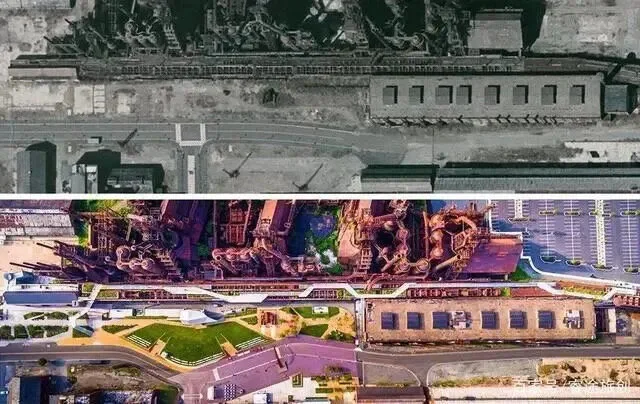
However, it seems difficult to support the new business by relying on the century-old cultural IP of the abandoned blast furnace area and the Bethlehem steel mill. In order to fully activate the area and bring in more people, the development company offered the government 9.5 acres of land free of charge, and the government lobbied the nonprofit art organization ArtQuest and PBS television stations to settle in.
The final presentation of SteelStacks Art and Culture Park is based on the original industrial heritage, Unified site landscape and new building style, at the same time the addition of overhead corridors, connecting industrial site landscape, Steel Stacks Art Park and the hotel integrated business district, the steel mill and the new community and commercial street to achieve a seamless connection.
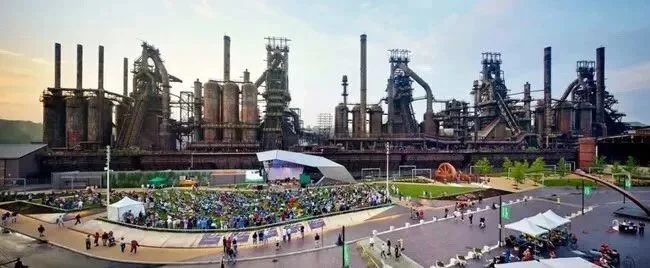
The key part of the transformation is to plan a curvilinear path through the campus, while meeting the outdoor open space needs of both sides of the Levitt Pavilion Levett Garden Plaza and ArtQuest Center and the PBS Performing Arts Center, Under the overall plan, the blast furnace site becomes the backdrop for the public space, pushing the Levitt Pavilion Garden Plaza, which incorporates art, entertainment and activities, onto the main axis opposite the main entrance to the park.
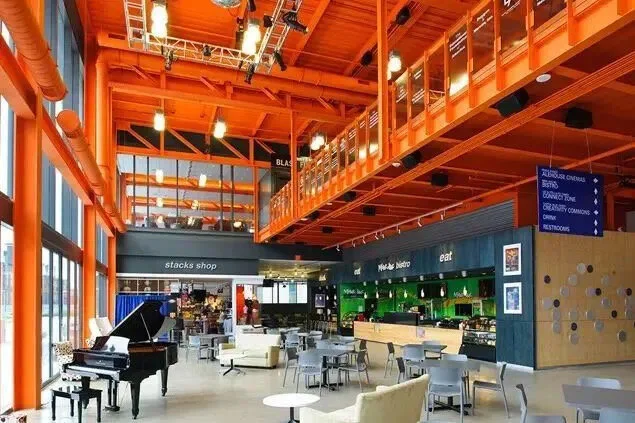
Inside the ArtsQuest Center building, music, art and film are almost nonstop - the ArtQuest nonprofit arts organization meets each year inside the Musikfest Cafe, Funding 150 ~ 170 music performances of unlimited style, which brought huge traffic to the hotel business district, as of 2017, On average, over 1000 concerts are held each year, with 13% of the traffic generated by Steel Stacks Cultural Park, Steel Stacks has become a world-renowned art, culture and entertainment park. It has been transformed into Jinsha Hotel on the east side of the park, and has brought in new talents and created a lot of employment opportunities.
Chongqing Industrial Culture Expo Park
Chongqing Industrial Culture Expo Park is located in Dadukou District, relying on the construction of some industrial remains of the prototype steel plant of Chonggang, Covering an area of 142 mu, with a total scale of 140,000 square meters, it consists of three parts: Industrial Heritage Park, Industry Museum and Cultural and Creative Industries Park. With industrial cultural heritage as the core, it forms an integrated new industrial pattern.
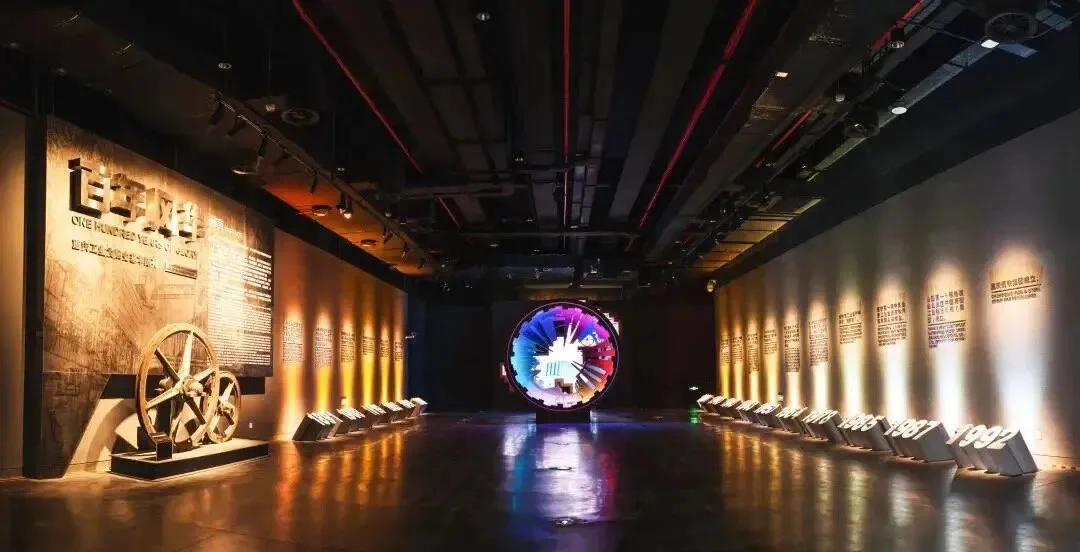
Chongqing Iron and Steel Group is a large iron and steel complex with a history of 100 years. Its predecessor was the Hanyang Iron Works founded by the late Qing Dynasty government in 1890, The steel mill is not only the history of the development of an enterprise, but also the epitome and portrayal of the bumpy progress of China's steel industry. In 2011, due to environmental protection relocation, its steel production system in the old district of Dadukou was all shut down. Then it was transformed into the Chongqing Industrial Culture Expo Park, which integrates "cultural tourism and business" into one, promoting the development of commerce through cultural tourism, so that the area glow with new vitality.
Industrial Heritage Park site in 1905 Sheffield company produced 8000 horsepower two-cylinder horizontal steam prime mover and other valuable industrial equipment exhibits, A number of themed sculptures, installations and statues of industrial pioneers embody the perfect combination of industrial culture and public art.

The Industrial Museum consists of the main exhibition hall, the "Steel Soul" museum and the industrial heritage park. It strives to create a pan-museum with innovative ideas, interactive experiences and thematic scenes.
Cultural and Creative Industrial Park combines the pan-museum and cultural and creative industries organically. It is arranged in the old factory building and the newly built LOFT space in Linjiang to form a cultural and innovation industrial park. Also the industry office, experiential commerce, sports and leisure, boutique hotels, public space leisure exchange areas and other space.
Since its opening in 2019, the park has become a new Internet celebrity punch card, and many visitors are attracted to it.
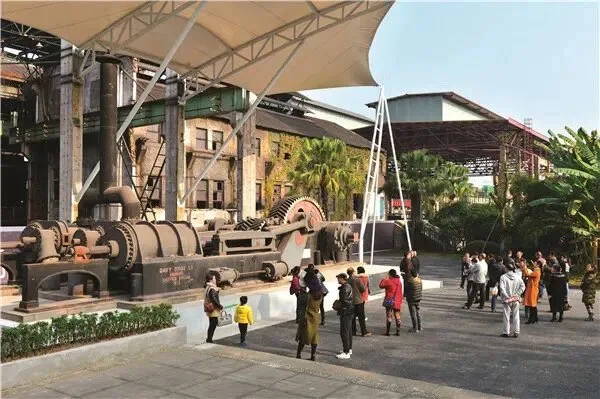
Whether foreign or domestic, industrial remains are not cold steel and masonry, But the witness of industrial civilization, bearing the culture and spirit of a city, when the wheel of the times rolling forward, these industrial remains should not be abandoned by the city, but need to be through reasonable development and transformation, reactivate these cultural carriers.
Mapping overdiagnosis of thyroid cancer in China
Globally, the incidence of thyroid cancer has increased substantially in the past three decades,particularly among young adults and even in adolescents,whereas mortality due to thyroid cancer has remained relatively stable at low levels, or decreased, almost everywhere.The intense scrutiny of the thyroid gland and widespread use of ultra- sonography and other modern diagnostic techniques have allowed the discovery of a large reservoir of previously undetectable, small, and predominantly papillary thyroid tumours. Thus, the epidemic of thyroid cancer is likely to be predominantly driven by overdiagnosis—ie, the diagnosis of cancer that would not go on to cause symptoms or death in a patient’s lifetime. Overdiagnosis of thyroid cancer has been estimated to account for up to 60–90% of the diagnosed cases in several countries.
This phenomenon might be affecting China,1 where thyroid cancer is the fastest growing cancer, with an average 20% annual increase over 2003–11.However, substantial geographical variability exists, with an approximately 45 times difference between areas with lowest and highest incidence,5 the reasons for which remain unclear.
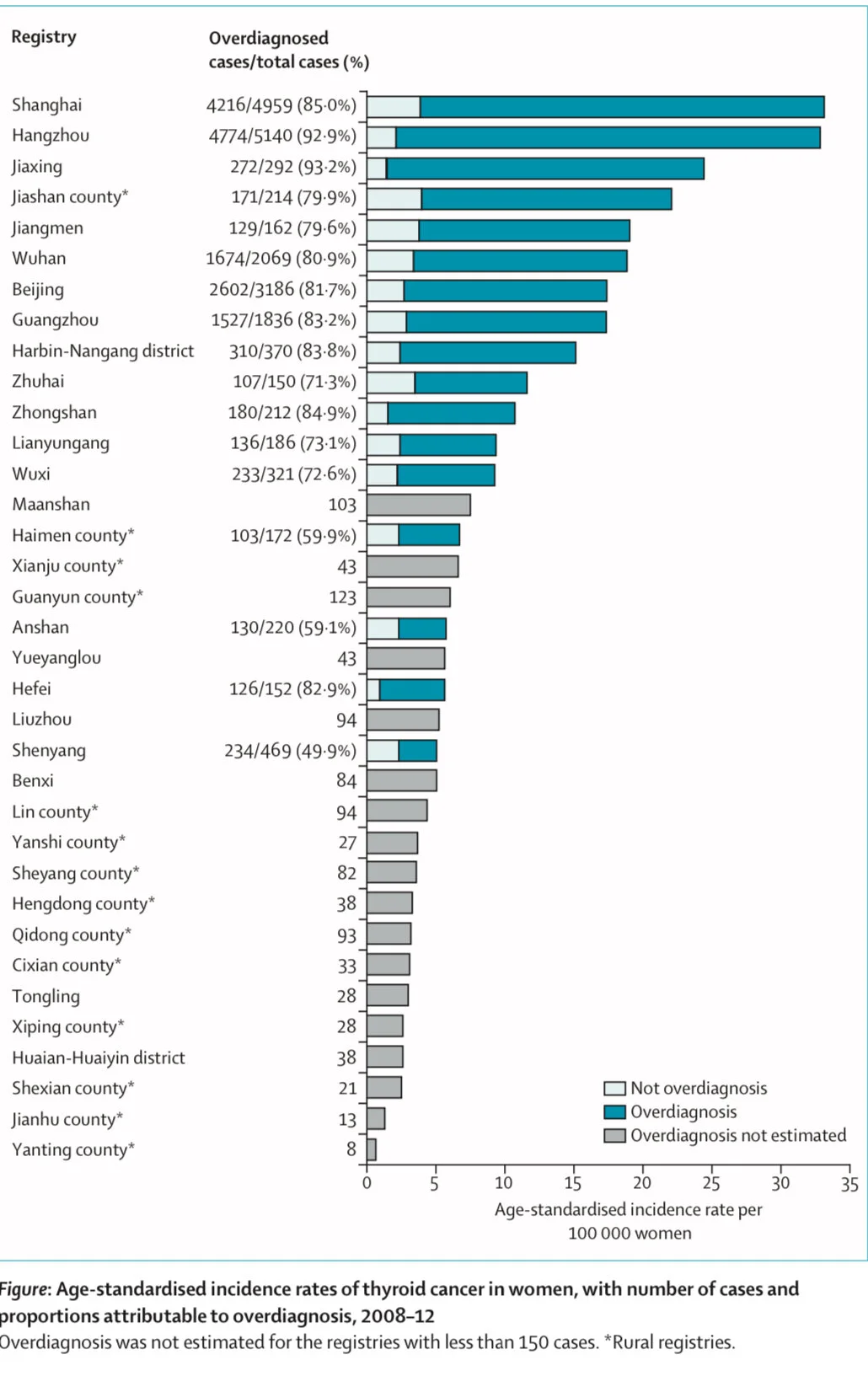
In this study, we explored the epidemiological features and the impact of overdiagnosis on thyroid cancer across regions of China, using population-based data from 35 cancer registries in mainland China included in the Cancer Incidence in Five Continents (CI5) database for the period 2008–12. In this period, 27 842 individuals aged 15–84 years were diagnosed with thyroid cancer (appendix pp 2–5). The average age- standardised incidence rate was 16.8 cases per 100000 women and 5·3 cases per 100 000 men. We found a large variability across registries in the age-standardised incidence of thyroid cancer, ranging from 0.7 to 33.9 cases per 100 000 women (figure) and from 0·4 to 11.6 cases per 100 000 men (appendix p 6). Higher incidence rates were observed in the 21 urban registries (an average age- standardised incidence 19.0 cases per 100000 women and 6·1 cases per 100000 men) than in their rural counterparts (4·9 cases per 100000 women and 1.4 cases per 100000 men). This geographical variation reflected predominantly the incidence of papillary carcinoma, which accounted for most of the diagnosed thyroid cancer cases in all registries (appendix p 7).
For ten registries with at least 10 years of registration data available (for 2003–12), we also assessed the temporal change of age-standardised incidence rates from 2003–07 to 2008–12, in absolute terms and as percentage of variation. We found increases of more than 10 cases per 100000 women and 5 cases per 100 000 men, with relative changes during this period exceeding 100% in Shanghai, Jiaxing, and Jiashan county (appendix p 12).
Contrary to incidence and similarly to what has been observed in other countries,thyroid cancer mortality remains low in China Previous studies have shown that the age-standardised mortality rate of thyroid cancer was 0·35 deaths per 100 000 women and 0.19 deaths per 100 000 men in 2010,far below the observed incidence, with an incidence-to-mortality ratio exceeding 40 in women and 20 in men. Even in high-incidence areas such as Zhejiang province, where the registries of Hangzhou, Jiaxing, and Jianshan county are located, age- standardised mortality of thyroid cancer remained stable at relatively low levels in the period 2000–12.7
A distinct epidemiological feature of thyroid cancer overdiagnosis that has been observed globally is that the increase in incidence is typically accompanied by a shift of the age at diagnosis, with a peak at around middle age (35–64 years), instead of at older ages (65–84 years), as was observed before the 1980s.Indeed, when plotting incidence against age at diagnosis in 2008–12 many regions of China followed this pattern, resembling an inverted U-shape, which was particularly pronounced in urban areas with high age-standardised incidence rates and large cities like Shanghai and Hangzhou (appendix p 8) but much less prominent in rural registries, except for Jiashan county (appendix p 9). Women in particular were found to be diagnosed early in life (age 30–49 years), probably due to their greater access to the health system than men due to gynaecological and obstetrical reasons, leading to increased chance of having their thyroid scrutinised by ultrasound. Unfortunately, data on the number of ultrasound machines in the study areas are not available.
We calculated overdiagnosis on the basis of the difference between the observed and the expected age-specific incidence, where the expected age curve was assumed to correspond to a scenario without overdiagnosis (ie, incidence increasing with a power law of age, as in historical patterns and in agreement with the multistage model of carcinogenesis; appendix pp 2–3). For all 21 registries in urban areas combined, we estimated that overdiagnosis accounted for 16 721 (83.1%) of 20 114 thyroid cancer cases in women and 4986 (77.3%) of 6452 cases in men in 2008–12. The highest proportions of overdiagnosis were estimated for Shanghai, Hangzhou, Wuhan, Beijing, and Guangzhou, accounting for over 70% of all thyroid cancer cases for both sexes (figure; appendix p 6). For all 14 rural registries combined, we estimated that 597 (60.4%) of 989 thyroid cancer cases among women and 170 (59.2%) of 287 cases among men were overdiagnosed.
We further assessed the possible role of availability and access to health care in China that, together with screening prevalence and socioeconomic development, has been found to be positively associated with incidence of thyroid cancer in previous national and international studies.We found that the age-standardised incidence of thyroid cancer was strongly associated at the regional level with gross domestic product (GDP) per capita and with the number of hospital beds per 1000 people in both sexes (appendix pp 10). One unit (¥10 000) increase in log(GDP) was associated with a 0.93 (95% CI 0.51–1.36) times increase of log(age-standardised incidence) in women and a 0.90 (0.50–1.31) times increase of log (age-standardised incidence) in men. The corresponding Spearman correlation coefficient was 0.52 (p=0.0017) in women and 0.60 (p=0.0002) in men. The regression coefficient of log(age-standardised incidence) on log-transformed number of hospital beds per 1000 people was 0.83 (95% CI 0.38–1.28) in women and 0.83 (0·42–1·24) in men; and the corresponding Spearman correlation coefficient was 0.44 (p=0.010) in women and 0.52 (p=0·0019) in men. Similar findings were observed when we only included the papillary thyroid cancer cases (appendix p 11).
Despite limitations due to possible ecological fallacy, we found that overdiagnosis of thyroid cancer occurs more often in regions where people have increased accessibility and affordability of health care than in other areas. No organised screening programmes for thyroid cancer exist in China, but the unregulated nature of the offer of medical services might lead to a large number of unnecessary check-ups. Thyroid ultrasound is included in the checklist of services in many health examination centres in China, especially under the scheme of urban employee-based basic medical insurance. The predominant fee-for- service payment method might have worsened the situation by creating incentives for hospitals to encourage more examinations. A national survey showed that the prevalence of thyroid nodules detected by ultrasonography was 20·4% in adults from the general populations.The large reservoir of subclinical disease in the general population, combined with the increasing use of non-evidence-based and extensive examinations, might have driven the high proportion of overdiagnosis in the urban areas.
Although rural areas were less affected by overdiagnosis than their urban counterparts, overdiagnosis cannot be ignored in these areas for at least two reasons. First, uneven development was seen within rural areas. For example, Jiashan county, where we observed substantial overdiagnosis, is among the top 100 counties in China in terms of comprehensive strength and development. Second, the rate of urbanisation has been accelerating in China over the past four decades. With the fast socioeconomic transition, the trends of thyroid cancer overdiagnosis observed in urban areas could potentially spread to rural areas if no regulation measures are available.
In conclusion, we found that many registries in China, predominantly in urban areas, seem to display the typical epidemiological features of overdiagnosis of thyroid cancer. These features include a large geographical variability in the incidence of the disease; a fast increase in incidence over a short period of time without a corresponding increase in mortality; a large proportion of papillary carcinomas; a great distortion of age-specific curves; and a positive correlation with indicators that are proxies of availability and access to health care, such as GDP per capita and number of hospital beds, suggesting that overdiagnosis has a major role in the regional variation of incidence of thyroid cancer.
Overall, our analyses indicate a possible sizeable problem of over- diagnosis of thyroid cancer in several urban cities in China. Individuals who are overdiagnosed with thyroid cancer undergo heavy and unnecessary treatments (including surgical removal of the thyroid gland and lifelong hormonal replacement therapy), which implies substantial impairment of patients’ quality of life and also relevant economic costs for patients and the health system. Thyroid cancer overdiagnosis is an example of medical service overuse, which is a major challenge to increase health service equality and reduce the governmental expenditure simultaneously. Our findings from China—a country rapidly transitioning to a higher level of socioeconomic status—should be an early warning to this emerging economy and other countries at a similar stage of development.
Healthcare Stocks: Four Questions for the Recovery
Bernstein
Disappointing returns for healthcare stocks through the market’s recovery from the pandemic have raised concerns about the sector. But there’s still plenty of promising growth potential to be found. These four questions can help investors identify areas of interest.
Since the pandemic began, many investors have paid close attention to the healthcare sector. Yet global healthcare stocks have trailed the broader market since the recovery from the COVID-19-related crash began in April 2020 and in the year to date (Display).
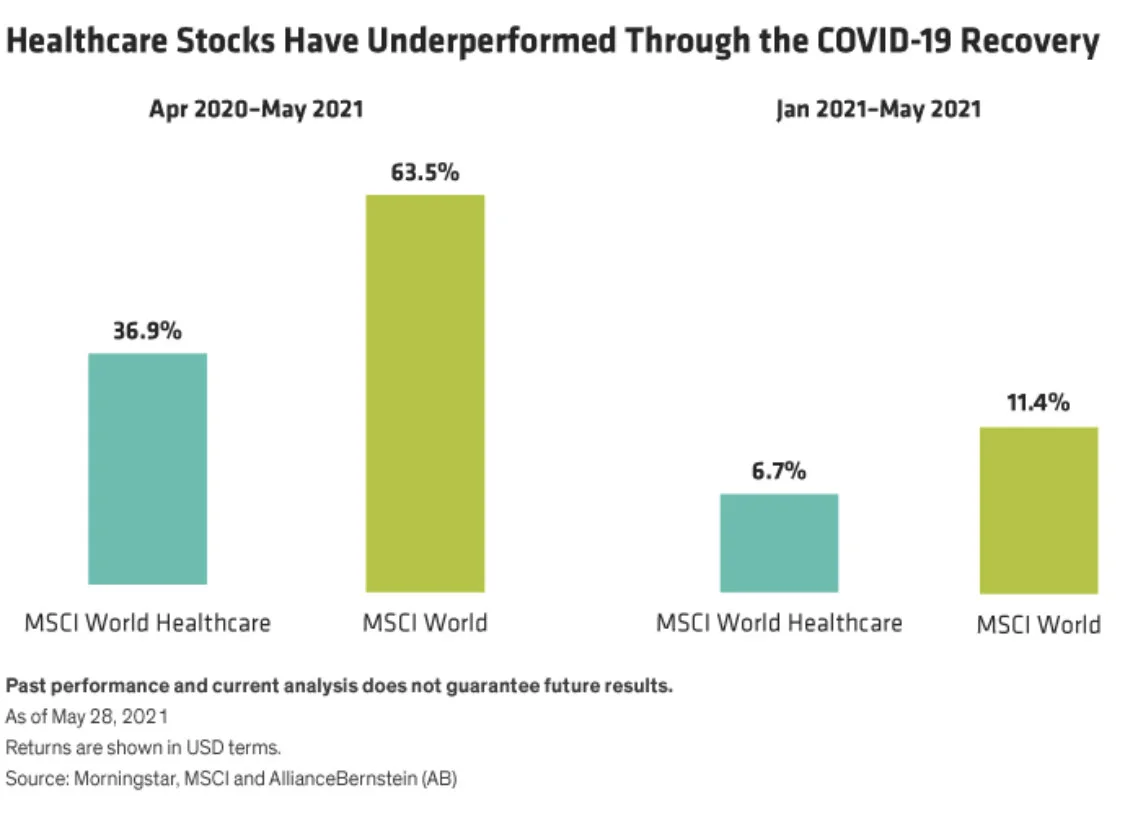
Why the underperformance? First, the sector was affected by a rotation into more economically sensitive industries and out of more defensive industries such as healthcare as investors positioned for an economic reopening post COVID-19. Second, unprofitable small- and mid-cap biotech companies have sold off this year, following strong but volatile gains in 2020. Lastly, rising interest rates have suppressed gains for growth stocks in general—including healthcare—which tend to benefit from lower discount rates. But these trends don’t undermine the long-term appeal of innovative healthcare companies with strong business fundamentals, in our view. The following questions can help guide the way to attractive opportunities in the sector.
1. How has the development of COVID-19 vaccines changed the healthcare industry?
Historic efforts to develop COVID-19 vaccines have had two huge effects on the industry. First, the success of mRNA technology has added an important weapon to drugmakers’ arsenals. We’ve learned from the pandemic that this new technology can be scaled up quickly to deliver a highly efficacious vaccine. It won’t be successful wherever it is applied. But we can look forward to new mRNA-driven efforts to develop vaccines for influenza—which has similarities to COVID-19—and also potentially for malaria, for HIV and in oncology.
Second, drug development has accelerated. The urgency of COVID-19 vaccines triggered innovations to clinical trials that will be applied more broadly. For example, instead of having patients come into hospitals for tests, we believe that some clinical trials will be able to utilize new technologies to monitor trial subjects remotely, effectively decentralizing the clinical trial process. Regulators have also shown they can cut red tape and hasten processes. Time-to-market for drug development may improve from the current standard of seven to 10 years by about a year or two, in light of these two trends.
2. What do the Biden administration’s policies mean for the US healthcare market?
Since President Biden’s election, there’s been quite a bit of talk about what policies he might apply to the healthcare sector, particularly on drug pricing or health insurance. So far, there haven’t been signs of major healthcare initiatives. Even within the Democratic party, there’s formidable opposition to major drug pricing reform such as reference pricing, which would link US drug prices to what’s being charged in Europe, or allowing the government to negotiate drug prices. Efforts to waive patents on COVID-19 vaccines to help reduce costs for emerging markets are also stuck. This requires international consensus, and Germany has recently opposed proposals to waive patents. So overall, we don’t expect any extreme policy changes for the healthcare sector under the new administration, which reduces policy risk for investors.
3. Does an ESG focus identify unique risks or opportunities for healthcare companies?
Integrating environmental, social and governance (ESG) factors in an analysis of healthcare companies is becoming increasingly important for equity investors. Since healthcare is an industry that has a profound impact on society, there’s a growing focus on the value of care provided for patients and communities. We believe companies that improve the value of care delivered make a positive impact on the healthcare system, which positions them well for growth in an era of rising healthcare costs and increased government involvement.
The value of care can be improved by decreasing the cost of service, increasing the benefit to patients or both. Another way to measure value is to connect healthcare with social determinants of health, such as housing, age, and community and education, which can help reduce adverse outcomes. Engaging with companies to increase the value delivered to patients is an effective ESG framework for investing in the healthcare sector, in our view.
For example, by focusing on value-based outcomes, UnitedHealthcare has shortened the length of hospital stays per case by 40% and lowered the mortality rate for patients with congenital heart disease by 41%. Patients who have used the company’s cost and wellness transparency resources have paid nearly 30% less than patients who did not. Edwards Lifesciences produces heart valves that are much cheaper than competitors’, which fosters shorter recovery times and helps people live longer. These examples show how a value-based ESG approach focused on patient benefits can also create better business outcomes for companies—and support returns for investors.
4. What are the latest trends in healthcare that deserve investor attention?
Diagnostics is an exciting segment of the industry. The pandemic taught us the hard way that a more sophisticated testing infrastructure could have helped prevent the spread of COVID-19. So, there will be increased efforts—particularly by governments—to develop preventative diagnostics capabilities. We’ll see significant investment in surveillance and tracking systems.
Efforts to bring medical care closer to the home are growing. The more you can keep people out of the hospital and intervene earlier, the better it is for the patient and for society. Technology will also be used more broadly, for example, to identify patients who are at risk of a bad outcome, which can help determine the sequence of care.
Data analytics, too, are becoming more commonplace to improve outcomes in innovative ways. For example, data analytics can help surgeons refine their skill set and understand where their technique could be better.
These trends are creating fertile ground for equity investors. But don’t be blinded by science; exciting drugs in development and new technologies on their own aren’t good guides to investing success, in our view. Focusing on business fundamentals—balance sheets, competitive advantages, cash flows and profitability—is the best way to find innovative healthcare companies that are well positioned to deliver long-term returns to equity investors in a rapidly evolving post-pandemic world.
AUTHORS
Vinay Thapar
Portfolio Manager and Senior Research Analyst—US Growth Equities and International Healthcare Portfolio
Ryan Oden
Research Analyst—Equities—AllianceBernstein
Zhangjiahui first instance judgment disclosed a complete bribe-taker list and details
Zhang Jiahui is a senior judge and her husband controls more than 30 companies. The couple's assets have been reported to be worth at least 20 billion yuan.

The mah-jongg judge would still be enjoying herself at the lakeside clubhouse if someone hadn't posted audio and video recordings of their daily conversations online. The female judge is not an ordinary judge. She is Zhangjiahui, the vice president of Hainan Higher People's Court and a doctor of law.
Yesterday, Zhangjiahui's first trial judgment was announced, and a detailed list of people who bribed her was disclosed. A staggering half of the 37 bribe-givers were lawyers. Moreover, many of these bribe-paying lawyers are famous and have many titles. They are literally "red-top lawyers".
Let me give you two examples:
Tu Xianya offered a bribe of 2.45 million yuan to Zhang Jiahui. Tu Xianya has been awarded the title of "Honest Lawyer" by the Justice Department of Hainan Province for many consecutive years, and was awarded the "Outstanding Contribution Award" by the Justice Bureau of Haikou City. From August 1992 to the present, in addition to serving as partner lawyer and director of hainan fangyuan law firm, he is also the vice president of hainan lawyers association.
Zhang Jie, who bribed Zhang Jiahui with 1.4 million yuan. Zhang Jie is the deputy director of the Civil and Commercial Committee of Hainan Bar Association. He has been awarded the titles of "National Advanced Individual for Legal Aid", "National Excellent Party Member of the Chinese Farmers and Workers' Democratic Party", "Hainan Advanced Individual for the Protection of Women's Rights and Interests", "Hainan CPPCC Outstanding Proposal", "Hainan Outstanding Lawyer" and so on. All of them are people who can't print their name cards and know how to use the law, but in their eyes, all of them have been transformed into money.
From 2013 to 2019, Tu Xianya, the woman mentioned in the article, went to her home every Spring Festival, leaving 200,000 yuan at a time. When the specific lawsuit, and then hundreds of thousands of hundreds of thousands of send. After getting the money, Zhang Jiahui greeted his subordinates several times and asked them to pay attention and treat them differently in the trial.
There was another detail in the verdict that struck me.
The scene of Zhang Jiahui receiving 3 million yuan from the lawyer Liao Zhetao. The "pimp" was Ding Ting, the head of the People's Daily's Hainan bureau, who has a local reputation for patronizing mainstream media. Originally, the litigant of the first instance lost the lawsuit, but the lawyer Liao Zhetao, through Ding Ting's request, asked Zhang Jiahui to say hello to the judge in charge, and simply pulled the lost case back.
According to the judgment, the verdict was changed in full accordance with Zhangjiahui's opinion, and the party who had already lost not only won, but also got 20 million yuan in payment and overdue liquidated damages.
Then a wonderful scene happened. The lawsuit won, the lawyer Liao Zhetao let Ding Ding drive a red Mercedes Benz to Haikou City Shuiyuntian District near the west gate, the two with a total of 3 million yuan in cash box to give Zhangjiahui - this kind of crime film in the underworld trading picture actually appeared in broad daylight.
The two parties are a senior judicial official and judge, and a leader and reporter of the People's Daily Hainan bureau. Hidden between them are highly respected professionals in the industry -- lawyers.
Judges, journalists, lawyers, the three identity in China on behalf of justice, in the two rod box, 3 million yuan in front of the crash, the law was forced J, strong J in the carnival!
The other bribes Cheung received were:
Received 6.15 million yuan from Zhang Fu, a lawyer who had entrusted Zhang Jiahui with the lawsuit of Industrial and Commercial Bank of China on his behalf; Received $1.25 million from lawyer Tong Tien Hang; Accepting 1 million yuan from lawyer Li Yongtao; Accepted one million yuan from lawyer Wang Lin; Accepting 800,000 yuan from lawyer Su Yanyan; Accepted 550,000 yuan from lawyer Pei Fei; Accepting 500,000 yuan from lawyer Chen Xiaoguo; Accepting 500,000 yuan from lawyer Wu Zhen; Accepting 450,000 yuan from lawyer Fan Wenjin; Accepting 300,000 yuan from lawyer Hu Tian; Accepting 200,000 yuan from lawyer Zhao Jianping; Accepted 100,000 yuan from the lawyer Ding Xin...
A judge, surrounded by lawyers; Behind a group of lawyers, the parties who pooled their money were enshrined. Rich you win, how to adjudicate anyway there are people who know the law to play with the law; You are in the right, but how can you make him rich?
In fact, the reason why Zhangjiahui exposed, pure chance. Had it not been for someone to film her words and actions, her luxurious life, Zhang Jia-hui is still living in the sweet days of a ladylike vice president, and in front of the camera, she is still the love of the country, the most safeguard the dignity of the law, the most against the interference of judicial bribery of female judges.
More than ten years of bribery, the total amount of such a huge, and so many years of "benign interaction" with lawyers, only to be exposed through Internet users' Revelations, this is probably the most chilling place ah!
I do not believe that in the judicial field only a Zhangjiahui will say hello, will take the power to circle money; I don't believe that in the legal profession, these 18 lawyers are the only ones who know how to give money. In the judicial circle, how many people are taking money as a legal gavel, deciding the true and false right and wrong, beauty and ugliness with money!
However, what on earth do we rely on to restrain, what on earth to pull out the cancer, and what to ensure the fair operation of justice?
Justice is the life of the judiciary, and the people of the judiciary but take the power to trade interests, the judiciary where there is justice?
It used to be said that the yamen opens to the south. It is difficult to come in without money and reason. But now for Zhangjiahui people, come in is come in, but want to maintain a justice to go back, first want to ask your opponent in the hand of the money is willing to! Ask your lawyers if they are in league with you!
I always believe that the three corruptions are the most hatable. One is the corruption in the education system. The worst is the hope, which makes people unable to see the future. Another is the corruption of the health system, which makes life harder for patients and their families. Another is the corruption of the judicial system, which is bad for faith, so that people have no place to complain.
If your case is in the same judicial environment as Zhangjiahui, you say, can you win this case? How is it possible
One More Chip Company Went Bankrupted
Due to the bottleneck of electronic industry, "chip development tide" started across the country a few years ago. All kinds of funds poured in crazily, and chip industrial parks have also been built in various places.

However, so far, few.chip factories are heard to output chips, some of them have closed down.
Since the collapse of "Huaxintong Semiconductor" in 2019, the most famous one, Wuhan Hongxin, which claims to invest nearly 100 billion yuan, has turned into an unfinished building and invested tens of billion yuan in "Nanjing Dema", with tens of billion yuan spent out, has also declared bankruptcy.
There are also Chengdu Gexin: established in 2017 and stopped working in 2020; Changsha Chuangxin: established in 2013 and auctioned in 2020; Shaanxi Kuntong Semiconductor: established in 2018 and suspended in 2020.
We wonder What on earth happened to these chip companies that once boasted high hope for?
Still, there are some more stories.. A few days ago, there was another piece of news that Shandong chip enterprise, Jinan Quanxin, with 59.8 billion yuan invested in, has stopped paying wages since April this year, and the construction of the factory building has also stopped one after another.
This is a chip enterprise that once had strong support from Jinan, Shandong Province. This enterprise also weny to Taiwan to hire technicians.
According to the report, Quanxin currently has only more than 400 employees, 180 of whom are engineers recruited from Taiwan. The average monthly salary of these Taiwanese engineers is between 50,000 yuan and 100,000 yuan.
The construction of Quanxin's plant began in 2019, when it was planned to build a chip plant that could produce 12 nanometers chips, with an annual output of 480,000 wafers and 2,400 light masks.
The factory has so far ordered a large amount of equipments, and the deposit alone has paid about 1.7 billion yuan.

According to public information, Quanxin was established at the end of January 2019. The three major shareholders are Yixin Jiji Circuit (Zhuhai) Co., Ltd., Jinan High-tech Holding Group Co., Ltd. and Jinan Industrial Development and Investment Group Co., Ltd. The last two units are all affiliated to Jinan State-owned Assets Supervision and Administration Commission.
However, the business is now facing great difficulties.
An employee of Quanxin said in an interview with the reporter, "The company is in a very difficult situation now. Since April, it has stopped paying salaries, and the company is forcing employees to leave."
The contractor in charge of plant construction also said, "This enterprise has changed the general contractor many times during the construction of
Clips of Red Mansion Private Home Cuisine shot in Heritage Villas Zhouzhuang
Introduction to Zhouzhuang yueyunzhuang Hotel
Zhouzhuang is located in Kunshan, Jiangsu Province. It is surrounded by water on all sides which are very close to each other. The ancient town is with a typical style of small bridges and flowing water families in the south of the Yangtze River. Wu Nong's soft language, the fragrance of grandma's tea, the sound of Lu and the long history of Kunqu Opera make Zhouzhuang one of the ten most beautiful towns in the world.
Invested and managed by Invengo Group, phase I of Yueyunzhuang Hotel in Zhouzhuang officially opened on September 28, 2018. The hotel perfectly combines our hospitality and local traditional architectural style to create a warm and unforgettable accommodation experience for guests in the world-famous ancient town of Jiangnan.
The hotel includes 60 boutique B & B rooms and deluxe guest rooms with rich local traditional culture and comfortable space design, as well as parent-child entertainment facilities full of idyllic nature, such as Minigolf course and outdoor recreation area.
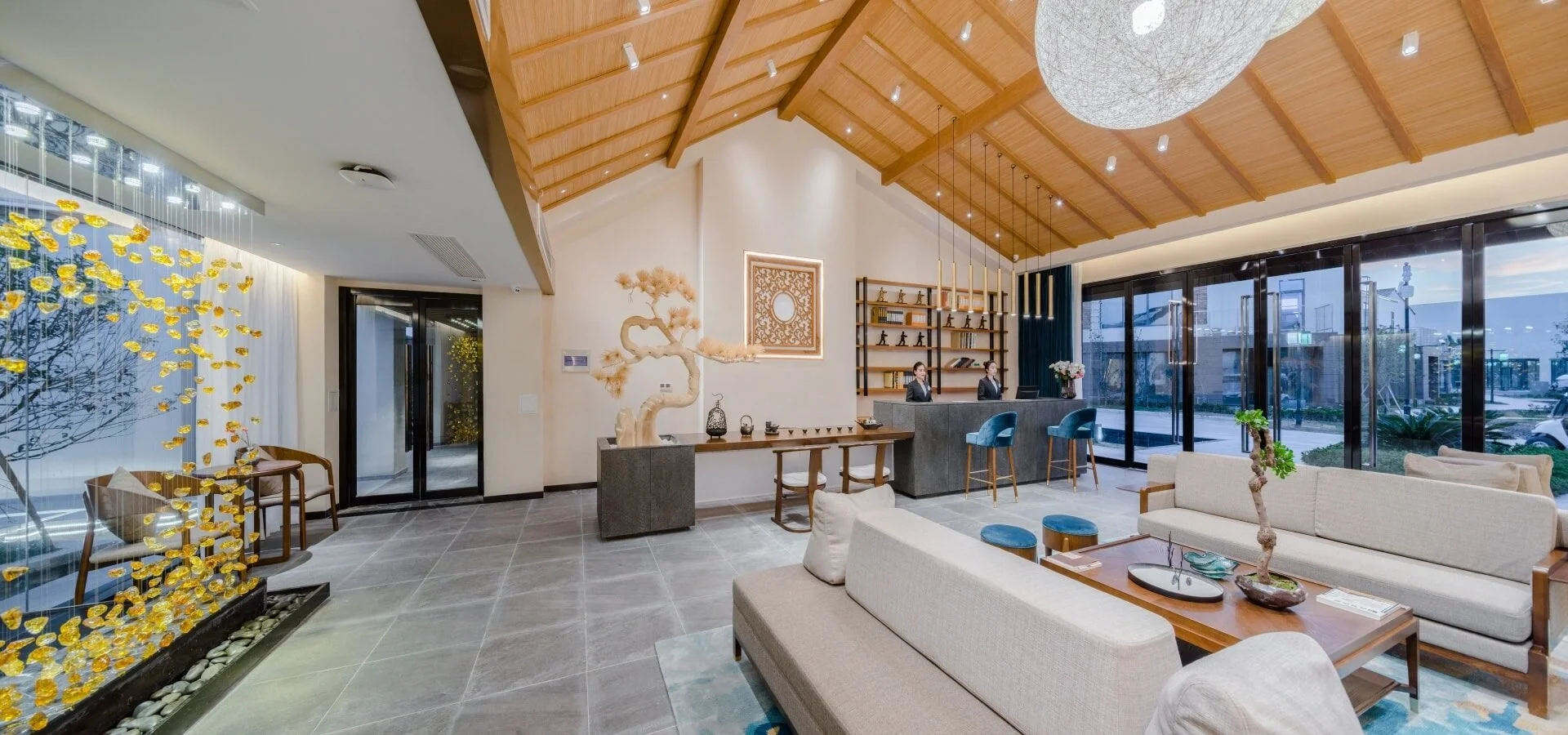
The story of Red Mansion Private Home Cuisine
It tells a story about a group of young people who love food and encounter many difficulties in the process of studying Honglou cuisine, and finally overcome all difficulties to grow up. This drama depicts several young people in the realization of their dreams and love at the same time and how to make perfect traditional Chinese cuisine for consumers, so that more people can taste and understand the long cultural history of Honglou cuisine, pay attention to the traditional Chinese cuisine and history of culture. The love story between Shen Lu, a food lover, and Lin Di, the inheritor of a famous Honglou restaurant in the south of the Yangtze River, takes the development and innovation of food and the competition in the catering industry , and vividly shows the courage and determination of contemporary young people to pursue love and realize their dreams.
Heritage Villas Zhouzhuang was chosen as main production base of TV series <Private Home Cuisine in Red Mansion> in April 2020. Now let’s start enjoying the wonderful clips and the beautiful hotel. All the videos are watched through moderator myself-paid third platform without any advertisements. In order to save the moderator’s money, please don’t take them as your lullaby.


Delux Loft Suite Became Shen Lu’s House
Do you want have a look at what 125 square meters luxury loft suite where Shen Lu stayed is like? Come and enjoy the video on the right! Moreover if you like experience our service and wonderful stay, press here to book.
Lin Di was stung by bees in order to find authentic food materials

Next to the hotel is the fresh Yungu Farm, which is a commercial project developed by Invengo Group Kunshan Company. Lin Di wants to make Lingaofen, which is a signature dish of Honglou Private House Cuisine. You should know that this dish has high requirements on the quality of honey. So the field was disguised as a bee farm. Look! Lin Di and Shen Lu came to gather honey.Oh, and don't forget there is Invengo Minigolf International Club on the east side of the garden, if you want to book an experience, please click here
The hotel is full of fresh air, Shen Lu is innovating a special dish

Have you ever heard a rooster crow? In this southern water country surrounded by 3,000 rivers. The morning air was naturally fresh. Beauty Shen Lu's mood is particularly happy today, Now she has begun to show Lin Di her cooking skills.

Lobby was truned into Red Mansion restaurant and starting soon
Lin Di will finally have a restaurant to practice their cooking skills. Finding investment, hiring, decorating, everything really took him to his feet. But taking the lobby of Yueyunzhuang Hotel as a restaurant. We were a little bit reluctant.
Xiao Tong plotted to destroy restaurant brand but saw through by Lin Di

Xiao Tong actually hired people to pretend to be poisoned to hit the brand of Red Mansion restaurant. Fortunately, the customer just happens to live in the Cloud Valley Garden next door. This makes it relatively easy to investigate and collect evidence. Soon the truth came out and the restaurant reopened. One more word on Cloud Valley Garden,it's the local famous community. With full intelligent appliances and dedicated decoration, there are garden houses and townhouses you can choose.
With feeling of taste loss, Lin Di felt sad

You know how painful it is , for a professional cook, someone who wants to win the national cook-off, to lose the sense of taste. It is as painful as a singer who has lost his speech or a musician who has lost his hearing. Thankfully, the disease usually clears itself slowly.
Lin Di showed his skill on making Lotus Rice Cake

《Dream of Red Mansion》mentioned this private house dish in Chapter 41. Jia Mu said, "I'm not hungry after two glasses of wine. Well, let's take them here and help ourselves to some." When the maids heard that, they brought two small boxes, including Lotus Rice Cake. Now this private room dish is cooked in this heritage villas, also attracted a lot of guests. Would you like to try the food here? Please click here to order.
Lin Di Preparing for the Cook-Off

If you don't look at the whole process, you think it's not food but a work of art. But if you look at the whole elaborate process. Don't you think this chef is an artist,? No, the chefs of This heritage villas hotel are all artists. They not only make exquisite food, but also carve history, culture and time.
Luxury washroom made Shen Lu feel so relaxed

If you look at Shen Lu lounging in bed, you can imagine how comfortable the bed is. The bedroom is huge, too! Maybe you've stayed in a fancy hotel, or a big room like this, but have you ever stayed in a room with a bathroom this big? And every toilet seat is equipped with automatic flushing system
Moyi and Qingqing Falling in Love

Stay at Yueyunzhuang Hotel, you can not only harvest food, leave memories, you may also harvest love. Look! Ding Moyi and white Qingqing are harvesting love here。
Opening Song

Although it's not a long series, the opening song and the ending song are both here. The producers really covered everything. The melody sounds soft and cheerful, and the lyrics are delicious: "It was as if strawberries were folded into a creamy embrace, and the air was sweetly fermenting. laughing and tears together with happiness and a sadness, made us just fall in love" Let's enjoy it.
Ending Song

Ice cream accompanies vanilla, you say it is the taste of love. We held hands and hugged each other. How lovely it is to forget your troubles and go to bed with a smile on your face". This is the true portrayal of 90s' optimism. How lovely young!
The furnace flame made love burning too

Have you ever seen the furnace flame in the lobby of Yueyunzhuang Hotel? She is always burning and is so prosperous, always let a person be passionate and unrestrained, unrestrained like Bai Qingqing's bold and straightforward, Only if Ding Moyi meet with her, she will not let him go.
Shen Lu's appointment with Xiao Tong made Li Di jealous

When someone falls in love with someone else. Even if clumsy and simple words can also express true feeling, so touched each other's heart. Let us take a look at How the action and simplicity of Lin Di moved Shen Lu, made Shen Lu change her mind
Ding Moyi hit Xiao Tong's luxury car

With riding a scooter, Ding Moyi hit Xiao Tong's luxury car. In his panic, he thought he was in great trouble. In fact, this is just a ruse of Xiao Tong. Ding Moyi has no money to oay for it, then he stole the menu of Honglou private home cuisine, handed over as compensation.
Behind the scenes
The night scenery of Yueyunzhuang Hotel is charming. The film crew arranged a lot of equipments at the scene, towering lights and cameras added a lot of charming colors to the night of the hotel.
If you want to watch these clips on your computer or TV, or download super quality and non-watermark videos, Press here to get them