From Sanctions to Capture: The Finale of the U.S. Policy Evolution Toward Venezuela Over Sixteen Years
Justin Lee
Abstract: Since 2010, U.S. policy toward Venezuela has escalated step by step—from diplomatic condemnation and economic sanctions to political isolation, culminating in military action. On January 3, 2026, under the pretext of a "law enforcement operation," the U.S. dispatched special forces into Caracas and announced the capture of President Nicolás Maduro. This sixteen-year-long standoff has reached a temporary, highly controversial conclusion with an arrest, yet it has also ignited new disputes over sovereignty, international law, and unilateralism.
I. From Criticism to Sanctions: The Gradual Escalation of Pressure (2010–2014)
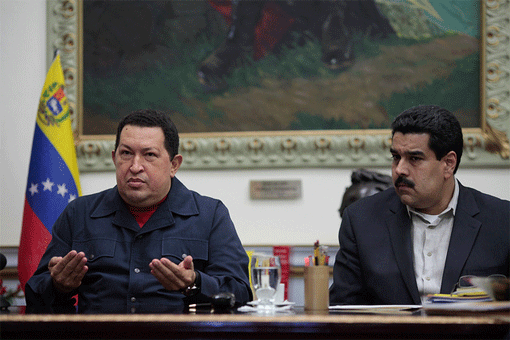
In the early 2010s, U.S. attention toward Venezuela remained focused on democracy and human rights issues. The then-president, Hugo Chávez, was criticized by Washington for suppressing media and undermining institutions, but economic ties—especially in oil—persisted, leading to a relatively cautious U.S. stance.
Following Chávez's death in 2013, Maduro won the presidential election by a narrow margin. The U.S. did not immediately recognize the results, calling instead for a "transparent review," foreshadowing its later refusal to acknowledge his legitimacy.
The turning point came in 2014. Large-scale protests erupted in Venezuela, met with a forceful government crackdown and the arrest of opposition leaders. The U.S. Congress responded by passing the Venezuela Human Rights and Civil Society Defense Act, authorizing sanctions against individuals responsible for human rights violations.
This marked a significant shift in U.S. policy tools, moving from verbal condemnation to tangible sanctions. The act became the legal foundation for the sanctions regime that followed, formally linking human rights issues to punitive measures.
II. Maximum Pressure: The Systematization and Comprehensive Blockade of Sanctions (2015–2018)
In 2015, President Obama signed an executive order declaring the situation in Venezuela a threat to U.S. national security, paving the way for broader sanctions. Initially, these targeted individuals, aiming to penalize core figures within the regime.
With the Trump administration, the policy became markedly more confrontational. The so-called "Maximum Pressure" strategy was launched, seeking to force Maduro from power through all-encompassing pressure.
Sanctions escalated rapidly:
· At the individual level: Maduro himself, his family, the vice president, high-ranking military officials, judges, and others were successively added to sanctions lists, with accusations ranging from undermining democracy to corruption and drug trafficking.
· At the economic level: Starting in 2017, financial sanctions cut off the Venezuelan government's access to international financing. In 2019, the state-owned oil company PDVSA was sanctioned, its assets frozen, and its oil revenues diverted to accounts controlled by the opposition. That same year, the U.S. froze all Venezuelan government assets within its jurisdiction and threatened "secondary sanctions" against any entities supporting Maduro.
By this point, U.S. sanctions against Venezuela had reached the level of a comprehensive blockade, comparable in severity to policies toward Cuba and Iran. Although humanitarian exemptions were included in the provisions, their implementation proved difficult in practice, worsening Venezuela's domestic humanitarian crisis.
III. Dual Recognition: Diplomatic Showdown and Political Division (2019–2021)
In 2019, the U.S. adopted a radical diplomatic move: it ceased recognizing Maduro and instead recognized opposition leader Juan Guaidó as "Interim President." Washington and its allies sought to create a power split within Venezuela, using it as leverage to engineer a change in government.
The U.S. quickly transferred control of official government accounts to Guaidó's representatives, provided financial support, and lobbied internationally, garnering recognition for Guaidó from over 50 countries.
Trump administration officials repeatedly hinted that "all options are on the table," including military intervention. Congress also passed legislation codifying the sanctions measures.
However, this strategy failed to achieve its goal. Guaidó was unable to sway military support or gain actual control of state power. By 2021, his influence had waned, and the U.S. "dual recognition" strategy reached an impasse.
IV. Strategic Adjustment: Negotiation and Pressure in Parallel (2022–2025)
With the Biden administration came a "pragmatic shift" in policy. While maintaining its fundamental characterization of the Maduro regime, the strategy moved toward "conditional engagement," offering limited sanctions relief in exchange for political dialogue.
In 2022, a high-level U.S. delegation visited Venezuela, leading to a limited agreement: Venezuela released two detained U.S. citizens, and the U.S. allowed Chevron to resume limited oil operations in the country, with revenues directed toward debt repayment rather than government coffers.
This was seen as a signal of policy relaxation, but the core stance remained unchanged. The U.S. continued to sanction individuals for human rights abuses, updated sanctions lists, and maintained criminal indictments against Maduro and others.
Notably, in 2020, the U.S. Department of Justice had indicted Maduro and over a dozen senior officials on charges including "narco-terrorism" and placed a bounty on Maduro's capture. This laid the legal groundwork for the final action.
V. The Final Act: "Operation Southern Spear" and the Controversial Capture (January 2026)
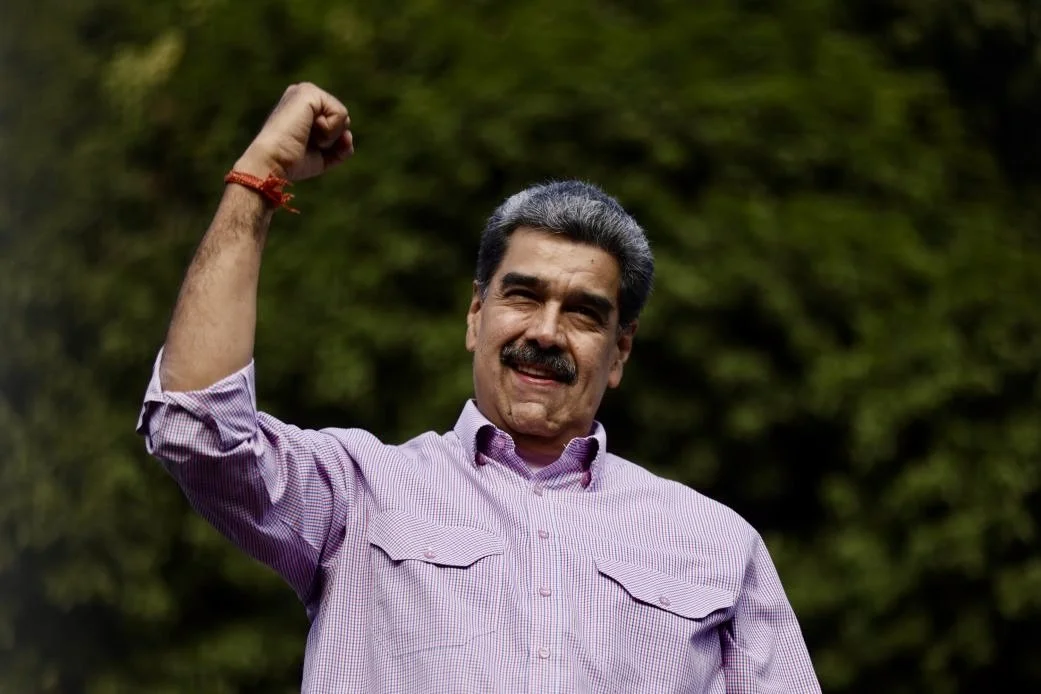
By 2025, dialogue within Venezuela had broken down again, and hardliners regained dominance in U.S. policy. On January 3, 2026, the U.S. announced the launch of "Operation Southern Spear," deploying special forces into Caracas and capturing Maduro and his wife.
The U.S. described it as a "counter-narcoterrorism law enforcement action," citing the earlier arrest warrants issued by the Department of Justice. Details of the operation, including casualties, were not disclosed.
International reactions were sharply divided:
· Russia, China, Cuba, Iran, and others strongly condemned the action, calling it a violation of sovereignty and international law.
· Traditional U.S. allies largely remained silent or responded with caution.
· Venezuelan Vice President Delcy Rodríguez condemned the "imperialist aggression," demanded "proof of life" for Maduro, and called on the military to defend national sovereignty.
Key points of controversy:
1. Questionable Legality: The cross-border capture of a foreign leader without UN authorization or the consent of the state involved is seen as potentially violating the UN Charter.
2. Lack of Transparency: All information comes solely from U.S. sources, with no independent third-party verification.
3. Framed as "Law Enforcement": By labeling it a crime-fighting operation, the U.S. avoids the "aggression" label, potentially setting a dangerous precedent.
VI. Conclusion: The Logic of Evolution from Indirect to Direct Intervention
Looking back over sixteen years, U.S. policy toward Venezuela shows a clear path of escalation:
· Phase 1 (2010–2014): Diplomatic condemnation, legislative preparation.
· Phase 2 (2015–2018): Systematic sanctions, targeting individuals and the economy.
· Phase 3 (2019–2021): Dual political and economic pressure, attempting to trigger internal collapse.
· Phase 4 (2022–2025): Strategic negotiation, using sanctions as leverage.
· Phase 5 (2026): Direct military intervention, framed as "law enforcement."
The core driving force remained consistent: viewing the Maduro regime as illegitimate, authoritarian, and a threat to regional stability, with the consistent goal of promoting a "democratic transition."
VII. Aftermath: Future Uncertainties
If confirmed, Maduro's capture will trigger multiple shocks:
· A Power Vacuum in Venezuela: Likely to trigger internal power struggles and social unrest.
· Increased U.S. Responsibility: The U.S. will be directly involved in Venezuela's political reconstruction, economic recovery, and humanitarian aid.
· Impact on the International Order: The event may intensify geopolitical confrontation and spark a global debate on unilateralism versus the rule of international law.
Epilogue
The action of January 3, 2026, is not an end but the beginning of new conflicts. Maduro's fate, Venezuela's future, and the boundaries of international law—all remain unresolved. The only certainty is that this sixteen-year-long game, concluded with a "capture," has left a deep fissure in the world.